
Last updated September 10, 2026
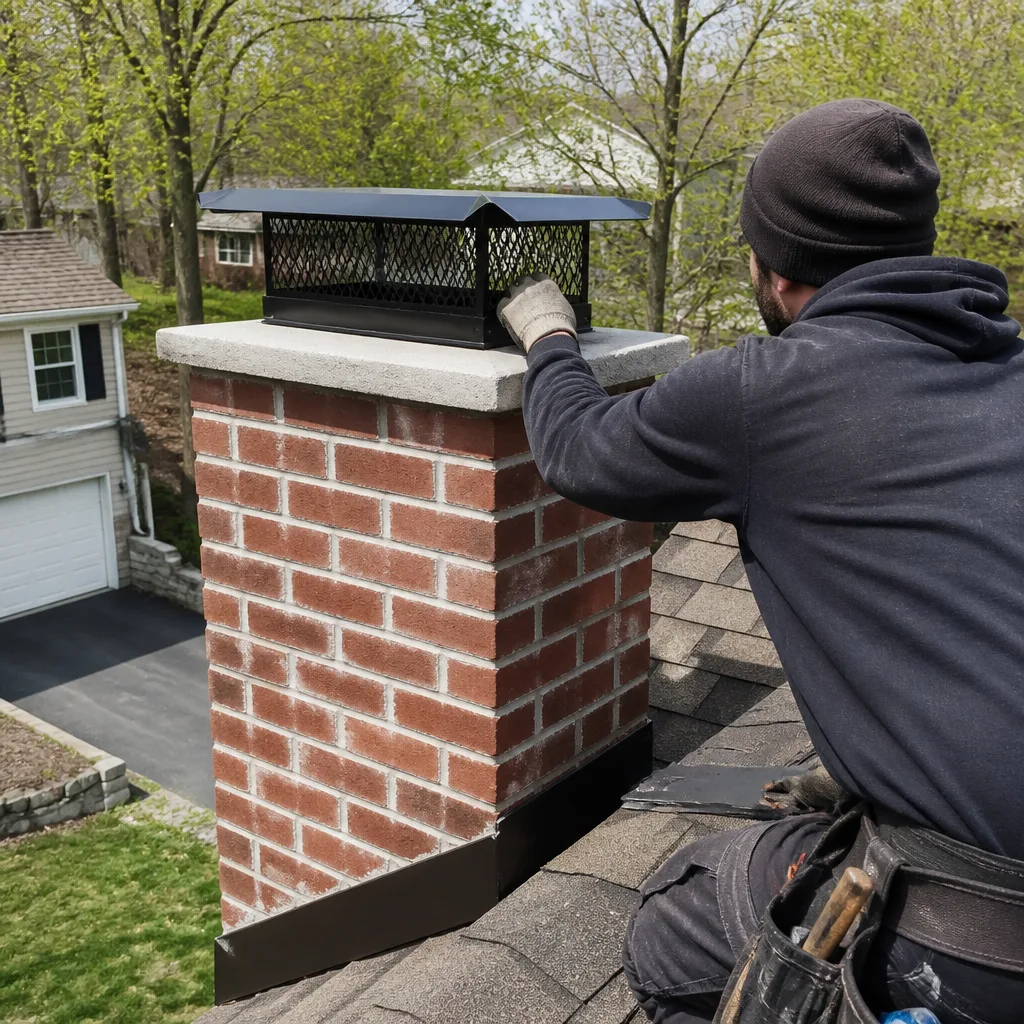
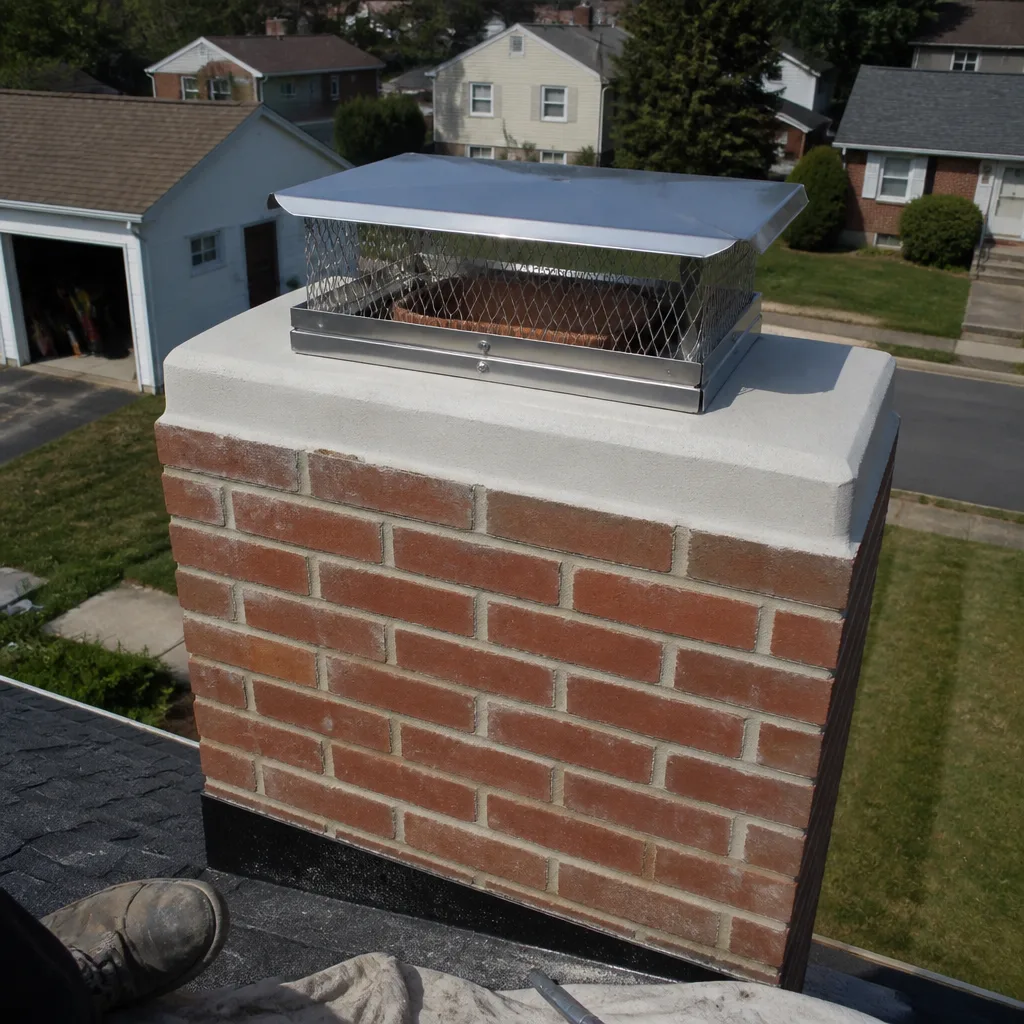
Level 1 sweep and inspection to the NFPA 211 annual standard - flue, crown, cap, and flashing checked and photographed
Chimney sweep logs do not sweep chimneys. They loosen some creosote - which then falls where a brush and vacuum still have to collect it.
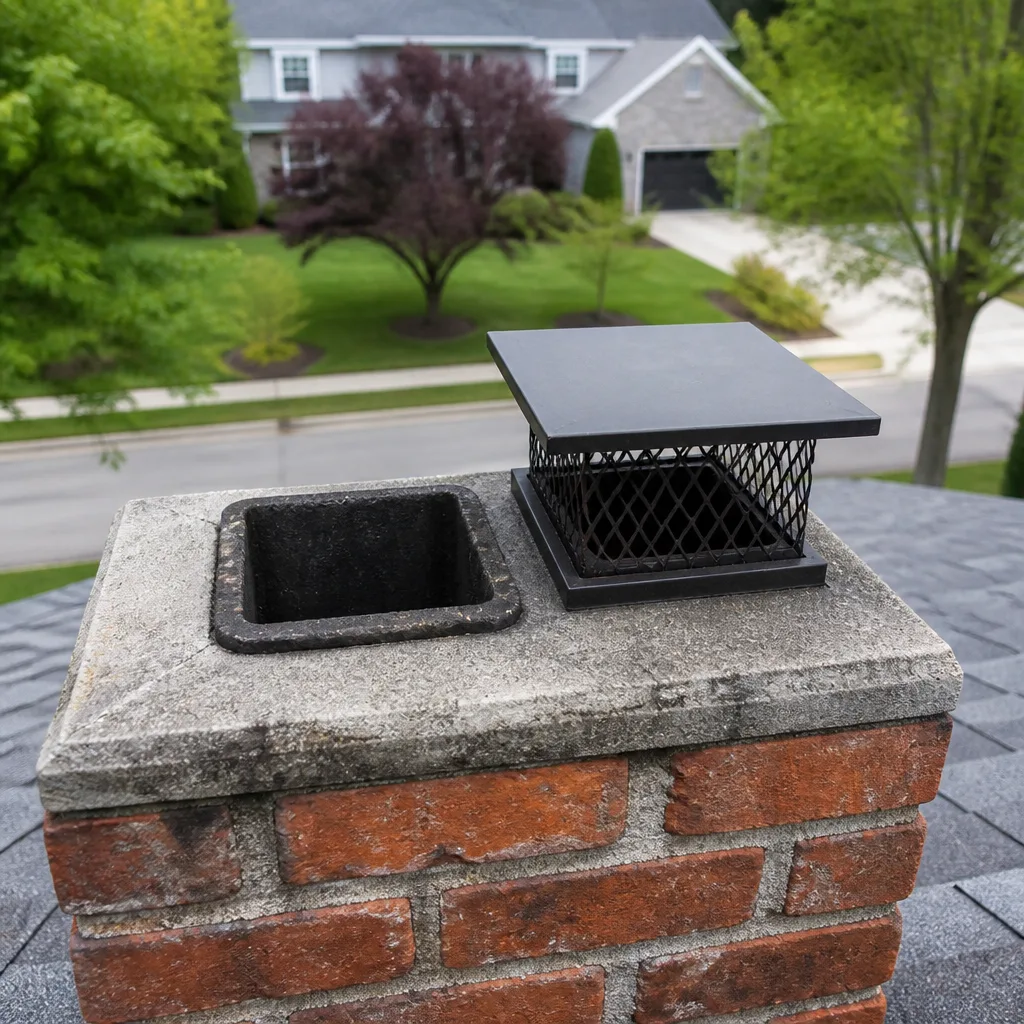
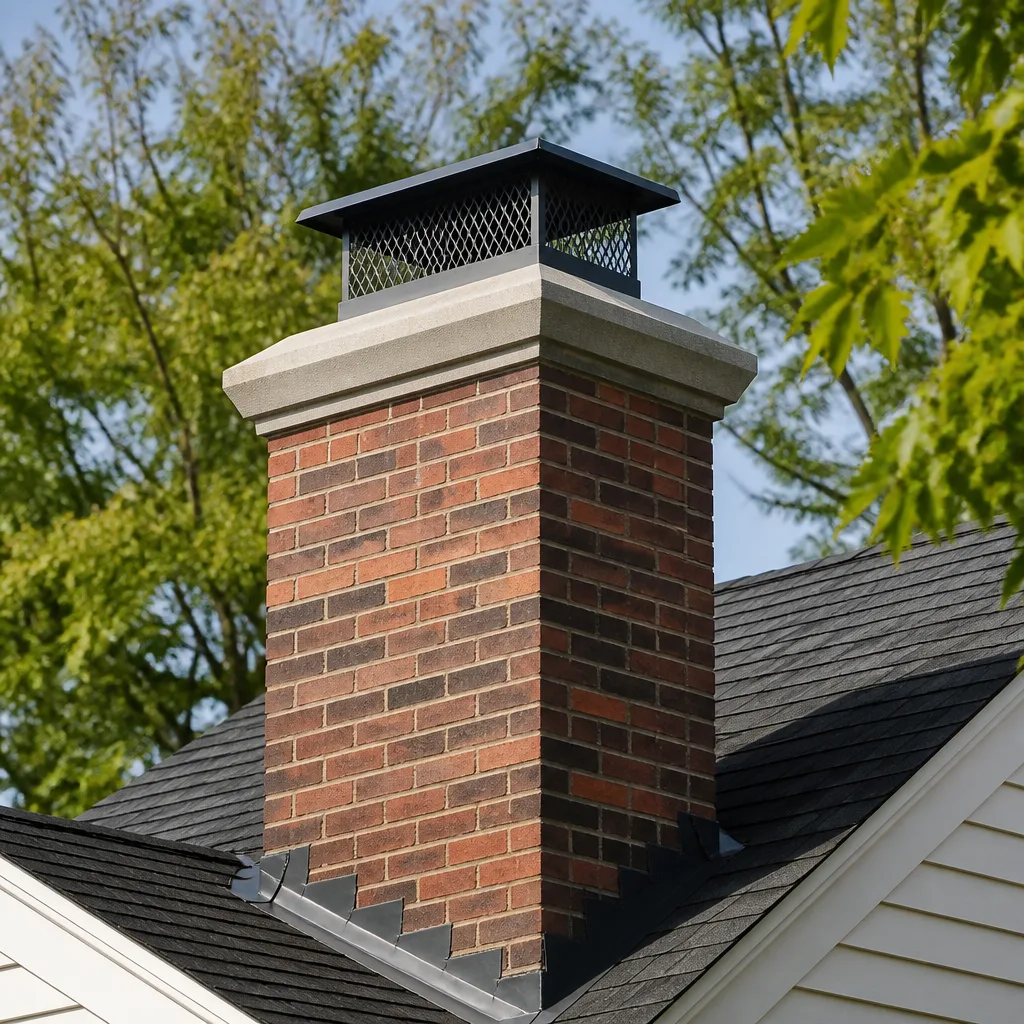
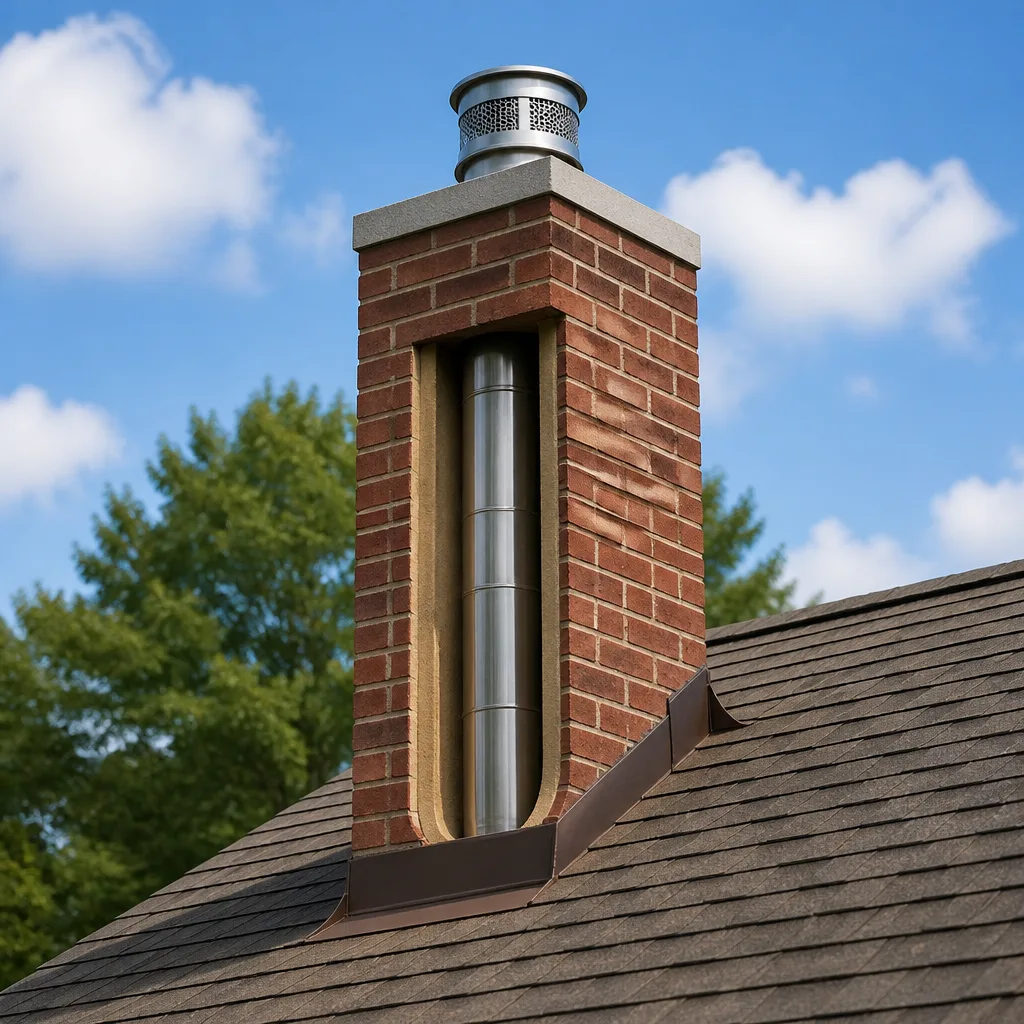
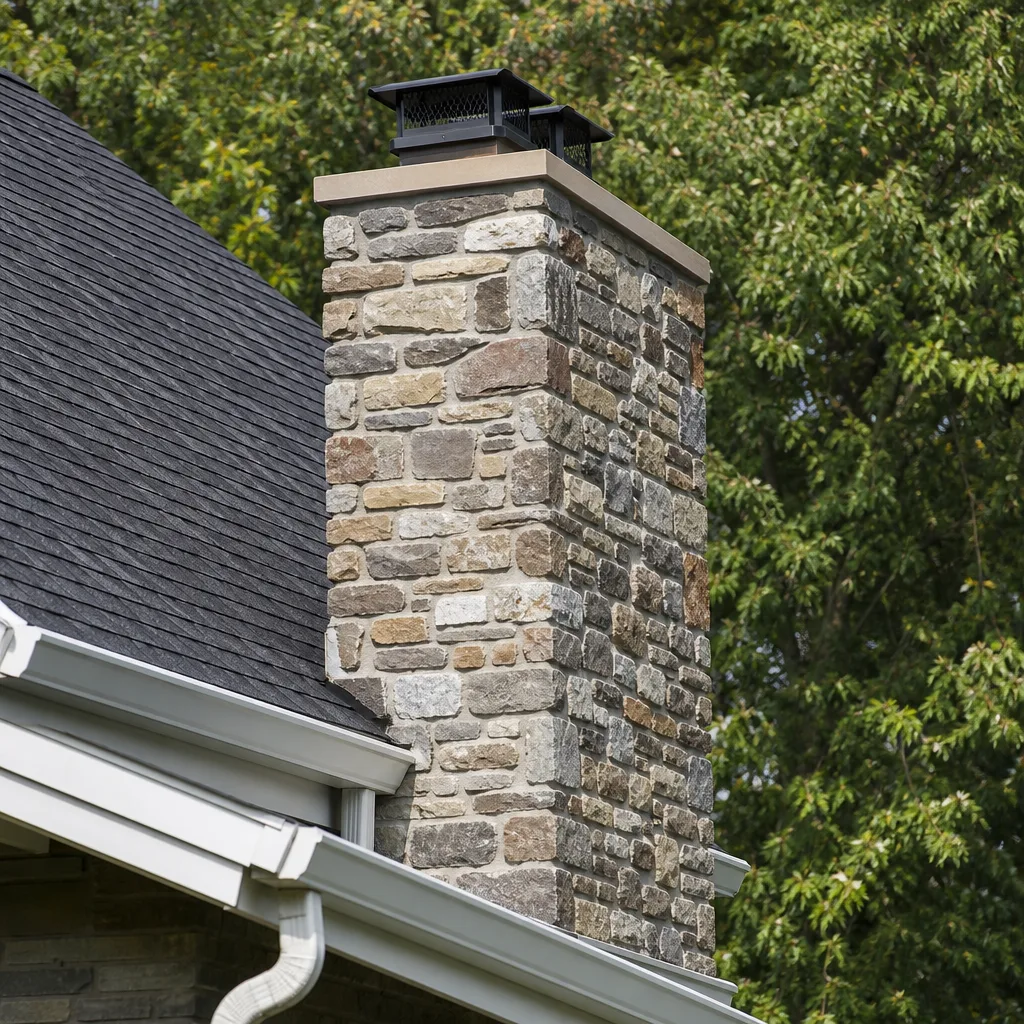
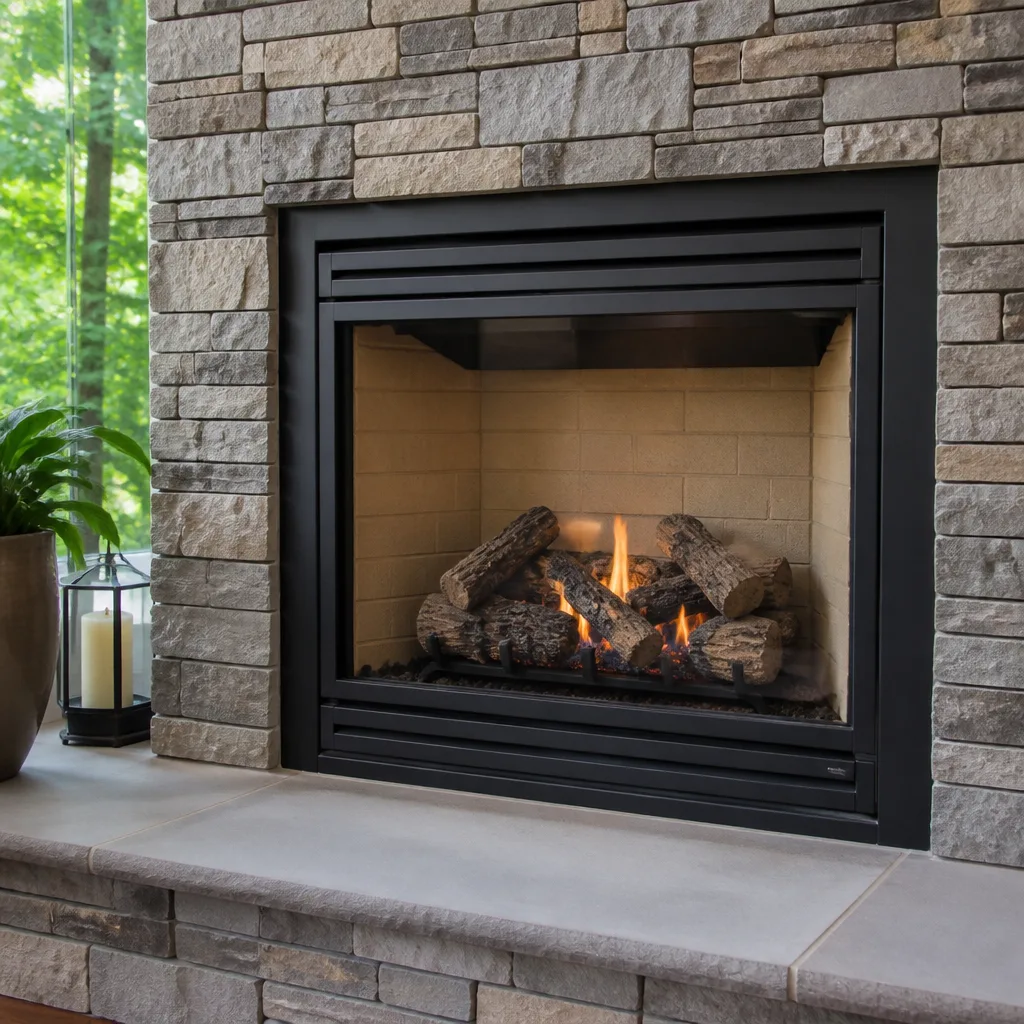
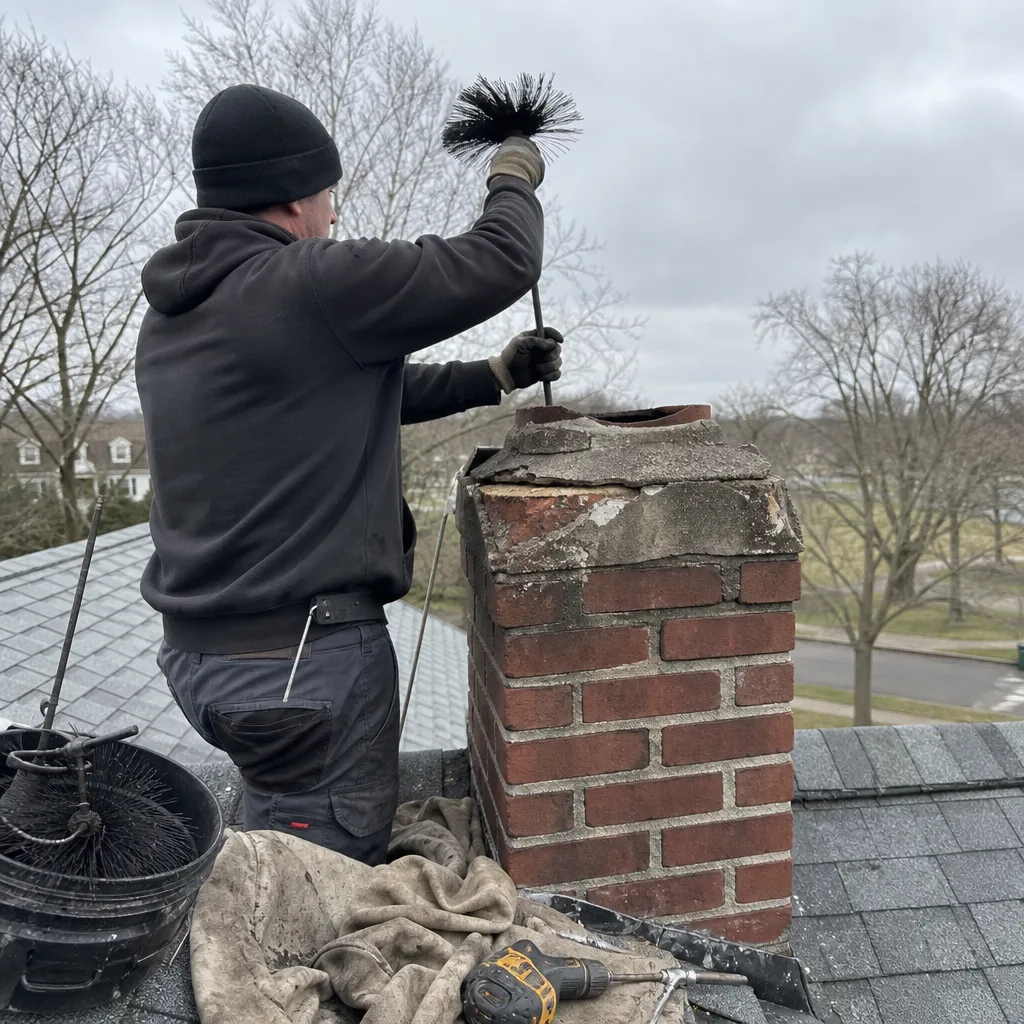 Before
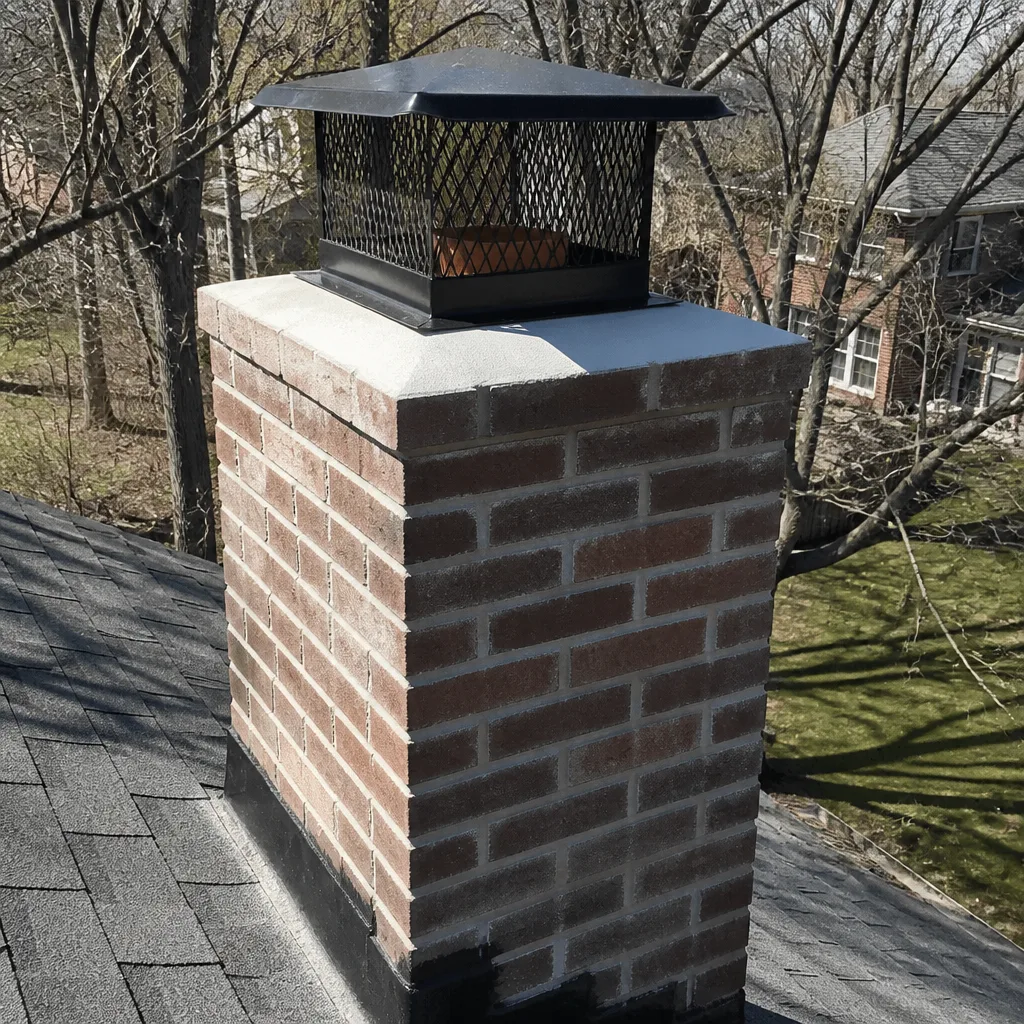 After
After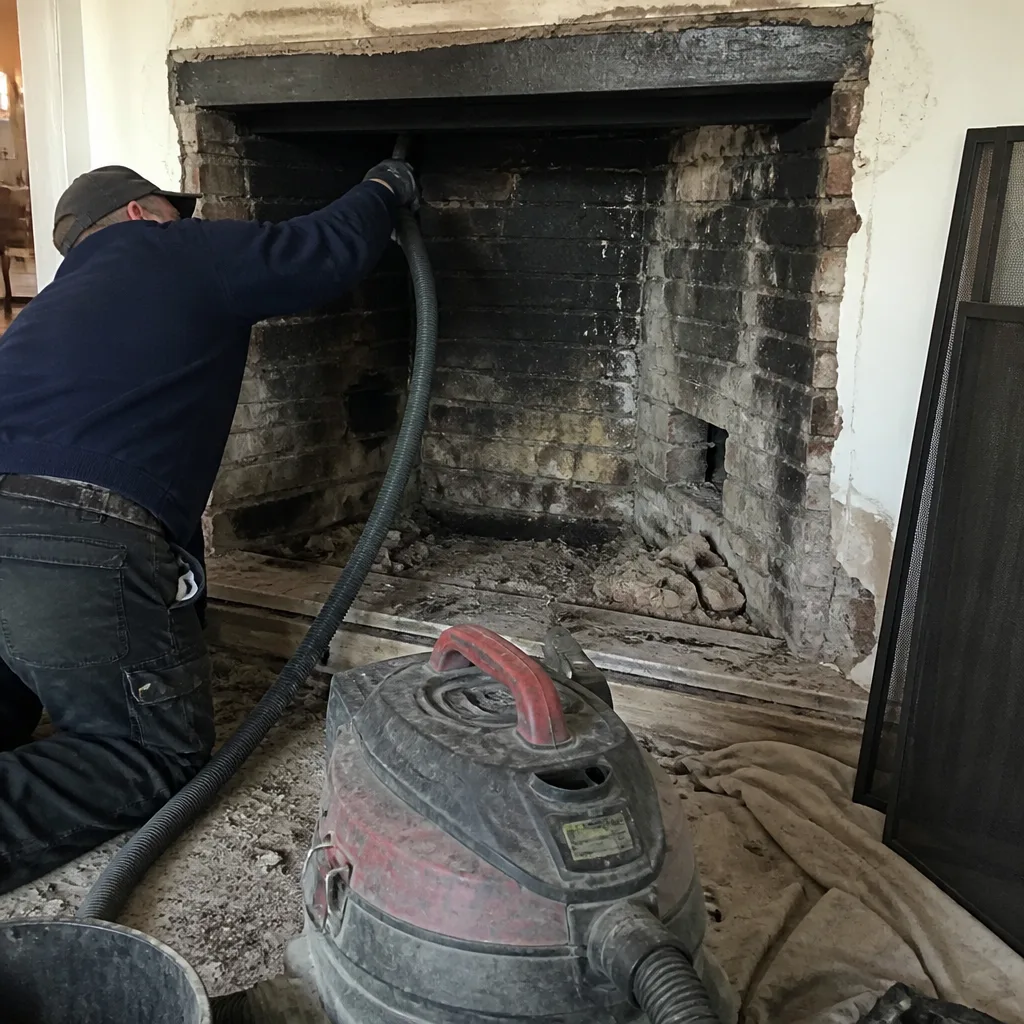 Before
 After
After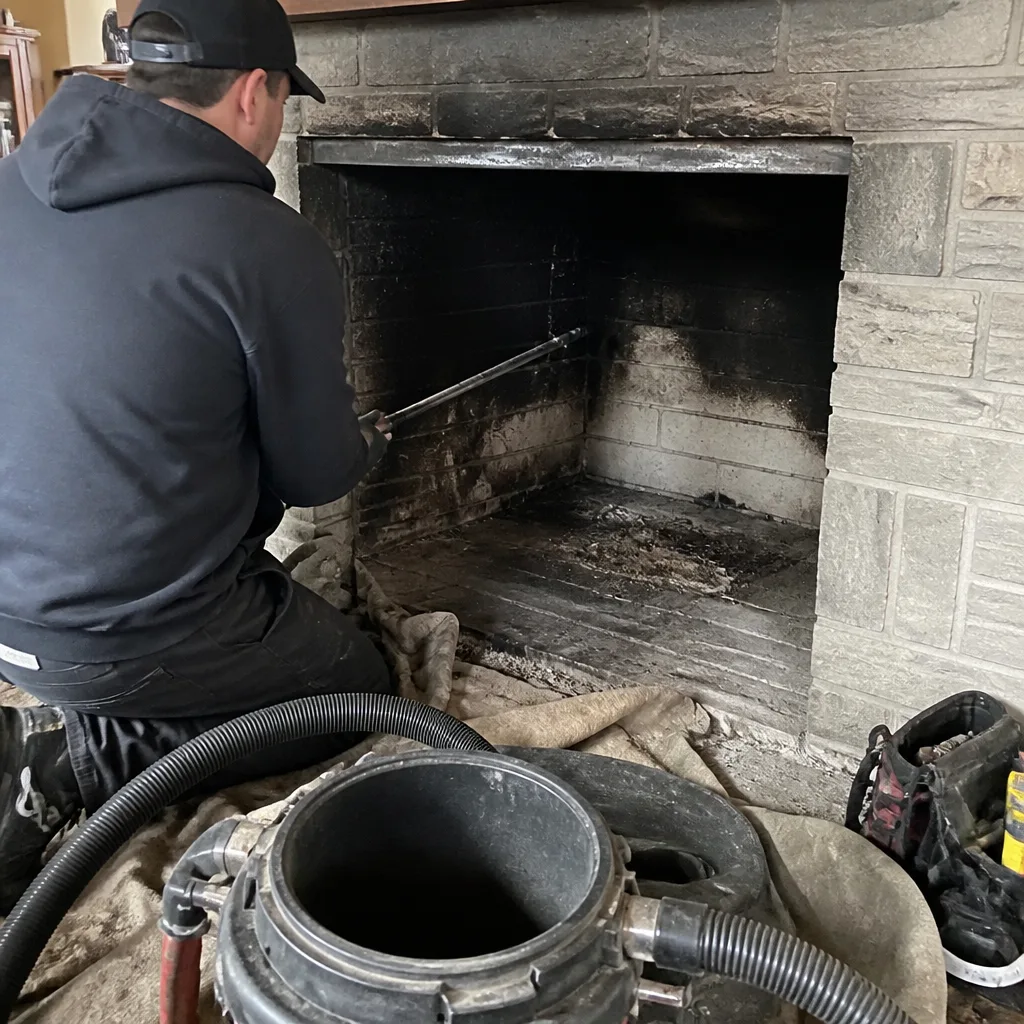 Before
 After
AfterChimney Cleaning Warning Signs: A Reading Homeowner’s Reference Guide
A white stain running down the outside of your chimney isn’t a cosmetic problem. It means water is moving through your masonry right now, and by the time it’s visible on the brick, it’s already been inside the flue for a while. Most chimney failures in Reading announce themselves weeks or months before they become dangerous. The trouble is that the warnings look different depending on whether you live in a 1900s rowhome off Penn Street, a 1960s split-level in Muhlenberg, or a newer place in Exeter Township. This guide walks you through what to look for from the ground, what different smells mean, and which signs say “call this week” versus “note it for the annual visit.”
Quick Answer
The most common chimney warning signs in Reading PA are a smoky smell when the fireplace isn’t burning, white staining or flaking on the exterior brick, black soot falling into the firebox during quiet weather, and a fire that burns sluggishly or smokes into the room. If you notice any of these, the chimney needs a professional look before the next fire. Annual cleaning is the baseline-our Complete Guide to Chimney Cleaning in Reading covers what that involves-but visible staining or odor changes are the prompts to move it up the calendar.
Table of Contents
- The Smell Guide: What Four Chimney Odors Actually Mean
- Ground-Level Visuals: What’s Worth a Phone Call
- Rowhome Signals vs. Detached House Signals in Reading
- When Smoke Pours Into the Room: Chimney Problem or House Problem?
- Weatherization and the 1940s Chimney: A Draft Problem Hiding in Plain Sight
- Creosote Stages: What Three Degrees Look Like and Why Early Matters
- Once a Year, Burn or No Burn: Why Off-Season Damage Catches Homeowners Off Guard
- Common Mistakes to Avoid
- When to Call a Professional
- Frequently Asked Questions
- The Bottom Line
The Smell Guide: What Four Chimney Odors Actually Mean
Your nose is the cheapest diagnostic tool you own. Before you see anything wrong, you’ll usually smell it. But not all chimney smells mean the same thing, and some are far more urgent than others. In Reading’s damp springs and humid summers, odor signals get muddled, so it helps to know what you’re smelling and where it’s coming from.
Musty or Damp Basement Smell
A musty odor coming from the fireplace in warm weather almost always means water is getting inside the flue or the masonry. It could be a cracked crown, a failed flashing seal at the roofline, or spalling brick that’s absorbing rain like a sponge. In older Reading rowhomes, the shared chimney chase means water entering one unit can travel and affect neighbors. This smell is not an emergency, but it is a sign that the chimney repair in Reading conversation should happen before freeze-thaw cycles make the cracks bigger. We’ve pulled apart chimneys where a damp smell had been ignored for three seasons and the interior masonry had turned to gravel.
Sharp, Acrid, Campfire-That-Won’t-Quit Smell
This is creosote. Specifically, it’s the volatile compounds in creosote off-gassing when the flue warms or when outside humidity rises. A faint campfire note is normal for a wood-burning fireplace. A sharp, eye-watering acrid smell that fills the room even when the damper is closed is not. It means there’s a meaningful creosote load inside the flue, and it’s concentrated enough to be moving air through the house. This one deserves a cleaning sooner rather than later. The fix is straightforward: a thorough sweep, and then a conversation about how the fire is being burned.
Smoky Smell When Nothing Has Burned in Weeks
If the fireplace hasn’t seen a fire since March and you’re catching chimney smoke odor in July, the flue is drafting backward. Warm outside air, cool interior air, an open damper, or negative pressure from attic fans and bath vents can pull chimney air down into the living space. This is common in Reading’s older homes, especially on hot afternoons. It is also fixable, often with a top-sealing damper or a better understanding of what’s running in the house when the smell appears. This is more nuisance than danger, but it does mean air from the chimney is entering your home, and that air may carry whatever is up there.
Rotten Eggs or Gas Smell
This is the one that should get you moving. If you have a gas fireplace or a gas water heater venting into the chimney and you smell rotten eggs, that’s mercaptan, the odorant added to natural gas. It can mean a venting problem pushing combustion gases back into the house. Shut the appliance off, open windows, and call a professional. Carbon monoxide is odorless; the rotten-egg smell is often the only warning you get. Do not wait on this one.
Ground-Level Visuals: What’s Worth a Phone Call
You don’t need a ladder to spot most chimney problems. You need a morning walk around the house and a willingness to actually look up. In our experience, most homeowners never walk to the far corner of the yard and study their chimney until something has already fallen off it. Here’s what to look for and what each finding actually means.
White Staining (Efflorescence)
White, chalky deposits on the brick face are mineral salts left behind as water evaporates from the masonry. Efflorescence itself is not structural damage. But it is proof that water is moving through the brick, and in Reading’s freeze-thaw winters, water inside masonry is a slow-motion wrecking ball. We see it constantly on chimneys along Route 422 and in the older sections of the city. If the staining is widespread or new, it’s time for an inspection. The water’s entry point is usually the crown, the flashing, or the brick itself if the mortar joints have softened.
Flaking Brick or Spalling
When brick faces start to pop off in thin layers, that’s spalling. Water gets in, freezes, expands, and the brick surface blows off. Spalling is a late-stage warning. It means the masonry has been absorbing water for years, not months. In Reading rowhomes, spalling on a shared chimney is a particularly tricky problem because the repair affects your neighbor’s wall as well as yours. This is never a DIY fix. The underlying water issue has to be solved first, or any patch job just buys a year or two.
Rust Stains or Streaks Below the Cap
Rust below the chimney cap often means the cap itself is deteriorating or the flue liner inside is corroding. On masonry chimneys with clay tile liners, the tiles don’t rust, so rust streaks usually point to a metal cap, metal flashing, or a metal liner that’s past its useful life. On prefab chimneys, rust is a direct signal that the chimney’s metal components are failing. In Reading’s humid summers, rust progresses faster than homeowners expect. If you can see rust from the ground, the component should be examined this season.
Missing or Cracked Chimney Cap
A chimney cap does a lot of work. It keeps rain out, keeps animals out, and contains sparks. A missing cap is an open invitation to every raccoon, squirrel, and starling in Berks County. More importantly, it lets rain fall directly into the flue, which accelerates creosote damage and can pool at the base of the chimney. If your cap is missing or visibly damaged, this is a high-priority item. It’s also one of the cheapest fixes relative to the damage it prevents. Top Hat Chimney installs caps from Olympia Chimney and Copperfield, and we usually have the right size on the truck.
Rowhome Signals vs. Detached House Signals in Reading
Reading’s housing stock isn’t one thing. The city proper and its older boroughs are filled with attached rowhomes, many dating to the late 1800s and early 1900s. The townships around it, places like Muhlenberg, Exeter, Spring Township, and Cumru, lean heavily toward detached single-family homes from the post-war decades and newer construction since the 1990s. The chimney problems in each housing type are different, and so are the warning signs.
Rowhomes: The Shared Chase Problem
In a Reading rowhome, your chimney almost certainly shares its structure with the houses on either side. The flues are separate. The masonry around them is not. That single fact changes everything about how you should read warning signs.
Water staining on your chimney may be coming from a failed crown on your neighbor’s side. A deteriorating mortar joint three houses down can let water into the shared chase that eventually seeps into your wall. Draft problems in one unit can be caused by somebody down the row installing a powerful kitchen exhaust fan. We’ve seen rowhome chimneys where the homeowner had a perfectly clean flue but constant musty odor, and the culprit was a cracked crown on the neighboring property.
The practical takeaway for rowhome owners in Reading: compare your chimney to the ones around you. If the whole row looks stained or spalled, the problem is systemic. If yours looks different, that’s a clue the issue is specific to your unit. And when you have work done, your sweep should explain which parts of the chimney are yours, which parts are shared, and who is responsible for what before any work begins. Our step-by-step guide to hiring a chimney contractor in Reading covers the questions to ask upfront.
Detached Houses: The Wind and Weathering Problem
Detached homes in the Reading suburbs face different challenges. A freestanding chimney takes full weather exposure on all four sides. Wind-driven rain hits it differently. Freeze-thaw cycles work all the way around. And in many post-war homes, the chimneys were built quickly, with thinner masonry and less attention to proper crown overhang.
On a detached home, the most common warning sign we see is crown deterioration. Rain sits on the crown, seeps into the masonry, freezes, and year by year the crown cracks wider. The second most common is flashing failure at the roofline, especially on homes where the original flashing is still in place from the 1970s or 1980s. Reading gets about 41 inches of precipitation a year, and a surprising amount of it is winter rain that freezes at night. That cycle is hard on exposed masonry.
Detached homeowners should also watch for one signal rowhome owners rarely deal with: chimney movement. A freestanding chimney that’s leaning, even slightly, is a structural issue, not a cosmetic one. Look at the gap between the chimney and the house. If the flashing looks stretched or the chimney appears to be pulling away from the roofline, call someone this week.
When Smoke Pours Into the Room: Chimney Problem or House Problem?
A fireplace that smokes into the room is the single most common complaint we hear in Reading, and it’s also the most misdiagnosed. Before you pay for a service you may not need, it helps to understand that smoke-in-the-room has two completely different causes, and only one of them is actually in the chimney.
The Chimney-Side Causes
A blocked or restricted flue is the obvious culprit. Creosote buildup narrows the passage. A dead bird or animal nest blocks it entirely. A failed clay tile can collapse and wedge sideways in the flue. All of these are confirmed with a camera, and they’re all fixable with a chimney cleaning and sweep in Reading.
A flue that’s too large for the fireplace can also cause smoke issues. Many older Reading fireplaces were built with large flues sized for coal or for open-hearth fires that burned hot and hard all day. A modern homeowner building a small, efficient wood fire in that same fireplace often gets smoke spillage because the flue never warms enough to draw properly. This is a design mismatch, not a cleanliness issue.
The House-Side Causes
Here’s the part most people don’t understand: a fireplace will smoke into the room if the house itself is starving for air. Modern homes in Reading have been weatherized with new windows, added insulation, and sealed doors. That’s great for the heating bill, but a fireplace needs makeup air to burn. When the house can’t provide it, the flue tries to pull air from itself and loses the contest.
The tell-tale test: run the fireplace and then crack a window near the fireplace a half-inch. If the smoking stops, your chimney isn’t dirty. Your house is tight, and the chimney needs a source of outside air. This is a common fix involving an air inlet or a top-sealing damper, not a cleaning.
The second house-side cause is another appliance fighting the chimney for air. Bath fans, kitchen range hoods, and especially clothes dryers all exhaust air from the house. Run two of them while the fire is burning and the chimney loses the pressure battle. In our experience, a surprising number of smoking fireplace calls in Reading are resolved by adjusting when the other appliances run, not by touching the chimney at all.
Before you pay for anything, ask yourself: does this fireplace smoke all the time, or only under certain conditions? The answer tells you which kind of problem you have. And a good sweep walks through this before quoting a fix. The camera footage and a plain-English verdict, every time, no exceptions.
Weatherization and the 1940s Chimney: A Draft Problem Hiding in Plain Sight
Reading is full of homes built before 1960, and those homes were built leaky on purpose. The house breathed. Air slipped in around windows, through floorboards, and up the chimney. The heating system didn’t have to work against a sealed envelope, and the chimney had a steady supply of replacement air.
Then came the weatherization era. New windows. Insulation in the attic. Caulk and foam around every penetration. The house got tighter, which cut heating bills, but it also changed the airflow equation. The chimney that worked fine in 1955 now has to fight for every cubic foot of air it needs.
Here’s what this looks like in practice, and here is the numbered sequence we walk through with customers facing a draft problem on an older home:
- Map the symptoms. When does the draft problem show up? During fires only, or also on hot summer afternoons? During fires with the dryer running, or all the time? The pattern narrows the cause.
- Check for competing exhaust. Bath fans, range hoods, and dryers all pull air from the house. If the problem spikes when they run, the house is too tight for the fireplace to compete.
- Test with a window crack. A half-inch opening near the fireplace that fixes the draft confirms the house is starving the fire for air. This isn’t a repair; it’s an experiment.
- Look at the flue size. A 1940s flue sized for coal or large open fires is often too big for a modern small fire. The chimney never warms, and the draft is weak from the first match.
- Consider a top-sealing damper or an air inlet. These are the two most common fixes. The top-sealing damper stops warm house air from escaping when the fireplace is idle; an air inlet gives the fireplace its own oxygen supply when it’s running.
- Camera the flue before concluding. If the flue is partially blocked or loaded with creosote, no house-side fix will solve it. The camera settles it.
The point is this: your chimney didn’t change. Your house did. If the fireplace worked for decades and recently started smoking or drafting badly after a renovation or weatherization project, the likely cause is the house, not the flue. Reading’s older housing stock makes this one of the most common service calls we run, and it’s often solvable without major work.
Creosote Stages: What Three Degrees Look Like and Why Early Matters
Creosote builds up in stages, and the stage determines the cleanup. First-degree creosote is a brush job. Third-degree is a glaze, catch it early. Here’s what the stages mean in practical terms.
First-Degree: Soot and Fine Powder
This is the normal byproduct of wood fires. It brushes off with standard sweeping tools and doesn’t pose a structural threat. Most chimneys that are cleaned annually stay in this range. If you burn dry, seasoned wood and have the chimney swept every year, first-degree buildup is all you’ll ever deal with.
Second-Degree: Tar-Like Flakes and Hard Deposits
This stage is crusty, dark, and starting to harden. It takes more aggressive mechanical cleaning to remove, but it is still manageable. Second-degree creosote usually means you’ve been burning unseasoned wood or running fires too cool to burn off the deposits. The fix is a thorough sweep and a conversation about wood quality and fire practice.
Third-Degree: Glaze and Hardened Tar
Third-degree creosote is a hard, glossy, tar-like coating that fuses to the flue wall. A standard sweep brush won’t remove it. It requires rotary cleaning tools, chemical treatments, or in severe cases, liner replacement. Third-degree creosote is a direct result of prolonged cool fires, wet wood, or a chimney that hasn’t been cleaned in many seasons. It is also a genuine fire hazard, because glaze creosote burns at very high temperatures and is the fuel source for the most damaging chimney fires.
Here is why early matters: the cost of a standard cleaning in Reading is a fraction of the cost of a rotary cleaning or a liner rebuild. The difference between first-degree and third-degree creosote is often just a few seasons of neglect. Once a year, burn or no burn, because chimneys break in the off-season too.
Once a Year, Burn or No Burn: Why Off-Season Damage Catches Homeowners Off Guard
The fireplace goes cold in April, and nobody thinks about it again until October. That’s the pattern, and it’s exactly why September and October are our busiest emergency months in Reading. Chimneys don’t just sit idle during the off-season. They take on water, host animals, and deteriorate in ways that go unnoticed because the fireplace isn’t in use.
Reading’s climate makes this worse. Spring rain saturates masonry. Summer heat dries it out and opens hairline cracks. Fall’s first freeze expands the water trapped in those cracks. By the time you light the first fire of the season, the crown may have cracked further, the flashing may have pulled loose, and the flue may be home to a squirrel family that spent the spring nesting.
The smarter pattern is this: have the chimney swept and inspected at the end of the burning season, not the beginning. For timing and seasonal prep, see our more guides & resources. A spring cleaning removes the season’s creosote before summer humidity turns it corrosive and smelly. It also means any repair work can be scheduled while the weather is good and the schedule is open. You’ll go into the next burning season with a clean flue and a repaired chimney, rather than calling in October with a house full of smoke and every chimney company in Berkshire County booked three weeks out.
Off-season calls also catch problems earlier, which means smaller repairs. A crown that’s caught in May gets patched. A crown that’s discovered in October when smoke is pouring into the bedroom may need a full rebuild. The fireplace services in Reading that start with a spring inspection pay for themselves in avoided emergency fees.
Common Mistakes to Avoid
- Ignoring a damp smell because “it’s just the weather.” A musty chimney smell that persists in dry spells is water in the masonry. In Reading, that water freezes every winter and widens whatever crack it found.
- Burning unseasoned wood and blaming the chimney. Green wood produces more creosote and less heat. If you’re fighting smoke and soot every fire, start by checking your wood stack. Wood needs a year or more to season properly.
- Assuming a rowhome chimney is only your problem. Shared chimney chases mean your neighbor’s failed crown is your water problem. Before you pay for repairs, find out what’s happening up and down the row.
- Waiting for visible damage before calling. By the time brick spalls or flashing pulls visibly loose, the repair is larger than it would have been a year earlier. Most chimney damage is invisible from the ground.
- Using a chimney sweep log instead of a real cleaning. Creosote-removal logs don’t clean the flue. They may loosen some deposits, but they don’t remove the accumulation. Only a mechanical sweep actually cleans the system.
- Closing the damper tight in summer and forgetting the flue. A sealed damper traps humidity in the flue and makes damp smells worse. A top-sealing damper is the real fix, and it saves conditioned air year-round.
When to Call a Professional
Call a chimney professional if you smell gas, if you’ve seen smoke backing into the room, if there’s visible white staining or flaking brick on the chimney exterior, or if you haven’t had the flue swept in more than a year. If a chimney fire has occurred, even a small one that seemed to burn itself out, treat it as structural damage until a camera says otherwise. A chimney fire can crack liners and mortar joints invisibly, and the next fire is the one that matters. Top Hat Chimney offers free estimates in Reading, call (484) 209-0837, and Wendell or a member of his crew will come out and put eyes on it.
Frequently Asked Questions
A standard chimney cleaning and inspection in Reading typically runs between $150 and $300, depending on the flue type, accessibility, and buildup level. Rotary cleaning for glazed creosote costs more, and repairs are quoted separately after the camera inspection. Call (484) 209-0837 for an exact quote, estimates are free.
Once a year, burn or no burn. The National Fire Protection Association standard is annual inspection, with cleaning as needed. In practice, most Reading wood-burning fireplaces accumulate enough creosote in one season to justify a yearly sweep.
Not always. Some liners fail and need replacement; others have a decade of life left. The only honest way to know is a camera inspection, and you should see the footage yourself. If someone tells you a new liner is required without showing you cracked tiles or a gaping seam, get a second opinion. Top Hat Chimney offers a free second opinion on any written estimate.
Creosote builds up, the flue narrows, and the chimney drafts worse. In a worst case, the creosote ignites and you have a chimney fire. In a more common case, moisture trapped by the buildup accelerates liner deterioration and you pay for a bigger repair later. Skipping one year isn’t a crisis; skipping five often is.
Not necessarily. Efflorescence means water is moving through the masonry, but if the staining is light and caught early, the fix may be crown repair and sealing. If the brick is spalling and the mortar is crumbling, more extensive work may be needed. The camera and a visual inspection settle it.
No. A fireplace that smokes into the room is often a house problem, usually caused by a tight, weatherized home starving the fire for air. Crack a window near the fireplace; if the smoking stops, the house is the issue, not the flue. That said, a blocked flue will also cause smoking, so the smart move is to rule out obstruction first.
The Bottom Line
Chimneys in Reading give clear warnings before they fail. The white stain, the musty smell, the sluggish draft, the smoke in the room. Learn to read the signals and you’ll catch problems when they’re small, before they become fall emergencies. Once a year, burn or no burn. Understand your house type, whether you’re in a shared-chase rowhome or a freestanding suburban chimney. And when something feels off, call someone who will show you the camera footage and tell you straight what needs doing and what can wait. That’s how we’ve done it since 1999.
For chimney cleaning, inspection, or repair in Reading, call Top Hat Chimney at (484) 209-0837 for a free estimate. Wendell answers the phone, and he’ll give you the number before the truck rolls. We’re a local Reading business, and we’re not hard to find. Ask anyone on your street.
Written by Wendell Pike, Owner at Top Hat Chimney, serving Reading since 1999.