

Level 1 sweep and inspection to the NFPA 211 annual standard - flue, crown, cap, and flashing checked and photographed
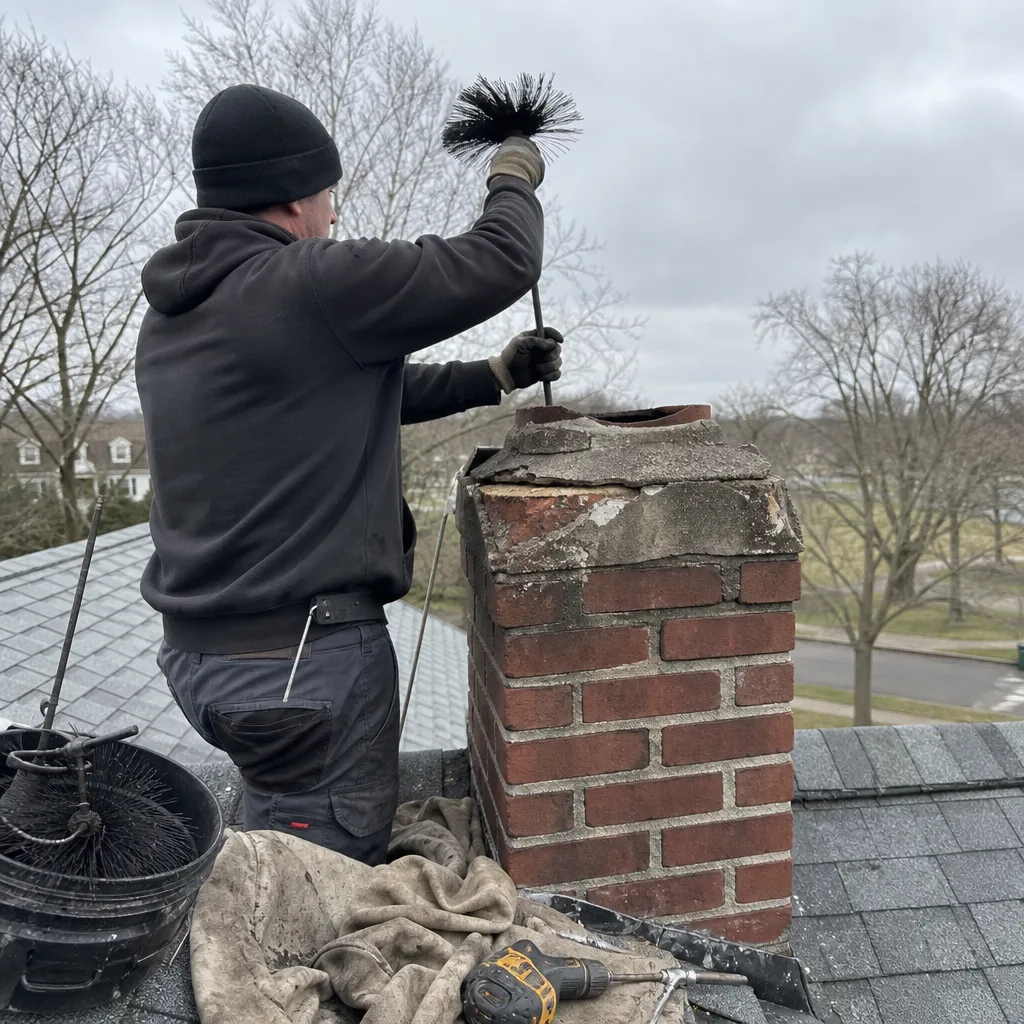
Chimney sweep logs do not sweep chimneys. They loosen some creosote - which then falls where a brush and vacuum still have to collect it.
 Before
 After
After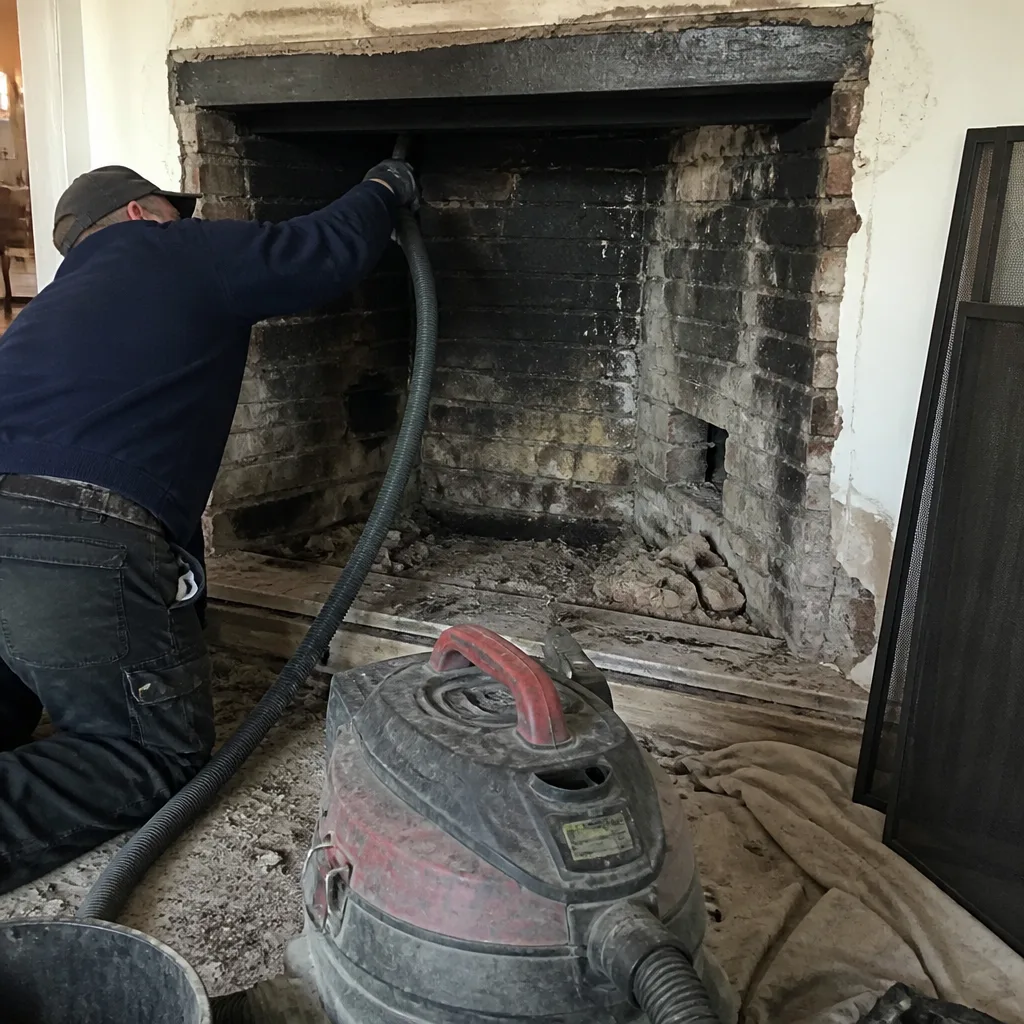 Before
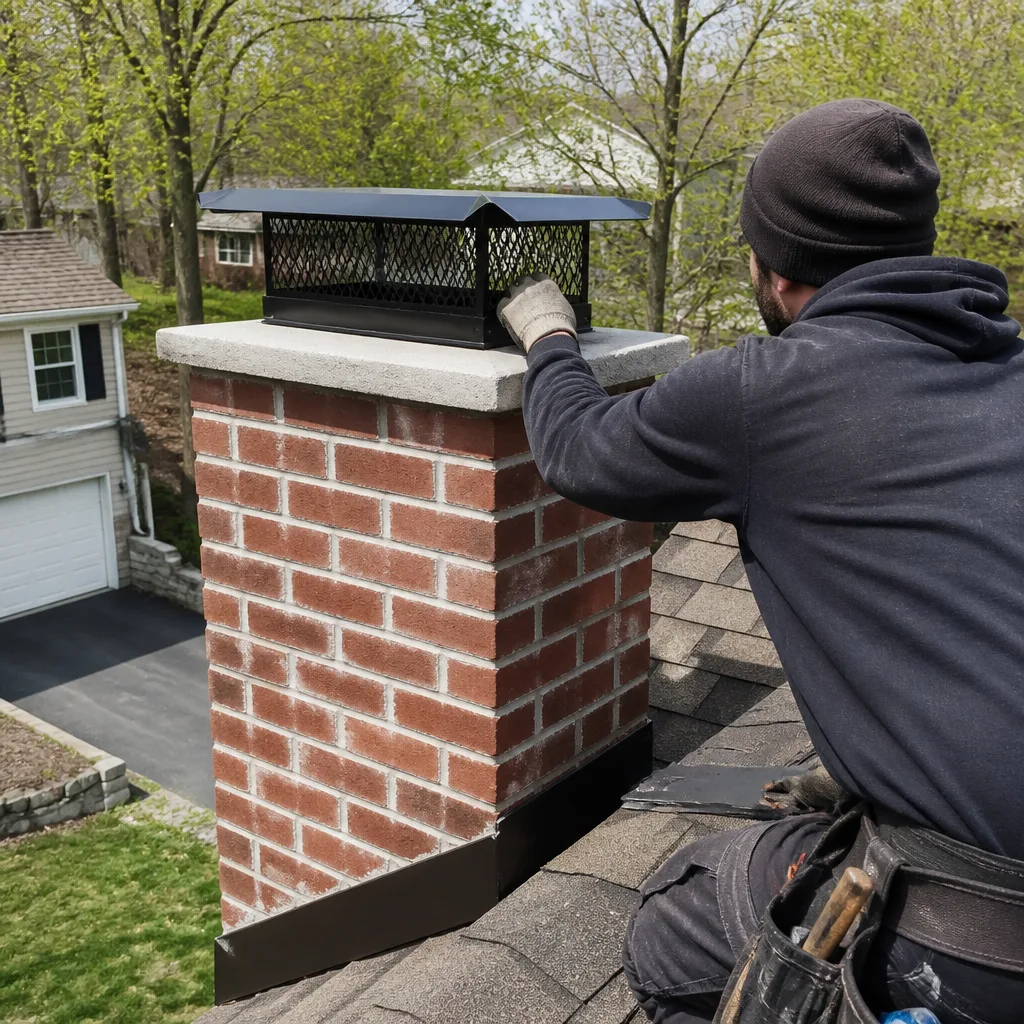 After
After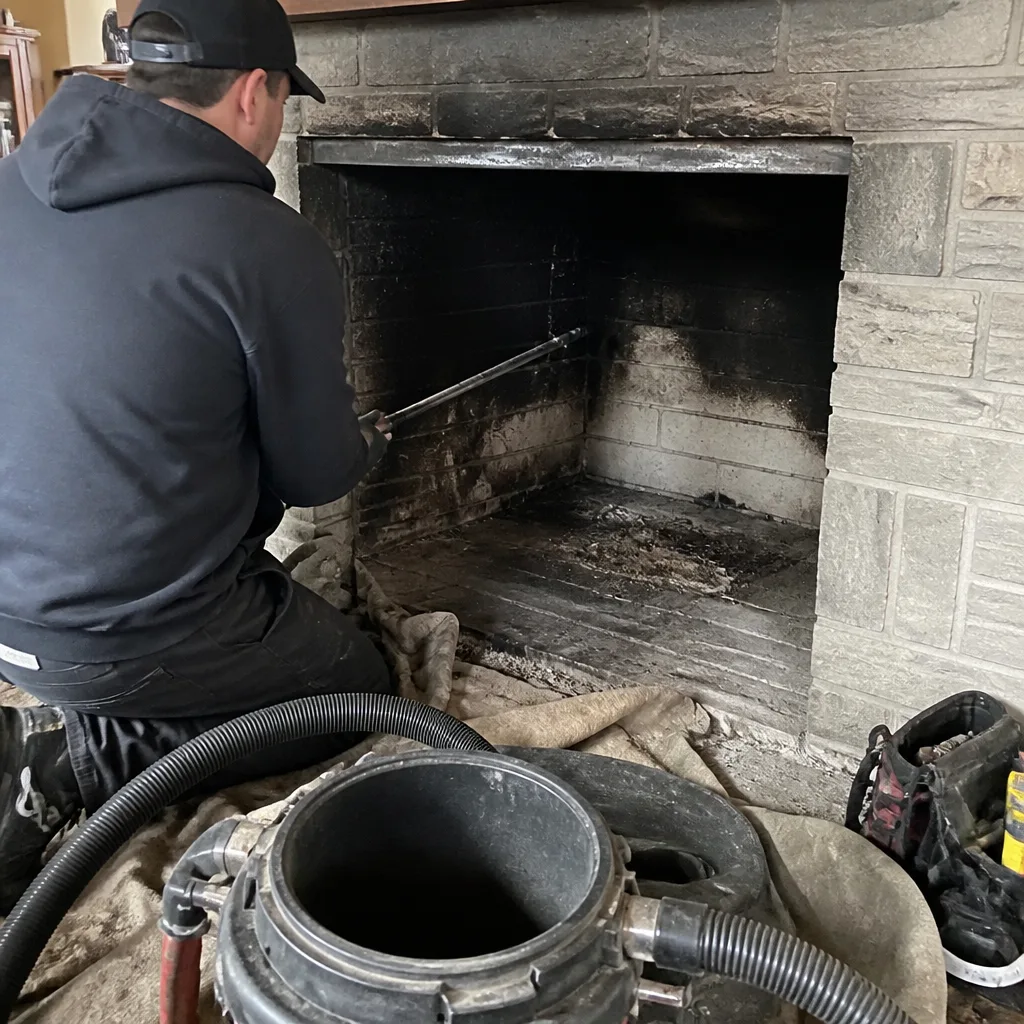 Before
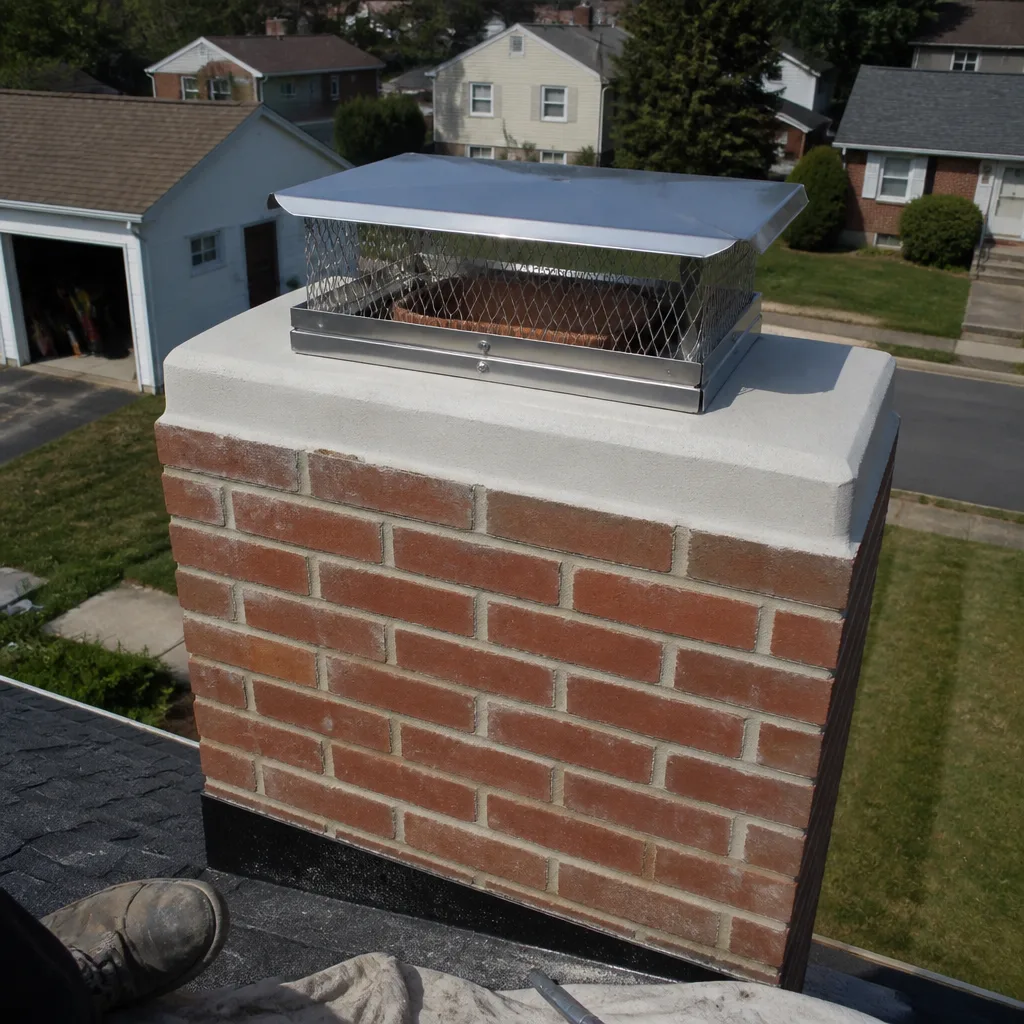 After
AfterHeatShield Chimney Cleaning in Amity, PA | Top Hat Chimney
We provide independent HeatShield chimney cleaning and repair across Amity, and the short answer is this: if your chimney has a HeatShield liner or coating, it still needs an annual sweep, and the way we do that work here is shaped by the fact that so many Amity homes are pre-1950s farmhouses with multi-flue chimneys originally built for coal. That’s not true in most of the suburbs around us, and it changes what we look for. Call (484) 209-0837 and Wendell Pike or one of his crew will give you a straight answer about what your flue actually needs. We’re not HeatShield the manufacturer, and we’re not an authorized dealer in any corporate sense. We’re the people who get called after someone else already looked at it and missed something.
Why Amity Residents Choose Us for HeatShield Service
Wendell Pike founded Top Hat Chimney in 1999, and he’s spent years running crews through the farm country and older housing stock around Washington County. When a chimneyman has spent that long inside old masonry flues, he doesn’t need a brochure to know how HeatShield Cerfractory behaves when it’s been sitting in a converted gas flue for five or six winters. He’s seen it with his own eyes. We work with genuine HeatShield Cerfractory and CeCure components because aftermarket coatings don’t handle the acid and the freeze-thaw the way the real material does. And we don’t do the national-chain routine where the price quoted on the phone isn’t the price at the door. The number you hear is the number on the invoice, and every job gets our 90-Day Done Right Promise in writing. If we missed something or it isn’t right, one call brings us back at no cost to you. That’s the whole point of a local shop.
Common HeatShield Chimney Cleaning Problems We Solve in Amity
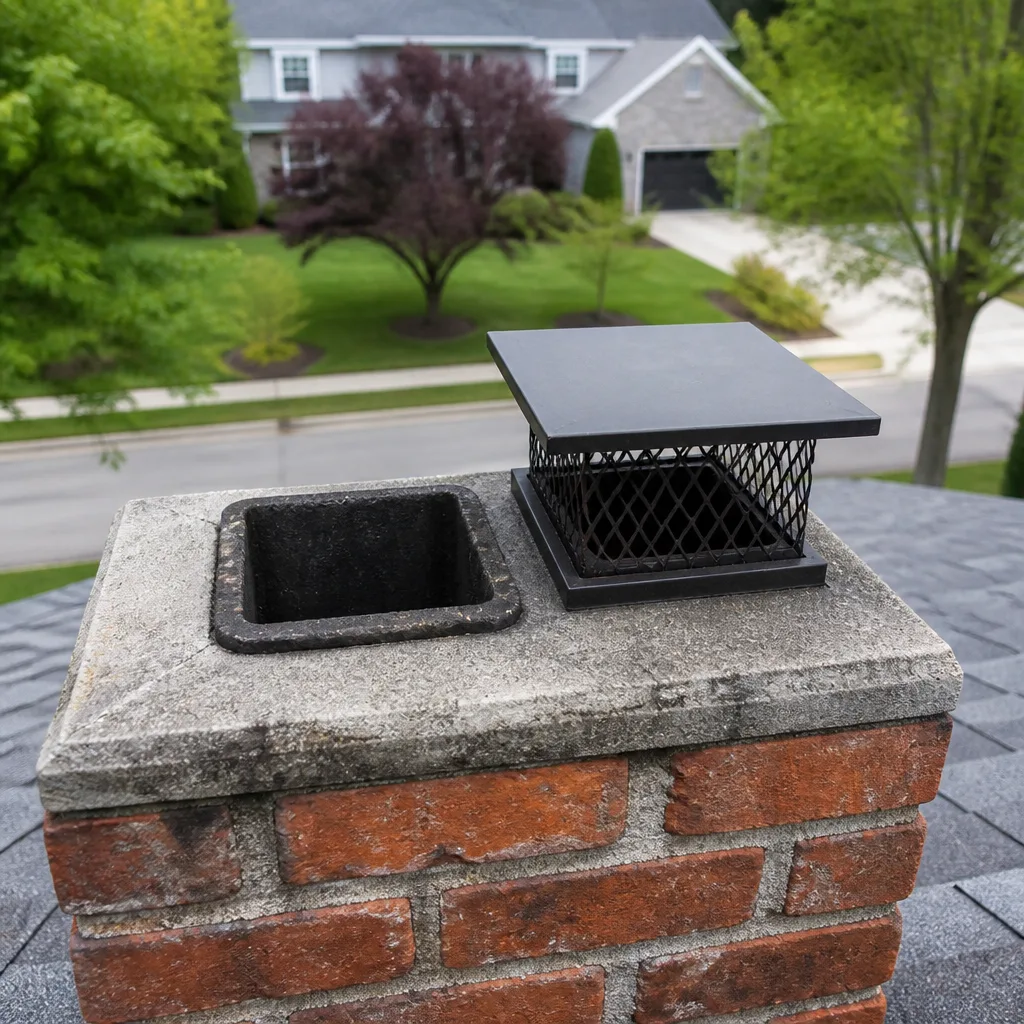
- Freeze-thaw spalling on exposed crowns. Amity sits on Appalachian plateau ground, and the chimneys here take a beating. When a HeatShield Cerfractory surface is applied to a crown that’s already been through decades of Washington County winters, the persistent freeze-thaw cycling through late winter and early spring can spall the surface if the original masonry wasn’t properly prepared. We see it on elevated farmhouse chimneys more than anywhere else, because the wind gets at them from every side. We don’t just sweep the flue; we check the crown every time, because in Amity the crown is where the trouble starts.
- Gaps at mortar joints in HeatShield Joint Repair from gas condensate. Here’s the thing about Amity’s gas conversions. After the Marcellus Shale boom, a lot of pre-1950s chimneys that once vented coal or wood got connected to gas appliances. Gas exhaust is far more acidic and condensing than what those old flues were built for. That acid eats at HeatShield joint repair work if the underlying masonry is porous and wasn’t sealed properly. We find these gaps during routine cleaning, often before the homeowner knows anything is wrong. That’s what camera inspection is for.
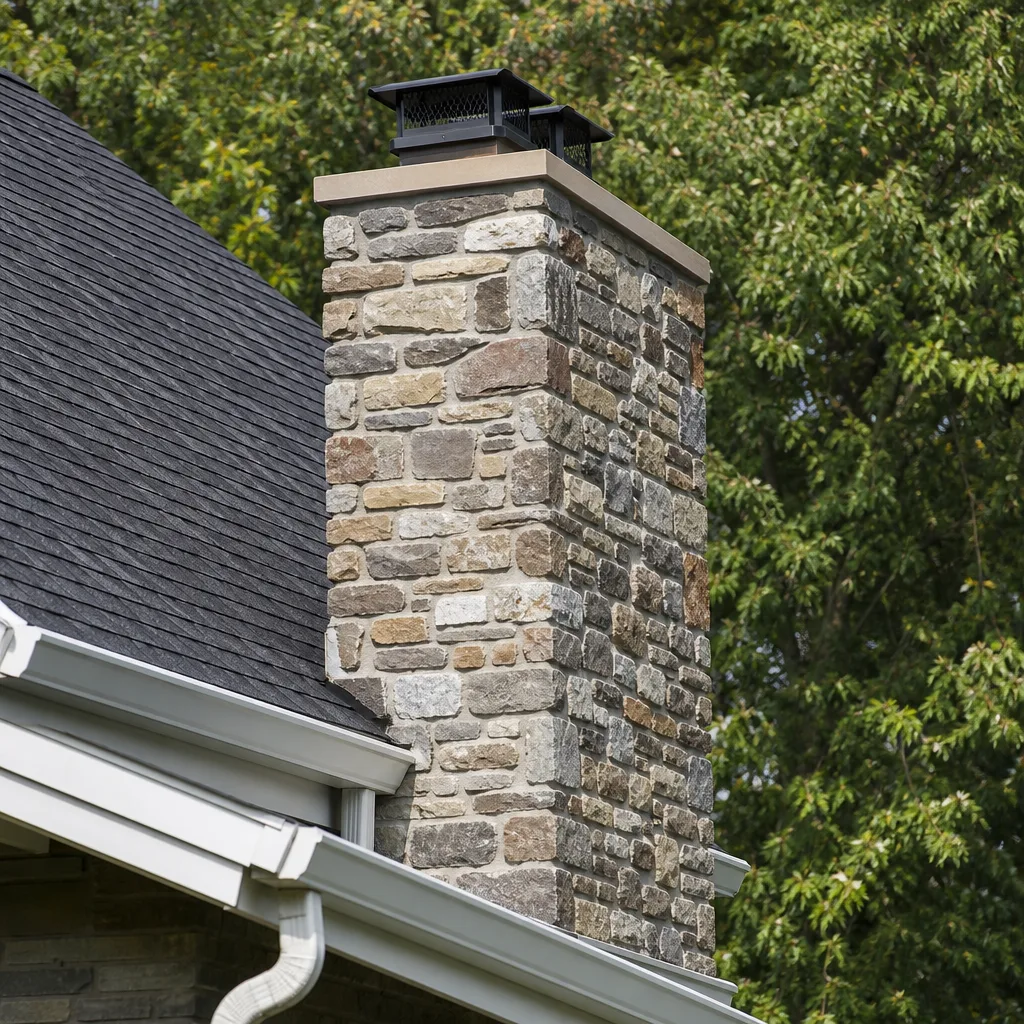
- Debris and acidic pitting in orphaned flues. Amity farmhouses often have a three- or four-flue chimney where only one flue is in active use. The others, once serving coal stoves and kitchen ranges long removed, sit open at the base to the basement. They collect debris, they act as cold-air conduits, and if they once had a HeatShield application, the acid from years of coal use can leave pitting that goes unnoticed for years. We clean and inspect every flue in the stack, not just the one that’s actively burning.
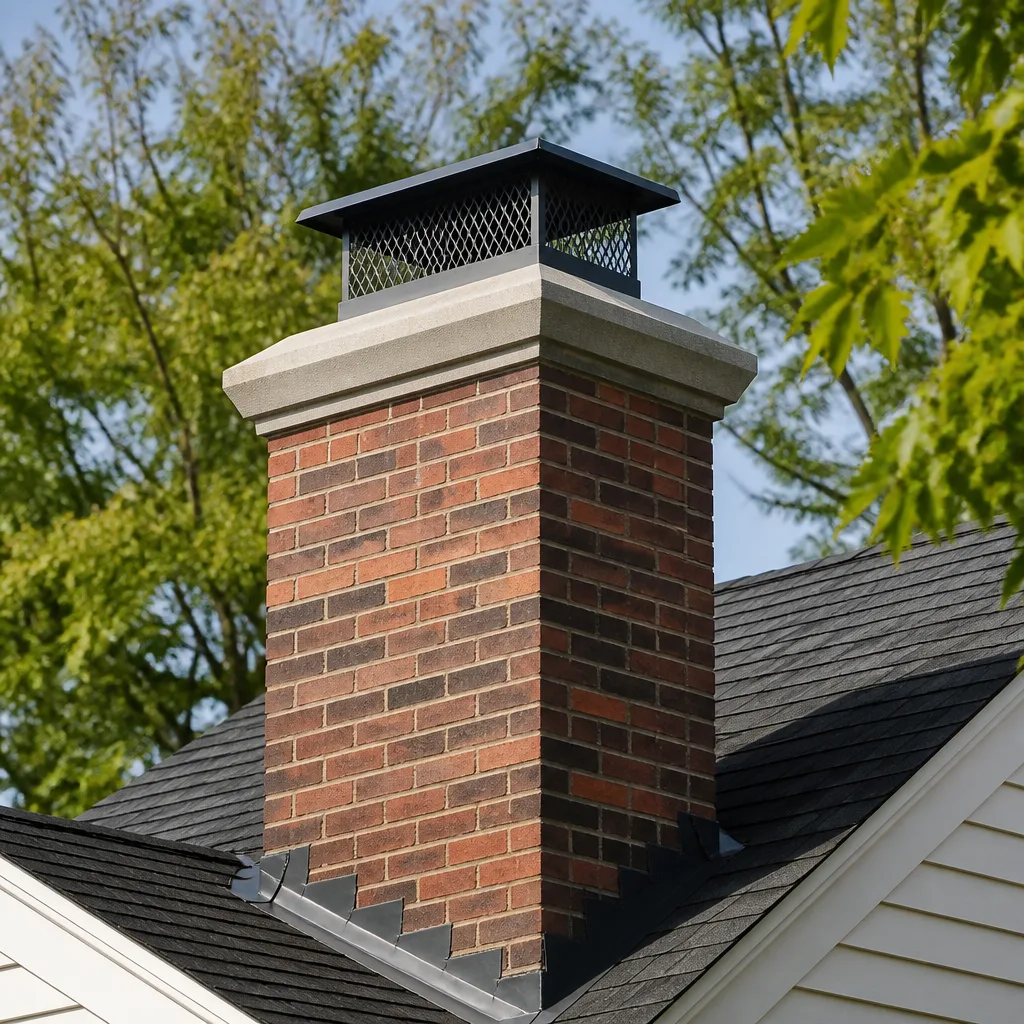
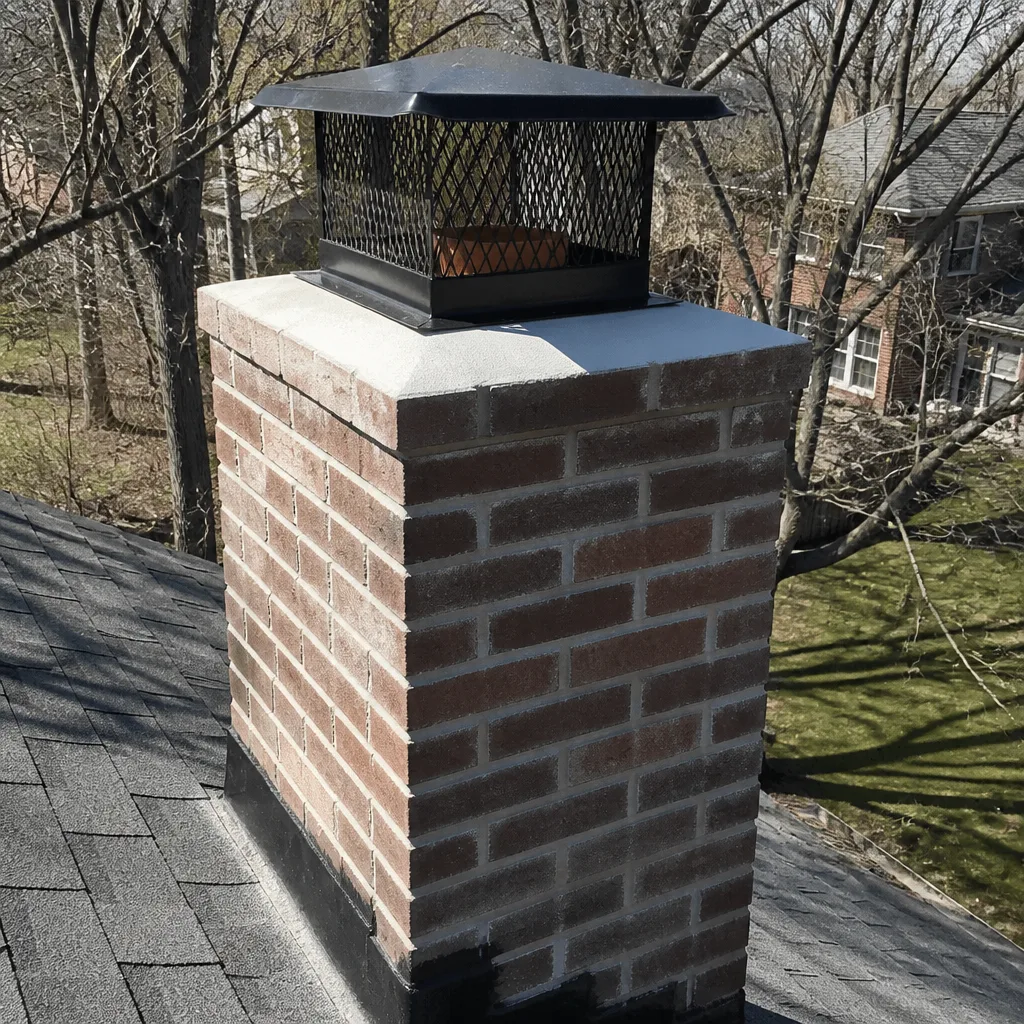
- Flue cap damage from wind-driven debris. Those same elevated chimneys that suffer wind exposure also collect whatever the wind carries. Tree branches, leaves, the occasional piece of farm equipment tarp. A damaged flue cap means rain gets in, and rain plus freeze-thaw is how you lose a chimney crown. We check the cap on every visit, because in Amity it takes a beating.
- Nesting animals in unused flues. Orphaned flues with open bases are an invitation. Starlings, squirrels, the occasional raccoon. We recently worked on a farmhouse off Route 136 near Amity where a four-flue chimney had a squirrel nest visible at the crown of one of the unused flues. The homeowners had no idea. That’s the kind of thing we find more often in Amity than anywhere else we work, because the housing stock is older and the flues were built for a different era.
HeatShield Service in Amity: What Local Conditions Mean for Your Equipment
Here’s the information-gain paragraph, and it’s specific to Amity in a way that wouldn’t be true in Spring or Birdsboro or anywhere else in the county. Washington County’s Marcellus Shale natural gas boom drove widespread fuel conversions across rural Amity-area properties. A lot of those pre-1950s masonry chimneys were built for coal, and coal flues were never sized or lined for modern gas appliance venting. Gas exhaust is acidic and condensing. It eats at old mortar from the inside out. You don’t see it from the ground. You don’t see it during a visual inspection from the roof, either. You see it on camera, when the flue surface looks like someone took a chisel to it. HeatShield’s Cerfractory is often the only liner material that can bond to that old, porous, previously unlined masonry instead of requiring a full rebuild. In Amity, where the housing stock is dominated by early-to-mid-20th century farmhouses with large multi-flue chimneys, this is a genuine safety issue rather than an upsell. An unlined or improperly lined flue venting gas through a converted coal chimney is actively deteriorating every time the furnace kicks on. Your flue doesn’t care how the fire looks. It cares how it breathes.
HeatShield Models & Products We Service in Amity
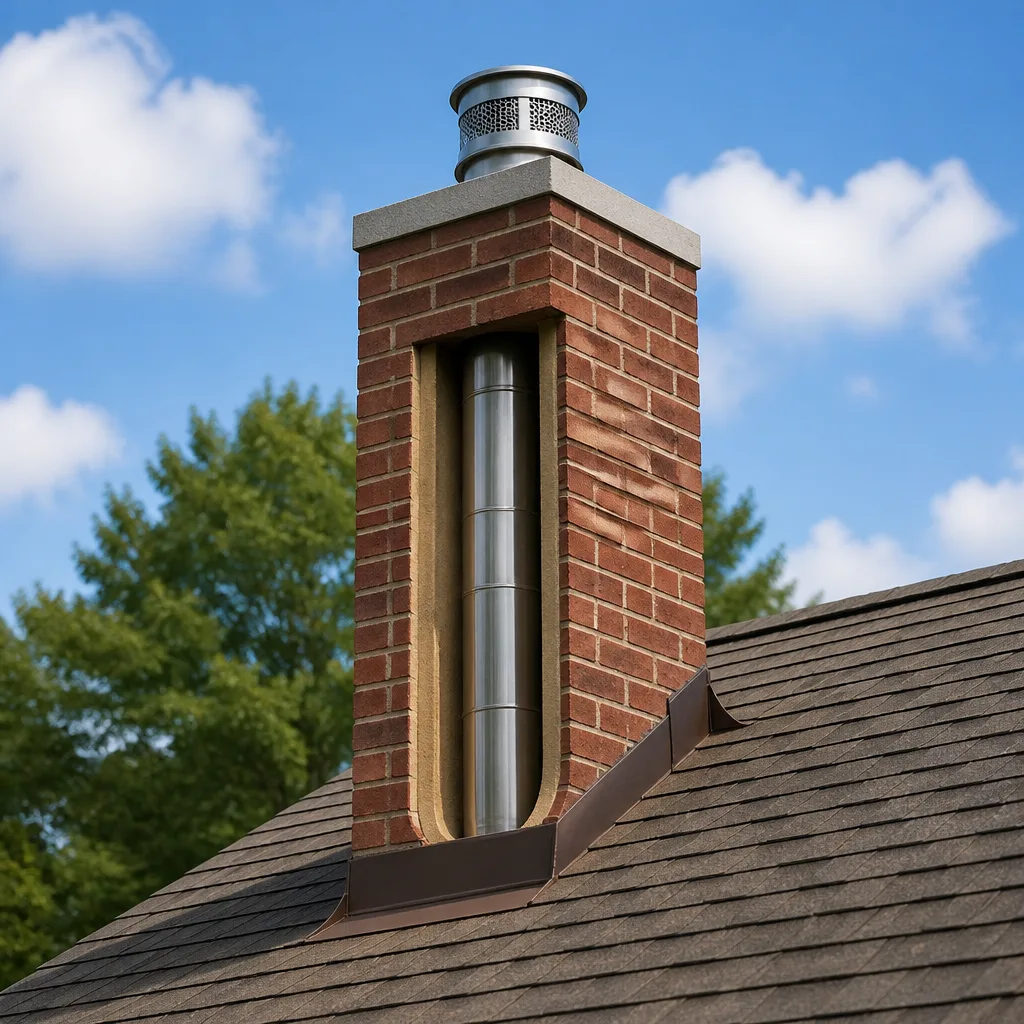
We work with the full HeatShield product line: HeatShield Cerfractory Flue Sealant, HeatShield Joint Repair System, HeatShield Resurfacing System, and HeatShield CeCure Sleeve Relining. When we repair or resurface, we use genuine HeatShield Cerfractory and CeCure components, because aftermarket coatings rarely match the expansion and acid resistance required for Amity’s freeze-thaw cycles and gas condensate. We stock the common components locally so we’re not waiting on a shipment when your flue is open and the weather turns. If the underlying masonry is sound, we resurface. If the flue is structurally compromised, we replace with a HeatShield sleeve rather than patching. Simple rule, and we’ll show you the camera footage to back up whichever call we’re making. For more about our HeatShield work across the region, see our HeatShield sales & service page.
HeatShield Service Pricing in Amity
HeatShield chimney cleaning in Amity typically runs between $180 and $340 for a standard sweep and inspection, depending on flue count, access, and whether there’s any animal nesting to remove. A HeatShield application or resurfacing job runs higher, from around $1,500 to $3,200 depending on the number of flues and the condition of the masonry beneath. The thing that drives cost in Amity more than anything else is the multi-flue factor. A three-flue farmhouse chimney takes longer to inspect and clean properly than a single-flue suburban chimney, and you should be suspicious of anyone who quotes you a single-flue price before seeing the stack. Every job gets upfront pricing before a single tool comes off the truck, and we do a camera inspection with a photo report on every job so you can see what we’re seeing. Call (484) 209-0837 for an exact quote. Estimates are free, and there’s no trip charge inside our service county.
Serving Amity, PA - Our Local Coverage Area
We’re based in the Amity area and know this community well. Use the map below to see our service coverage - if you’re nearby, we can almost certainly help.
FAQs - HeatShield Chimney Cleaning in Amity
Yes, and in Amity this is one of the most common HeatShield applications we do. The old coal flue is unlined or has deteriorating clay tiles, and the acidic gas condensate from a converted gas appliance is eating the masonry from the inside. HeatShield Cerfractory bonds to that old porous surface, seals it, and gives it acid resistance. We resurface when the masonry underneath is sound; if it’s not, we sleeve with HeatShield CeCure instead. The camera footage will tell us which one you need. Call (484) 209-0837 if you’ve got a converted gas flue you’re not sure about.
Yes, and you need to know this before anyone touches the flue. A chimney fire compromises the structural integrity of the existing masonry, often in ways you can’t see from the top. Gaps open between tiles, mortar crumbles, and the surrounding brick can be cracked. You can’t just resurface over that and call it done. We do a Level 2 camera inspection first. If the masonry is still structurally sound, a HeatShield Cerfractory resurfacing can work. If it’s not, you need a HeatShield CeCure sleeve. We’ll show you the footage and tell you plainly. Wendell’s signature phrase is worth repeating here: if it doesn’t need doing, he’ll be the first one to tell you.
Yes, and it’s often the best option. Those old multi-flue chimneys were built for coal furnaces, kitchen ranges, and parlor stoves that ran at different temperatures and produced different exhaust than modern appliances. HeatShield’s Cerfractory is designed to bond to old, porous masonry and handle the freeze-thaw and acid cycles we get in Washington County. We’ve applied it to active flues, sealed orphaned flues at the top and bottom, and resurfaced crown surfaces on the same stack. Your flue doesn’t care how the fire looks. It cares how it breathes.
Done right, a HeatShield Cerfractory application should last 20 years or more, even with Amity’s snowfall and freeze-thaw cycling through late winter and early spring. The key is proper preparation. If the original masonry is unstable, the coating will fail early. If the crown isn’t sealed, water gets behind it and freeze-thaw spalls the surface. On exposed rural farmhouse chimneys, we pay particular attention to the crown and flashing, because that’s where winter weather does its worst work. We inspect every HeatShield chimney we service for surface spalling and crown damage, regardless of whether we did the original application. Give us a call at (484) 209-0837 and we’ll take a look.
Yes, and in Amity, where exposed crowns take a beating from wind-driven rain and persistent freeze-thaw, we use HeatShield Cerfractory on crowns more often than you’d think. The crown is the flat masonry surface at the top of the chimney, and it’s the first thing to fail when water gets in and the temperature drops below freezing. HeatShield works on crowns as well as flue liners, and at Top Hat Chimney we also do mortar repointing, crown repair, and flashing repair as part of the same job when needed. A crown that leaks will take out the flue liner eventually. We’d rather catch it while it’s just a crown repair.
Service Areas Near Amity
We serve Amity and the surrounding Washington County and Berks County communities. That includes Amity service area coverage throughout the township, along with HeatShield service in Reading, HeatShield service in Spring, Wyomissing, Shillington, and Birdsboro. If you’re in one of these areas and you’ve got an older chimney that was converted to gas or still runs a wood stove, we’ll come take a look.
Book Your HeatShield Service in Amity Today
Give us a call at (484) 209-0837. A live person answers, around the clock, and it may well be Wendell himself. We’ll give you an honest assessment, upfront pricing, and a 90-Day Done Right Promise in writing. If the chimney doesn’t need work, we’ll tell you that and shake your hand on the way out.
Written by Wendell Pike, Owner at Top Hat Chimney, serving Amity since 1999.