
Level 1 sweep and inspection to the NFPA 211 annual standard - flue, crown, cap, and flashing checked and photographed
Chimney sweep logs do not sweep chimneys. They loosen some creosote - which then falls where a brush and vacuum still have to collect it.
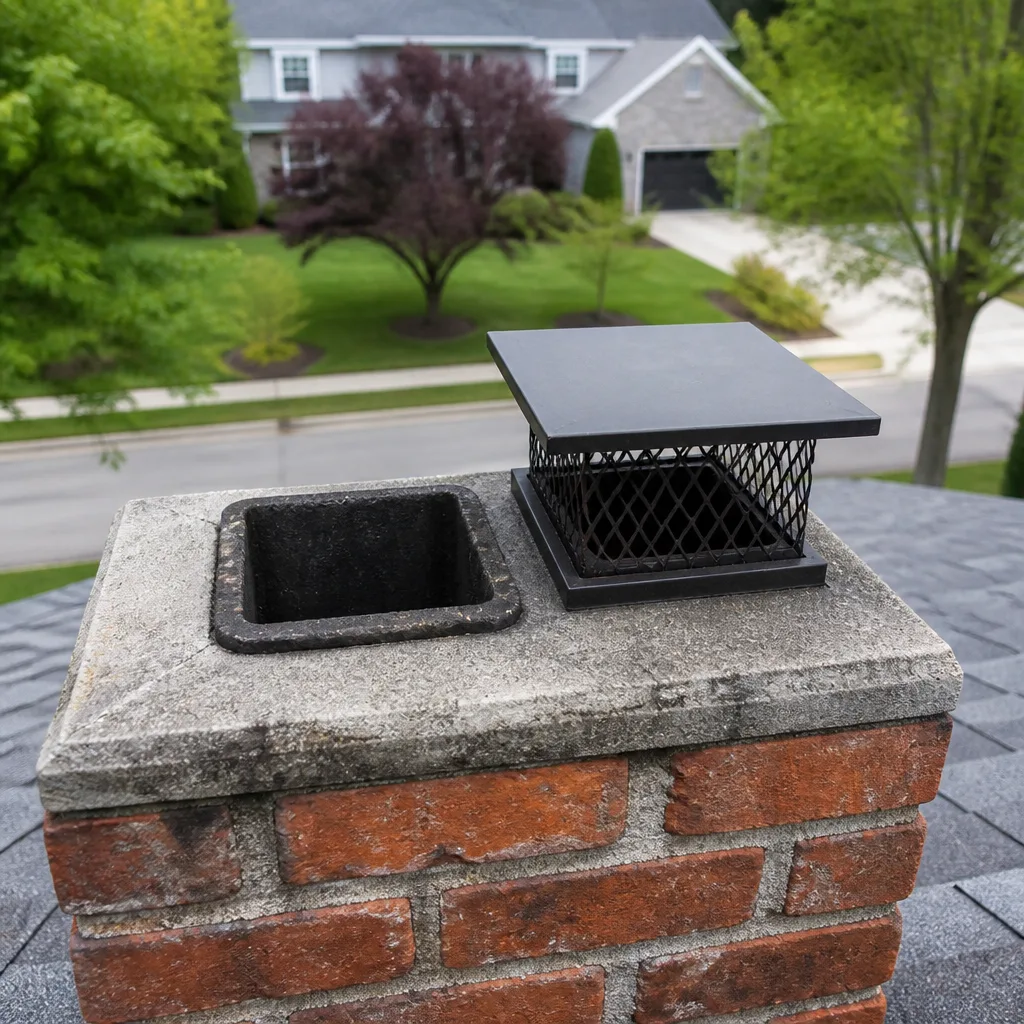
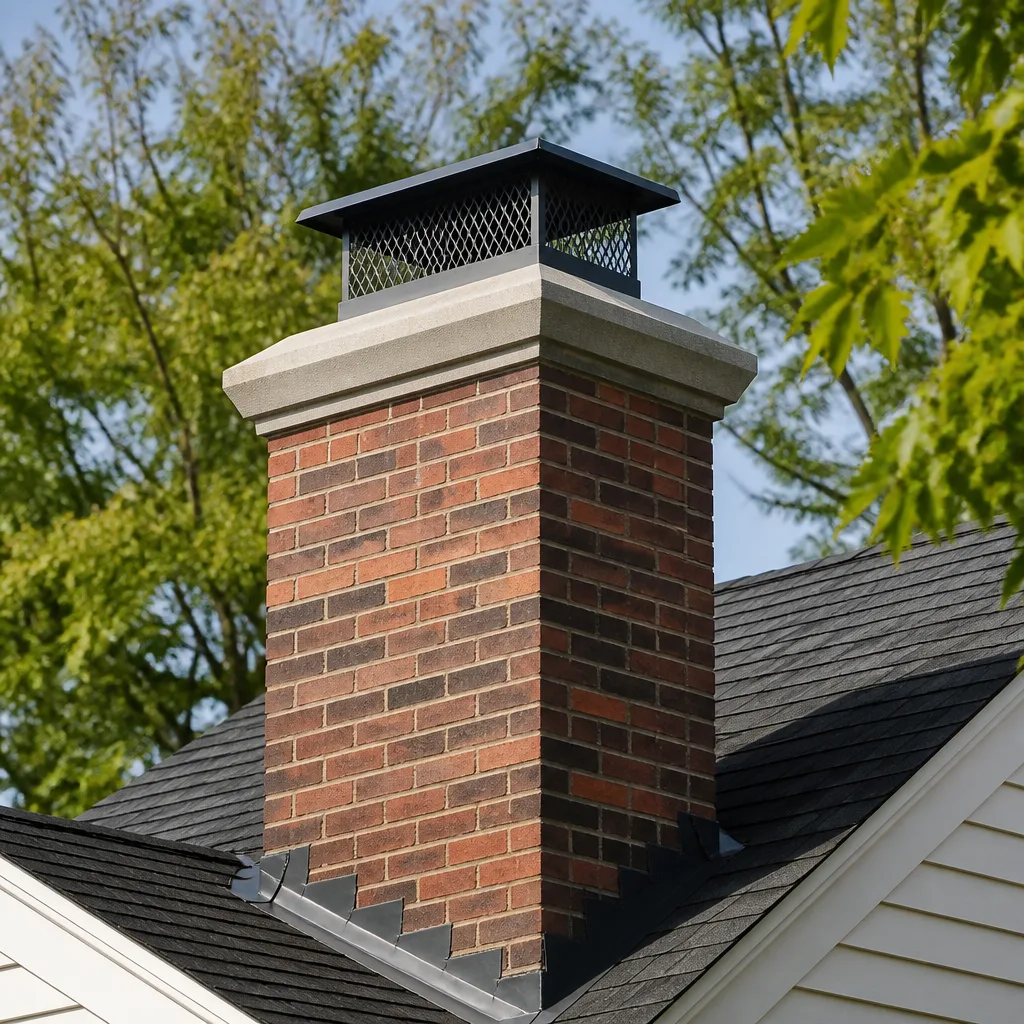
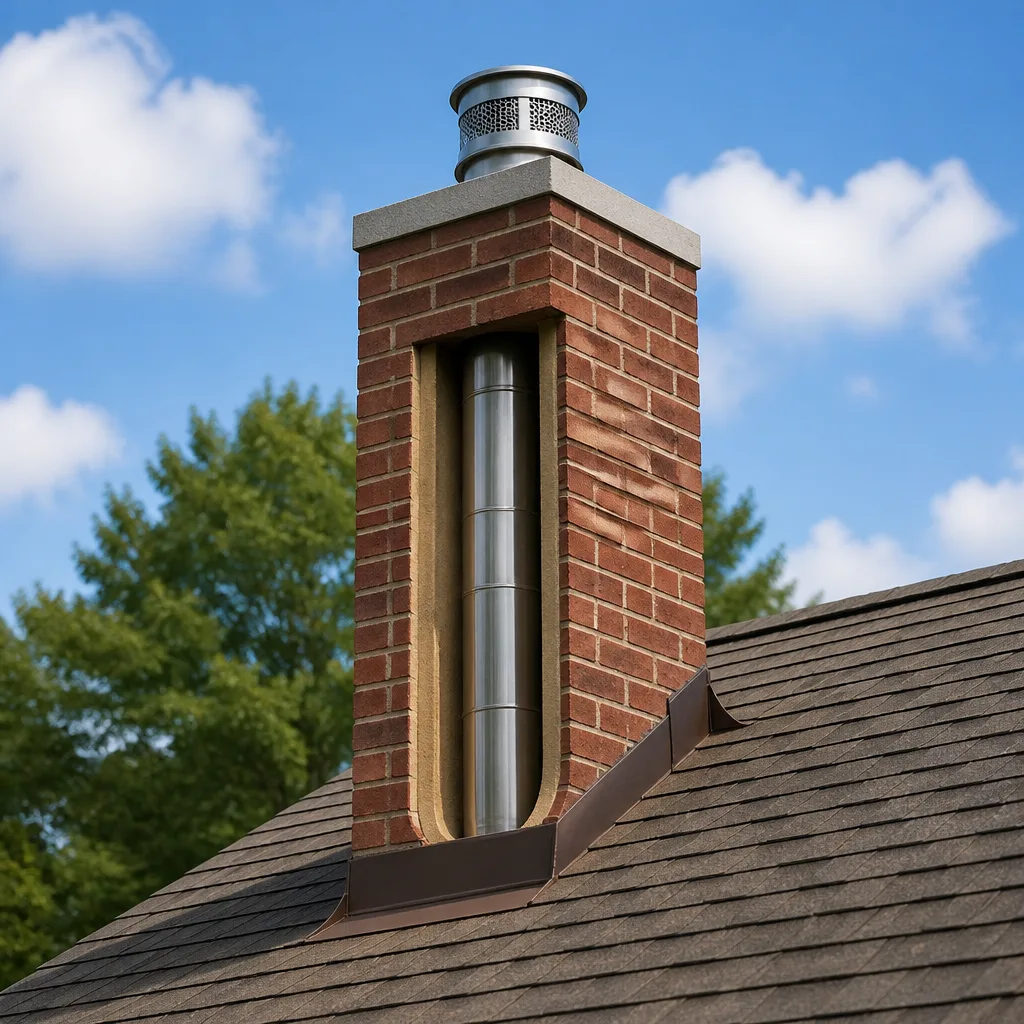
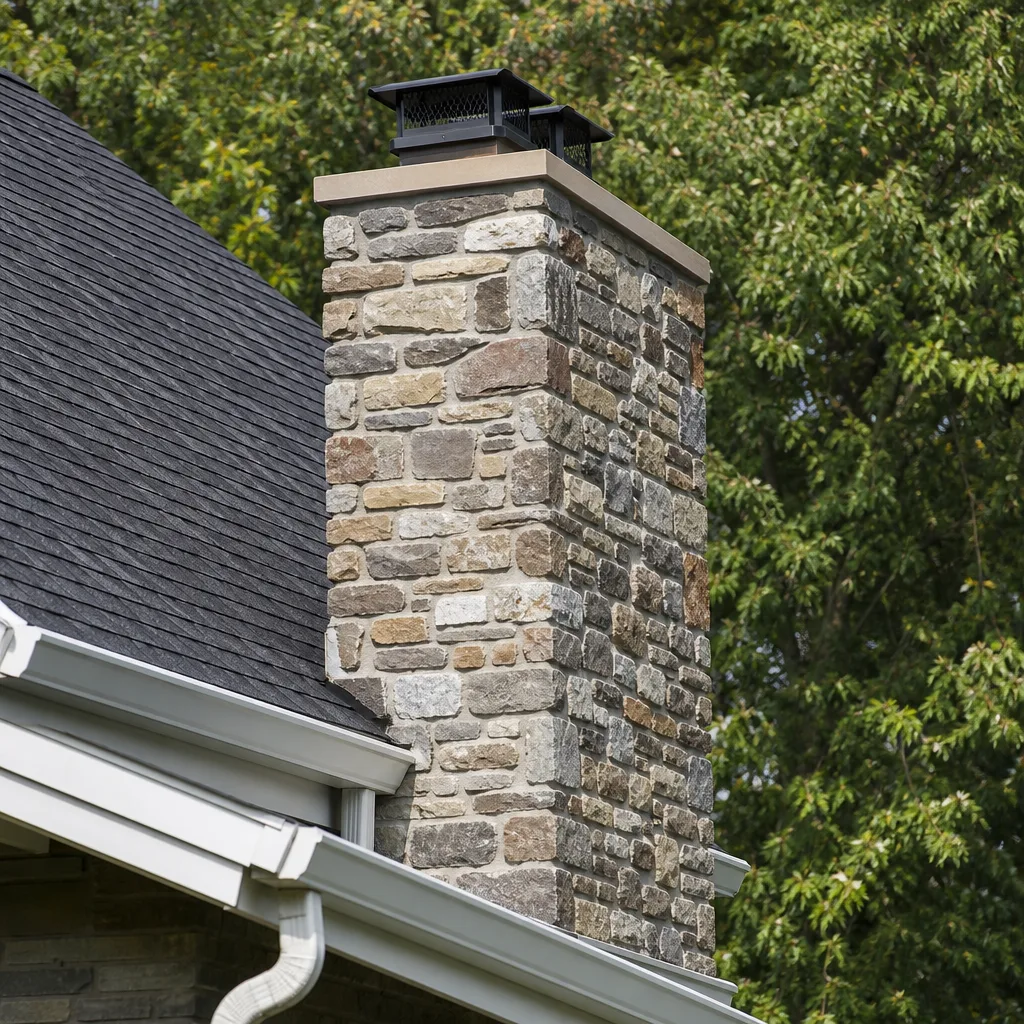
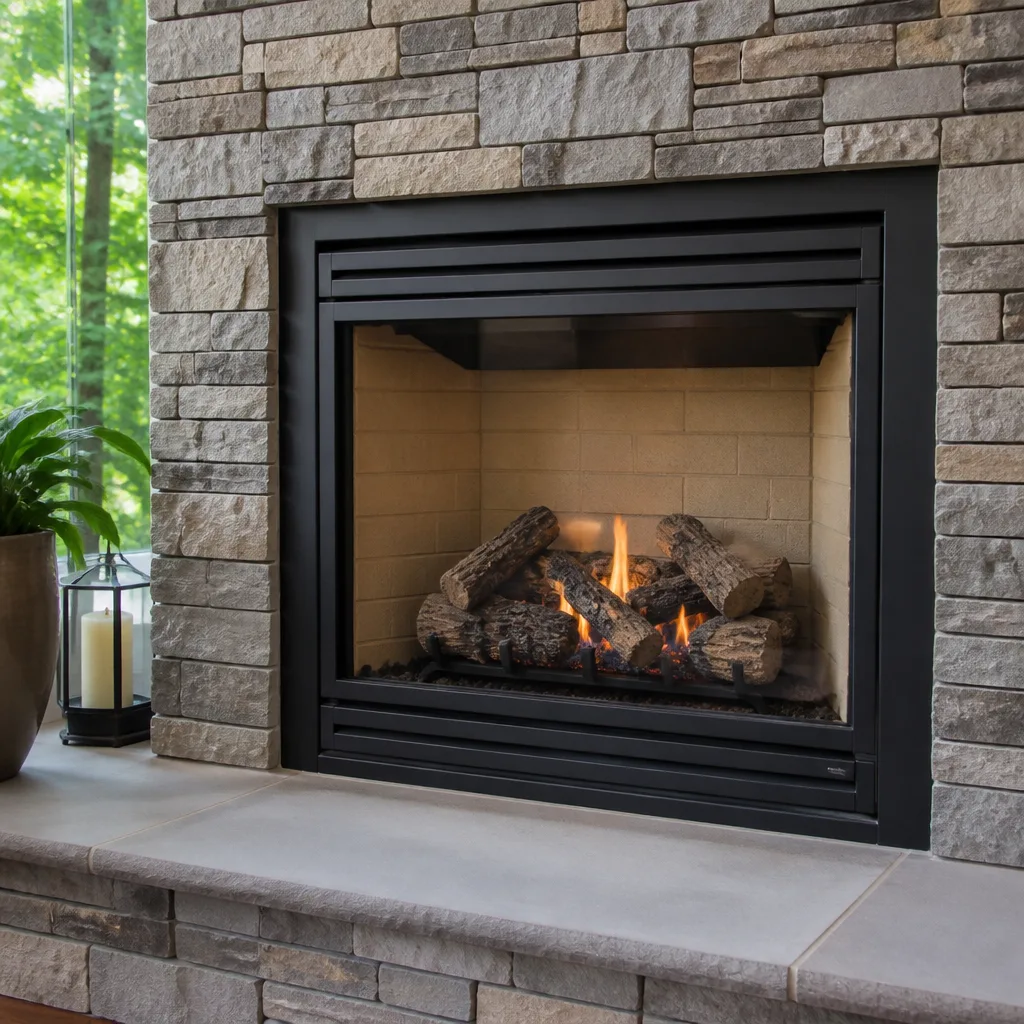
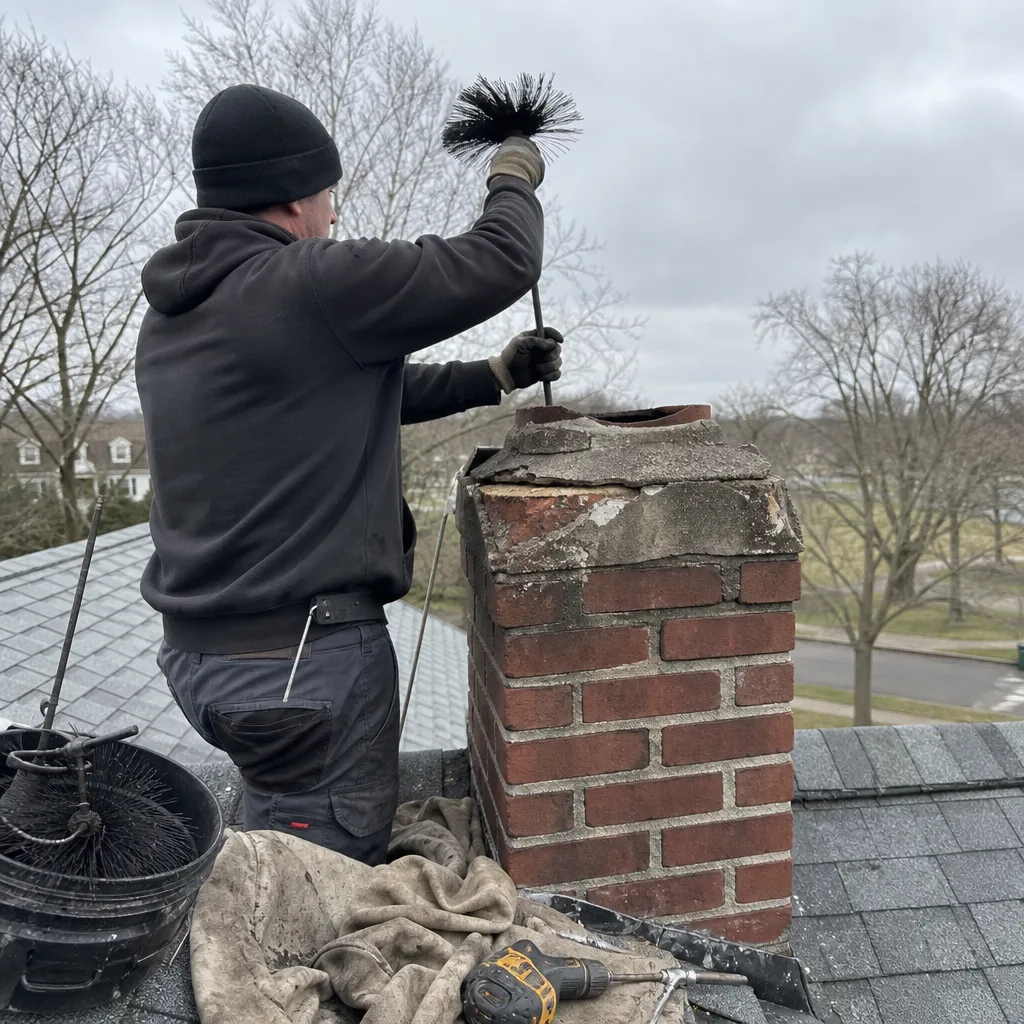 Before
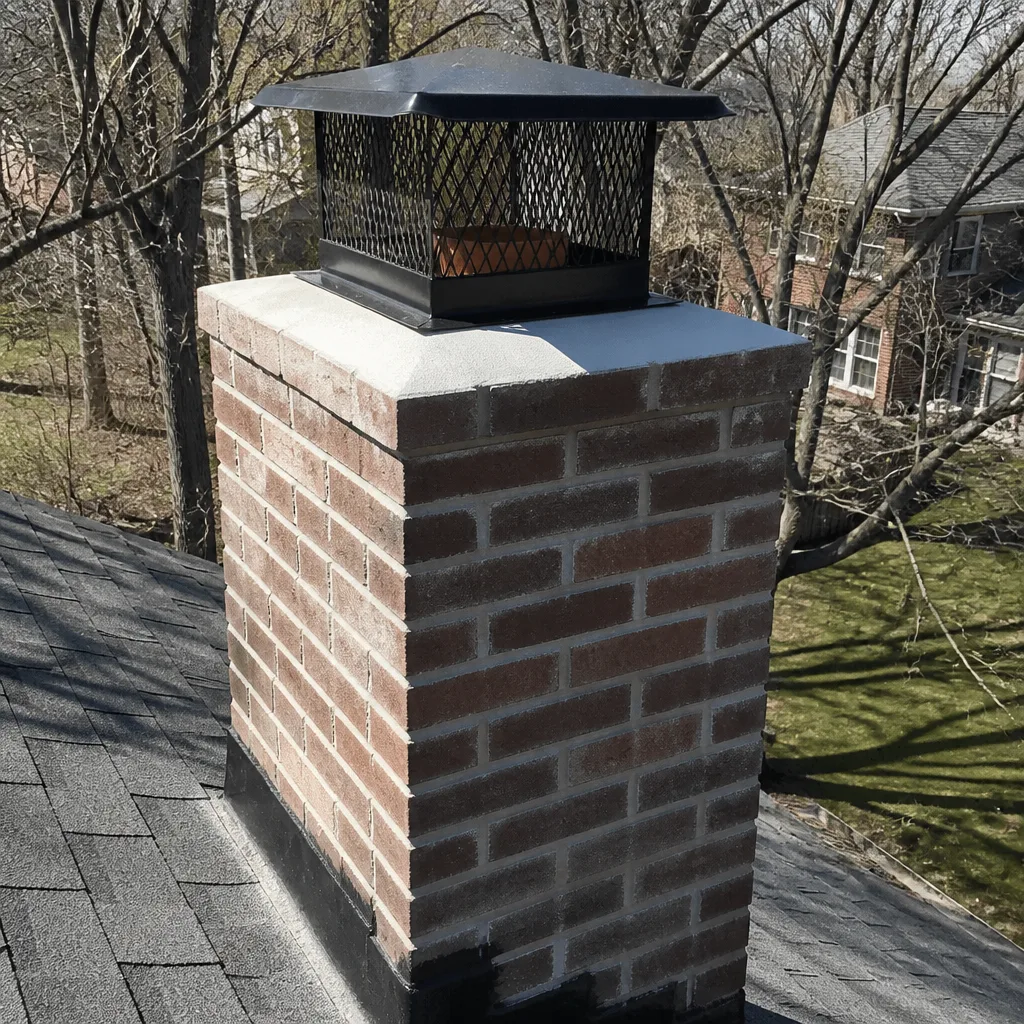 After
After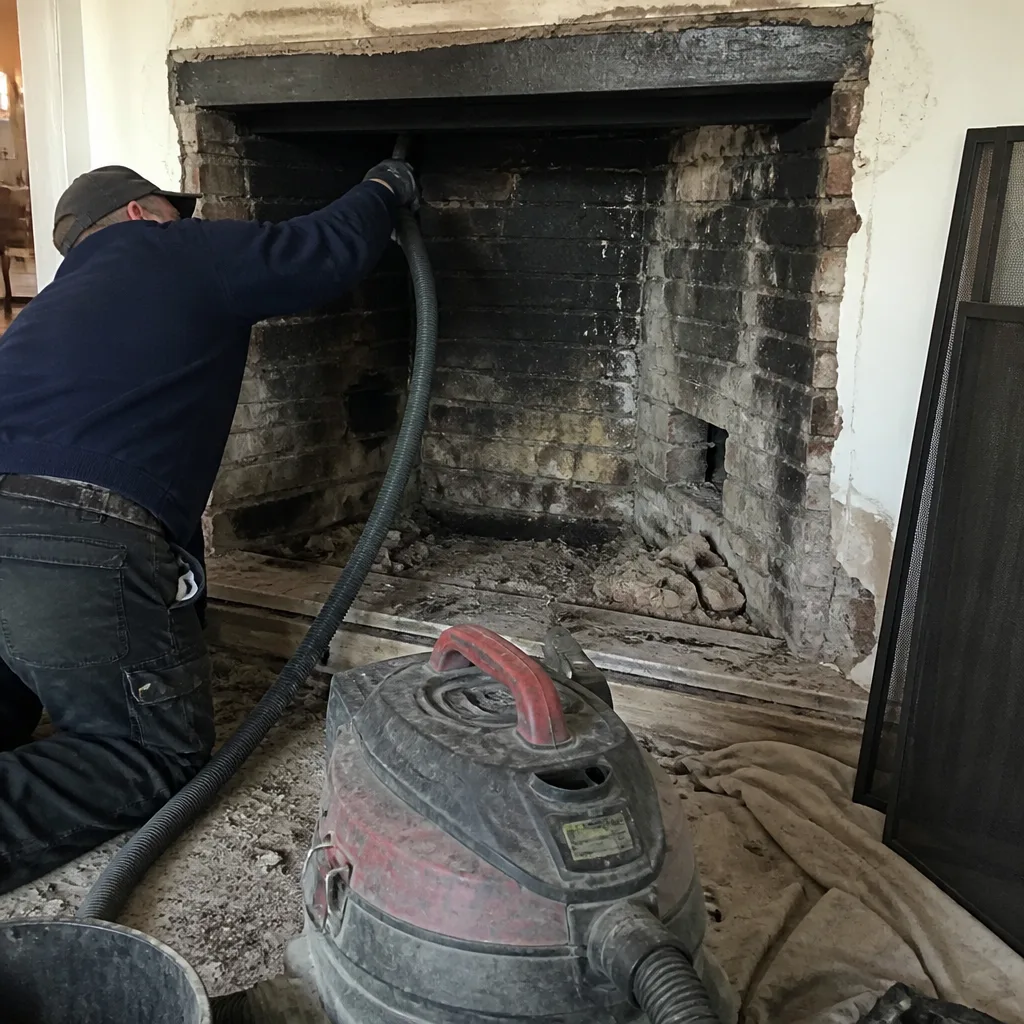 Before
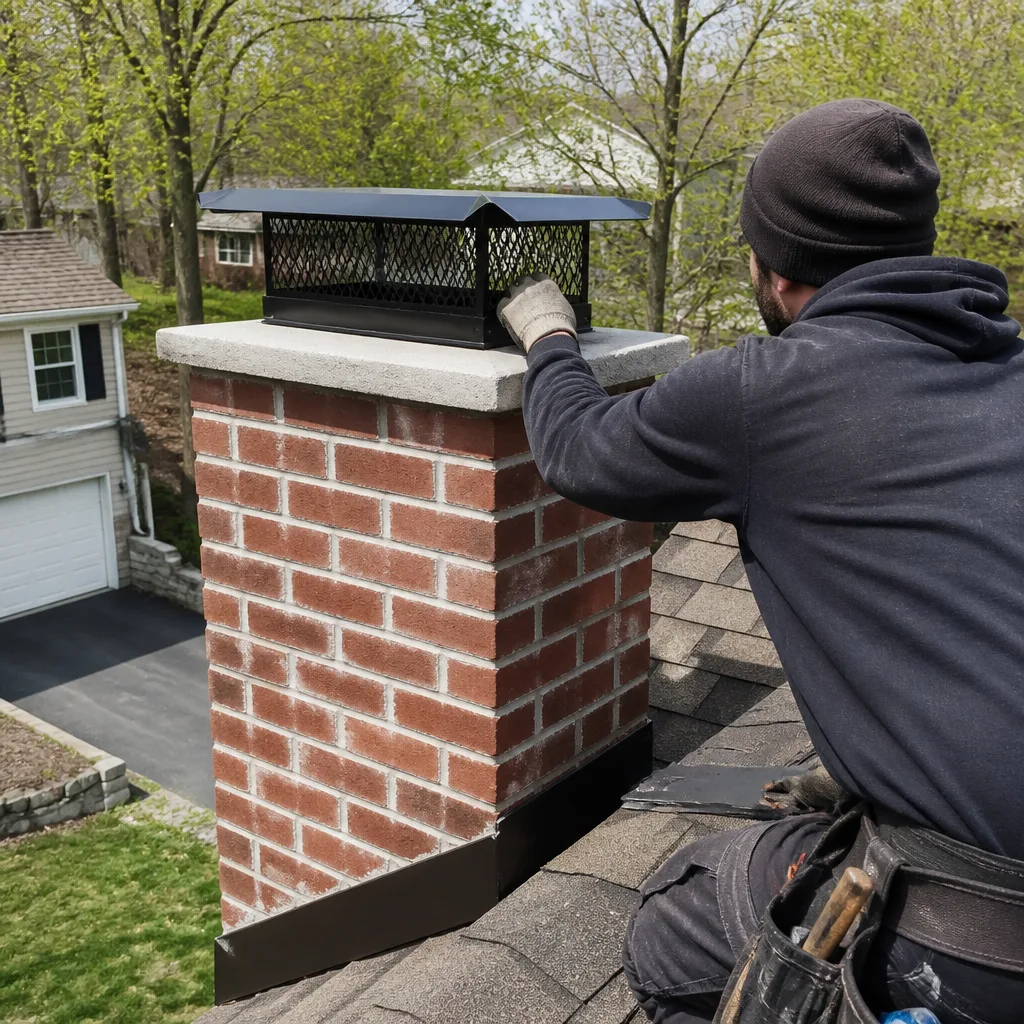 After
After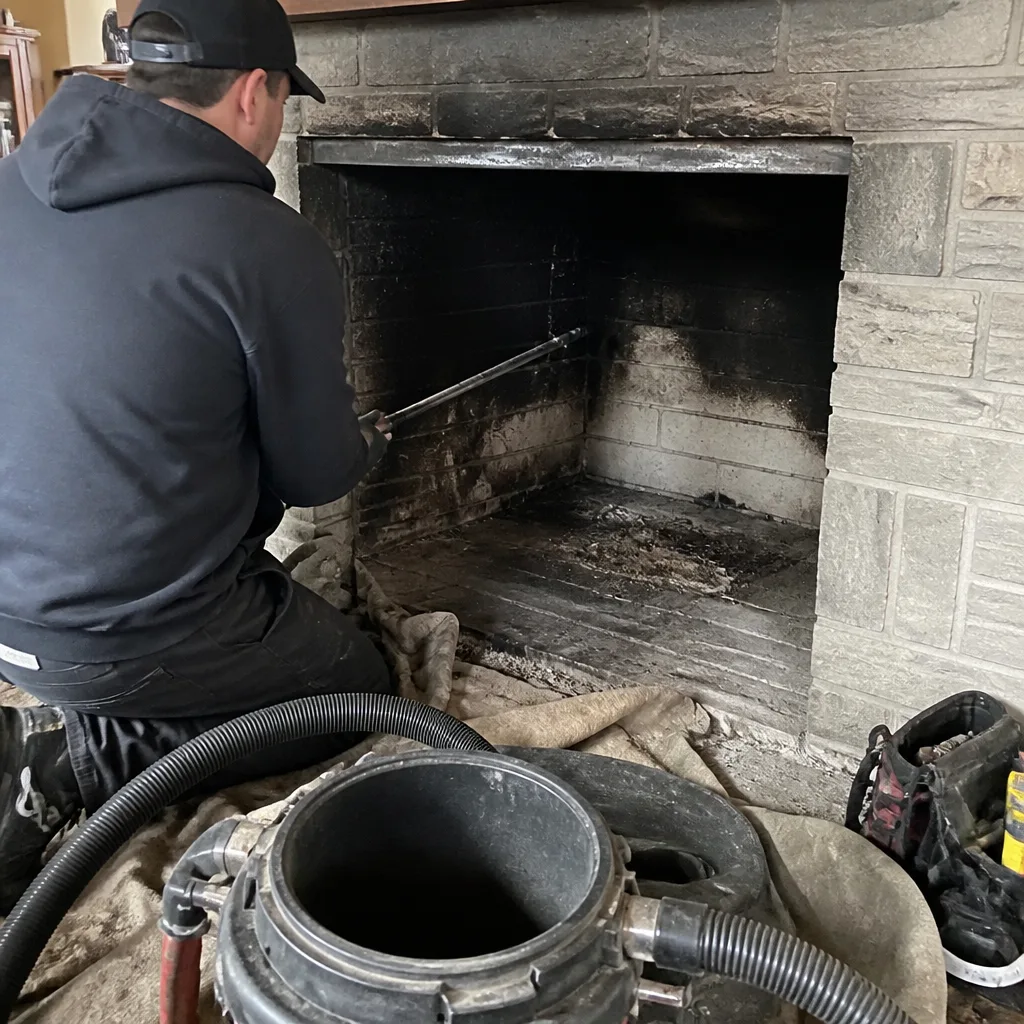 Before
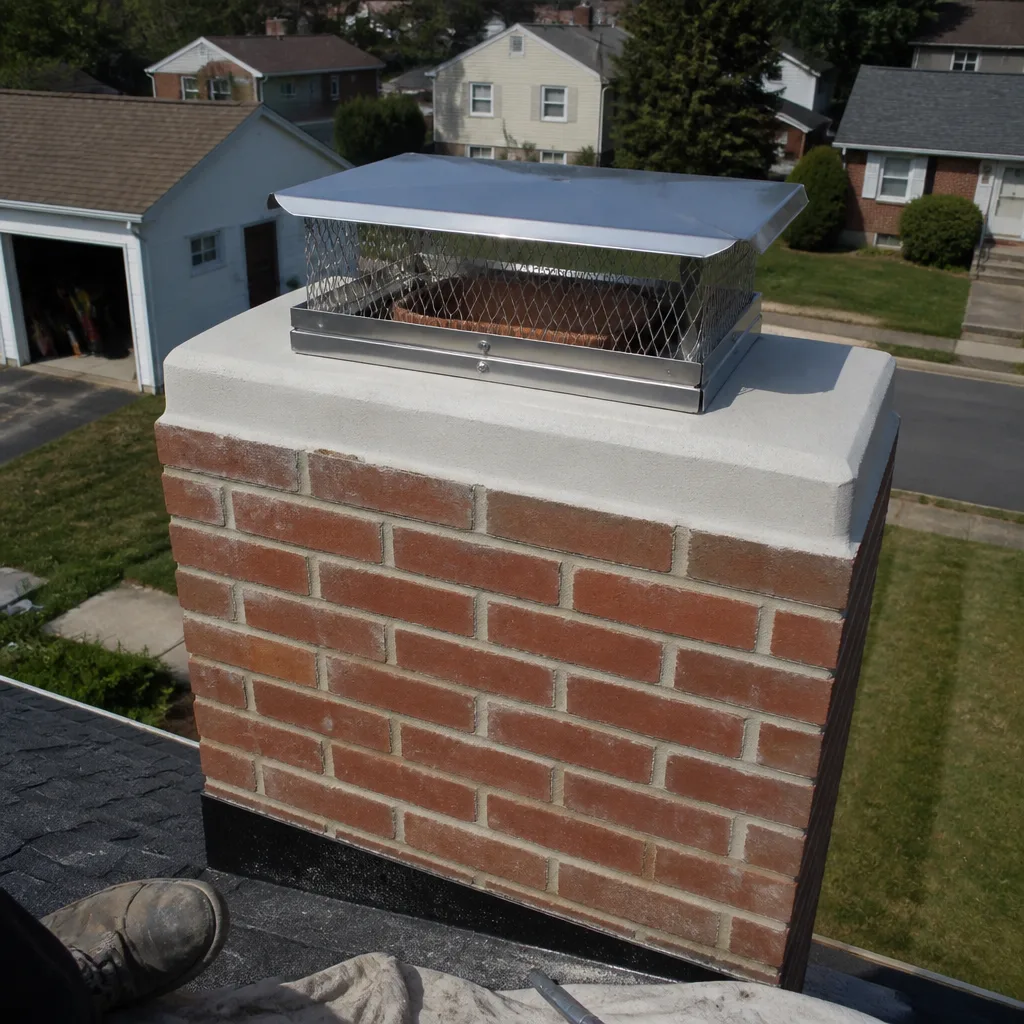 After
AfterOlympia Chimney Crown Repair: The Reading Owner’s Guide
Olympia Chimney crown repair in Reading typically runs $450 to $900 installed, depending on how much of the old crown has to come off and whether we’re rebuilding from the flue tile out or doing a full tear-out and recast. We keep Olympia Chimney-compatible crown materials on the truck, and most jobs in Reading are done in half a day. The way most folks find out their crown is shot is simple: water stains on the ceiling near the chimney, or a chunk of mortar sitting in the gutter after a hard rain. By then, the freeze-thaw cycle in Berks County has been working on that crown for a while.
The crown is the concrete slab that caps the top of the chimney, and its whole job is shedding water away from the flue and brickwork. When it cracks, water gets in, freezes, and pries things apart. Reading winters don’t mess around. Ice expands, cracks widen, and what started as a hairline becomes a spalled mess by spring. If you have an Olympia Chimney system, the crown was poured to fit their specific flue tile and chase dimensions, which matters more than most folks realize.
Key Takeaways:
- Olympia Chimney crown repair in Reading: $450 to $900 installed, typical half-day job.
- We’re an independent local shop, not affiliated with Olympia Chimney, but we stock and install their compatible crown materials every week.
- The crown is your chimney’s first line of defense against Reading’s freeze-thaw cycle.
- Camera inspection and a plain-English verdict come with every crown assessment, at no extra charge.
- Backed by our 90-Day Done Right Promise in writing.
Which Olympia Chimney Models This Applies To
Olympia Chimney produces a range of prefabricated and masonry-compatible systems, and the crown situation depends on which one you have. For their masonry chimney components, the crown is a site-poured or pre-cast concrete cap sized to the outside dimensions of the chimney and the flue tile opening. For their stainless chase-top systems, the crown is a fabricated metal cap with a formed drip edge, and it mates to specific chase dimensions, not just the flue pipe. The compatibility gotcha we see in Reading all the time: a homeowner buys a universal crown form at a big-box store, sizes it to the flue, and never accounts for the overhang or the drip edge. Water runs back under it and straight down the chimney face. Olympia’s own spec calls for a minimum 2-inch overhang beyond the brick face and a drip kerf cut beneath the edge. That kerf is what breaks the water’s surface tension so it drips off instead of curling back. Miss that, and you’ve bought yourself a crown that fails in two Reading winters.
To identify what you need, start with the flue tile measurement, not the brick. Olympia systems commonly pair with 8×8, 8×12, or 13×13 flue tiles. Measure the outside of the tile at the top, then measure the full outside dimension of the chimney chase or brick column. If you have a pre-cast Olympia crown that’s cracking, we can often recast it in place; if it’s the fabricated chase-top style, the whole pan usually gets replaced rather than patched. On the OEM-versus-aftermarket question: for concrete crown work, there’s no meaningful difference between Olympia-branded crown material and a properly mixed, properly tapered crown built to their dimensional spec with a good acrylic bonding agent. What matters is the installation geometry and the weather resistance of the mix. For the fabricated metal chase tops, we prefer the actual Olympia replacement when it’s available, because the punch-outs for the flue and the anchor points are already set to the chase. A universal aftermarket pan in the same gauge works, but whoever installs it has to field-modify the openings, and most won’t take the time. That’s the kind of corner that shows up as a rust line two years later.
We’re proud to be an independent service provider; we’re not the Olympia Chimney factory and we don’t claim to be. We install their products and match their specs because they’re good products, and because a crown built to the spec on day one is a crown you won’t think about for twenty years.
Signs Your Olympia Chimney Crown Repair Is Failing
- Chunks of mortar or concrete in the gutter or at the base of the chase. That’s called spalling, and it means water got into the crown, froze, and popped the surface loose. Once spalling starts, it accelerates: more surface area, more water entry, more freeze damage. In Reading, a spalled crown left over two winters usually means brick face repairs below it the following spring.
- Water stain running down the chimney face or discoloration just below the crown line. Water tracking down the outside of the brick means the drip edge isn’t doing its job. It’s either missing, too shallow, or the overhang is too short. The water runs down, saturates the brick, and freezes there. In our climate, that’s a slow wreck.
- Efflorescence: white powdery deposits on the brick, especially above the roofline. Efflorescence happens when water moves through masonry and pulls soluble salts to the surface. It’s a tell that the brick is getting wet from above, not from rain on the face. If you see it near the top of the chimney, the crown is the prime suspect.
- Crumbling joints in the top three or four courses of brick. Weight and water load hit hardest right below a failing crown. The mortar joints soften, then erode. By the time a whole brick wiggles, the crown has been leaking for a while.
- Drafts or a persistent damp smell near the fireplace after rain. Water that gets past the crown travels down through the flue or the space between the flue and the chase. You smell it before you see it. It means the chimney is wet inside, and a wet flue degrades the liner and accelerates creosote adhesion when you burn.
Replacement Cost & What’s Included
In Reading, a crown rebuild on an Olympia Chimney masonry system runs $450 to $900 installed. The range comes down to three things: the size of the chimney, the condition of the top courses of brick, and whether the old crown has to be fully chipped out or can be bonded over after proper prep. A simple recast on a smaller flue with solid brick below it lands near the low end. A full tear-out with brick repair, a new bond coat, and a formed crown with the best drainage geometry for that chimney is at the top. If the flue tile itself is cracked, that’s a separate line item and we’ll show it to you on camera before we touch anything.
What’s included on every crown job: removal of the damaged crown material, prep and bonding of the existing surface, a properly sloped crown built to shed water away from the flue, the 2-inch overhang and drip kerf, integration of any existing spark arrestor or cap mount, and a full cleanup. You’ll get the camera footage of the before and after, every time, no exceptions. We price the job before a single tool comes off the truck, and the number you hear on the phone is the number on the invoice. No trip charge if you’re inside the county. And the work itself is covered by our 90-Day Done Right Promise: if it’s not done right, one call brings Wendell and his crew back, no charge, no argument.
DIY or Call Us?
There are two kinds of people in Reading: the ones who’ve been up on a chimney crown and the ones who are about to find out why we charge for it. You can safely do a visual check from the ground or a ladder if you’re a confident ladder person: look for the obvious stuff, the cracks, the missing chunks, the white staining. What you can’t do from the ground is assess whether the crown is bonded to the brick, what’s happening under the surface, or whether the flue tile core is still intact. And a crown that’s cracked but still in place looks fixable to a homeowner; half the time, the bond underneath is gone and the whole thing is floating. We’ve seen plenty of patch jobs around Reading where someone smeared a bag of mortar over a dead crown and called it done. It fails. The freeze cycle in this county is relentless, and mortar smeared over an unbonded slab has no mechanical strength. It’s a 30-dollar fix that buys you six months and makes the real repair cost more when it fails, because now we’re removing the patch too.
If the damage is a small hairline crack and the crown is under five years old, a high-quality flexible sealant can extend its life for a season or two. That’s a legitimate stopgap. Anything beyond that, you call us. We’ll put a camera up there, show you exactly what we’re seeing, and give you a price before anything gets chipped. If it doesn’t need doing, I’ll be the first one to tell you. Call (484) 209-0837 and set up an assessment. No trip charge inside the county, and we’ll beat any written estimate you’ve got or offer a second opinion free.
How much does Olympia Chimney crown repair cost in Reading?
Olympia Chimney crown repair in Reading typically costs $450 to $900 installed, depending on chimney size, brick condition, and whether the old crown needs full removal or can be bonded over after proper prep. The lower end covers a recast on a smaller flue with solid brick; the upper end covers a full tear-out with brick repair and a formed crown with proper overhang and drip edge. Call (484) 209-0837 for an exact quote, and we’ll do a free assessment with camera proof.
How long does an Olympia Chimney crown last in Reading?
In Reading, a properly built Olympia Chimney crown lasts 15 to 25 years; one with short overhang or no drip kerf often fails in under 5. The freeze-thaw cycle in Berks County is the limiting factor, and the difference between a two-decade crown and a five-year crown is usually drainage geometry and the quality of the bond coat underneath. We build for the long end of that range, because redoing this work at Reading prices means doing it once and leaving it done.
Can you patch a cracked Olympia Chimney crown instead of replacing it?
A hairline crack in a crown under five years old can often be sealed with a flexible, high-bond sealant and get another season or two; a crown with spalling, missing sections, or a broken bond underneath needs a recast, not a patch. Smearing mortar over a dead crown just gives the freeze cycle more surface area to work on. We’ll tell you which one you have after we see it, and we’ll show you the camera footage so you’re not taking our word on faith.
How long does an Olympia Chimney crown repair take?
Most Olympia Chimney crown repairs in Reading take half a day from setup to cleanup, including the before-and-after camera work. If brick repair below the crown is needed, add a few hours and sometimes a return trip depending on weather and mortar cure times. We schedule the job around the forecast, because crown work needs a dry window to bond right.
Do you stock Olympia Chimney crown replacement parts?
We stock the crown forms, bonding agents, and reinforced mix we need for Olympia Chimney-compatible masonry crown work, and we can usually source Olympia fabricated chase-top replacements within a few days for the prefab systems. We also stock and service components from DuraFlex, HeatShield, and Gelco, so if the crown work turns into a liner or chase-top conversation, we’re not sending you around town. The question is never whether we can get the part; it’s whether that part is the right fix for your particular chimney. We’ll tell you the truth either way.
Written by Wendell Pike, Owner, Top Hat Chimney at Top Hat Chimney, serving Reading and nearby areas.