
Level 1 sweep and inspection to the NFPA 211 annual standard - flue, crown, cap, and flashing checked and photographed
Chimney sweep logs do not sweep chimneys. They loosen some creosote - which then falls where a brush and vacuum still have to collect it.
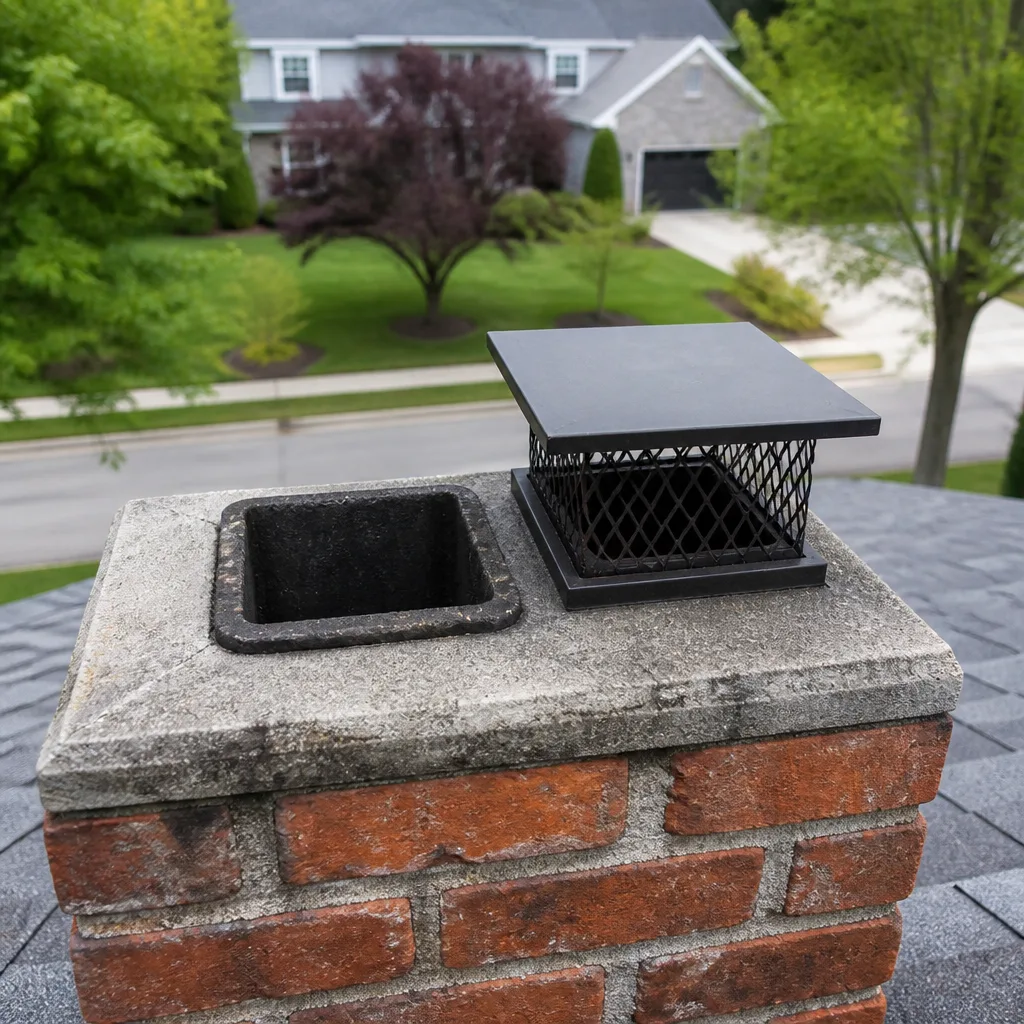
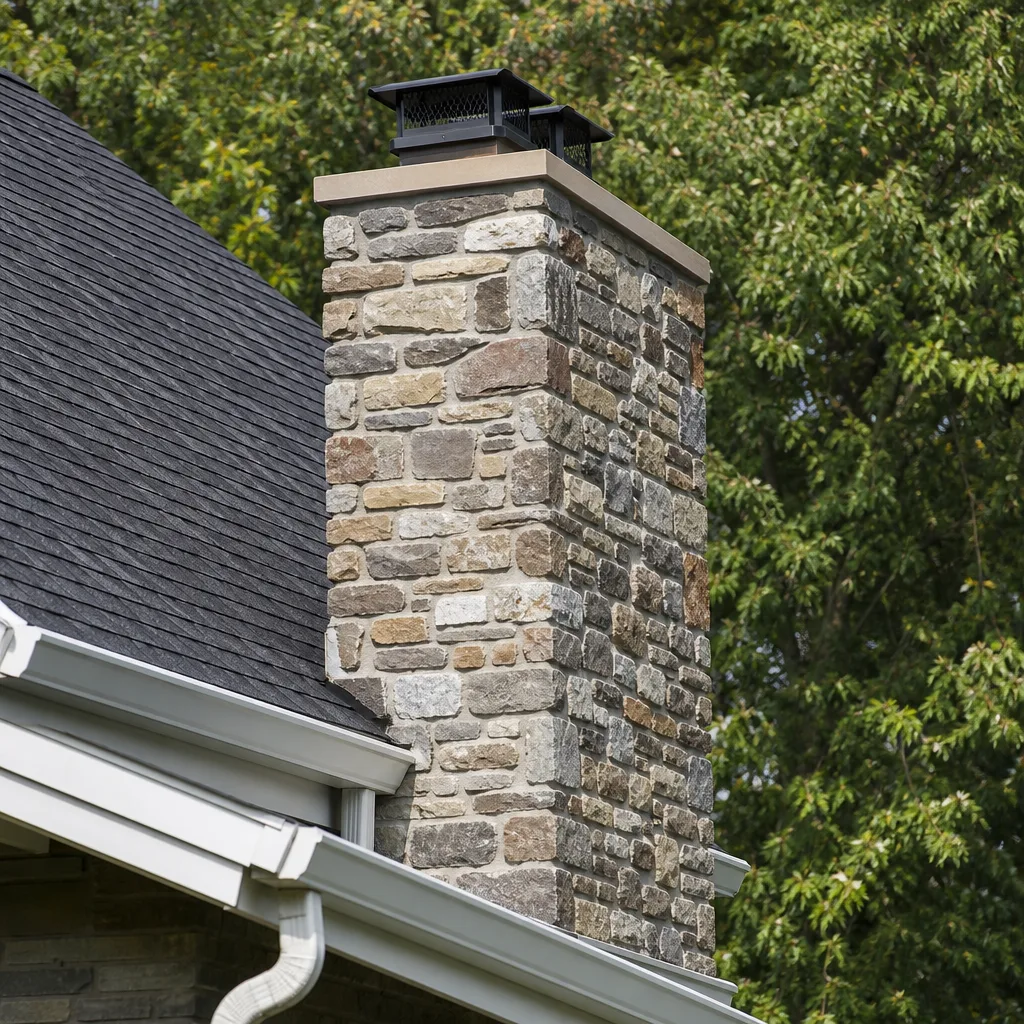
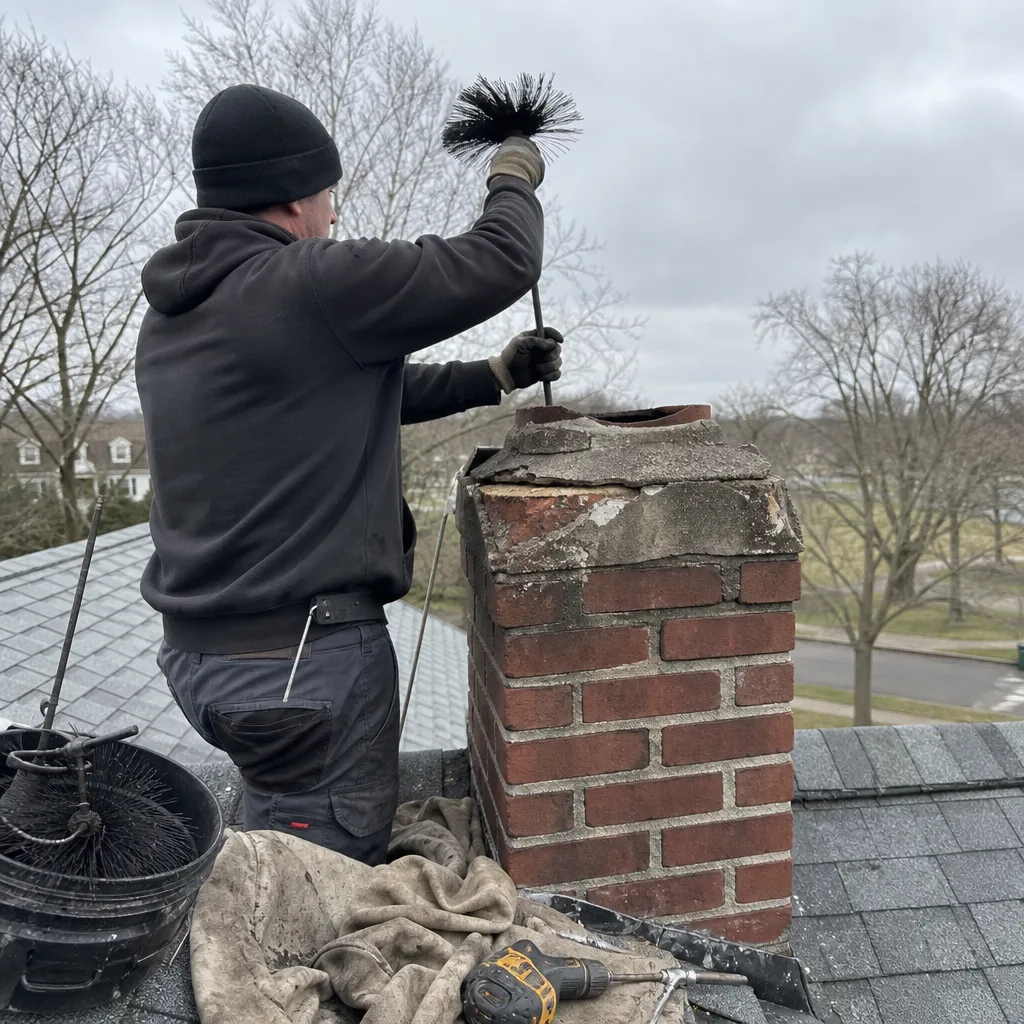 Before
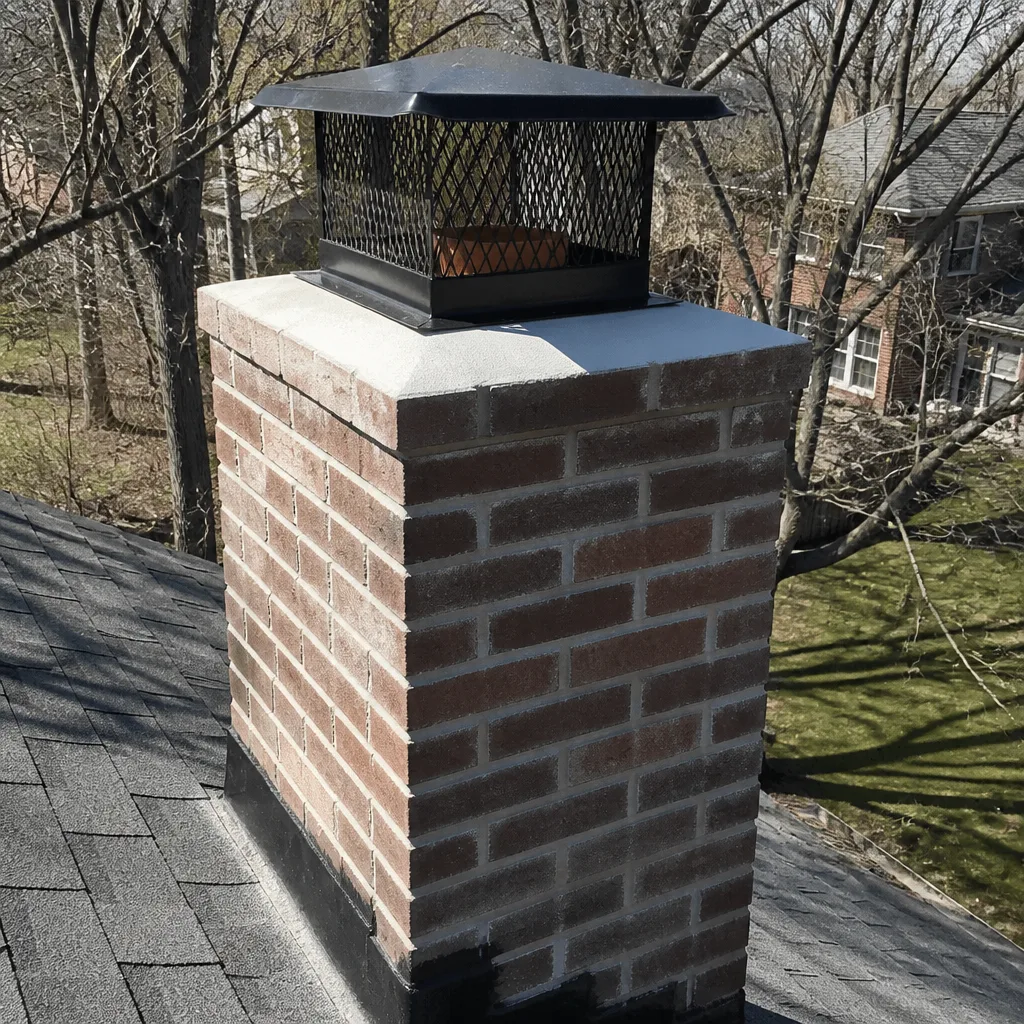 After
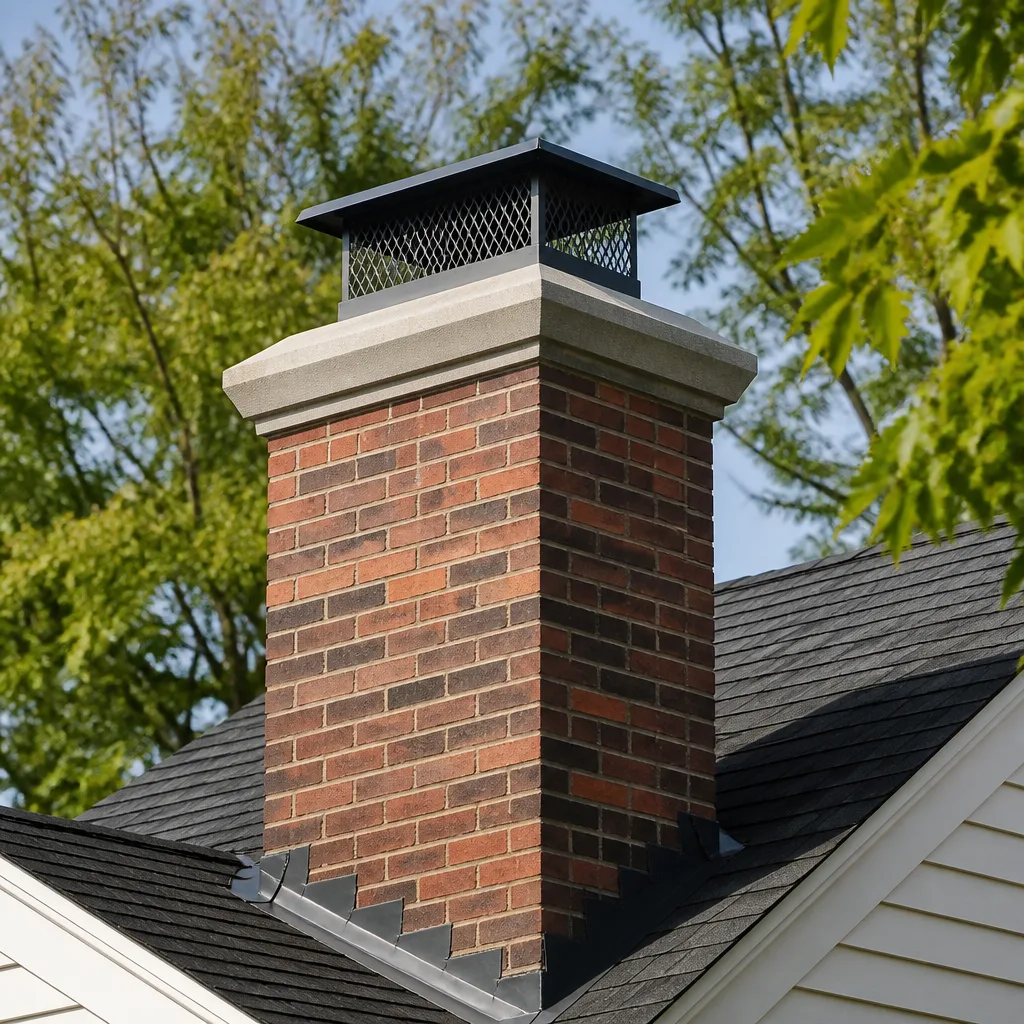
After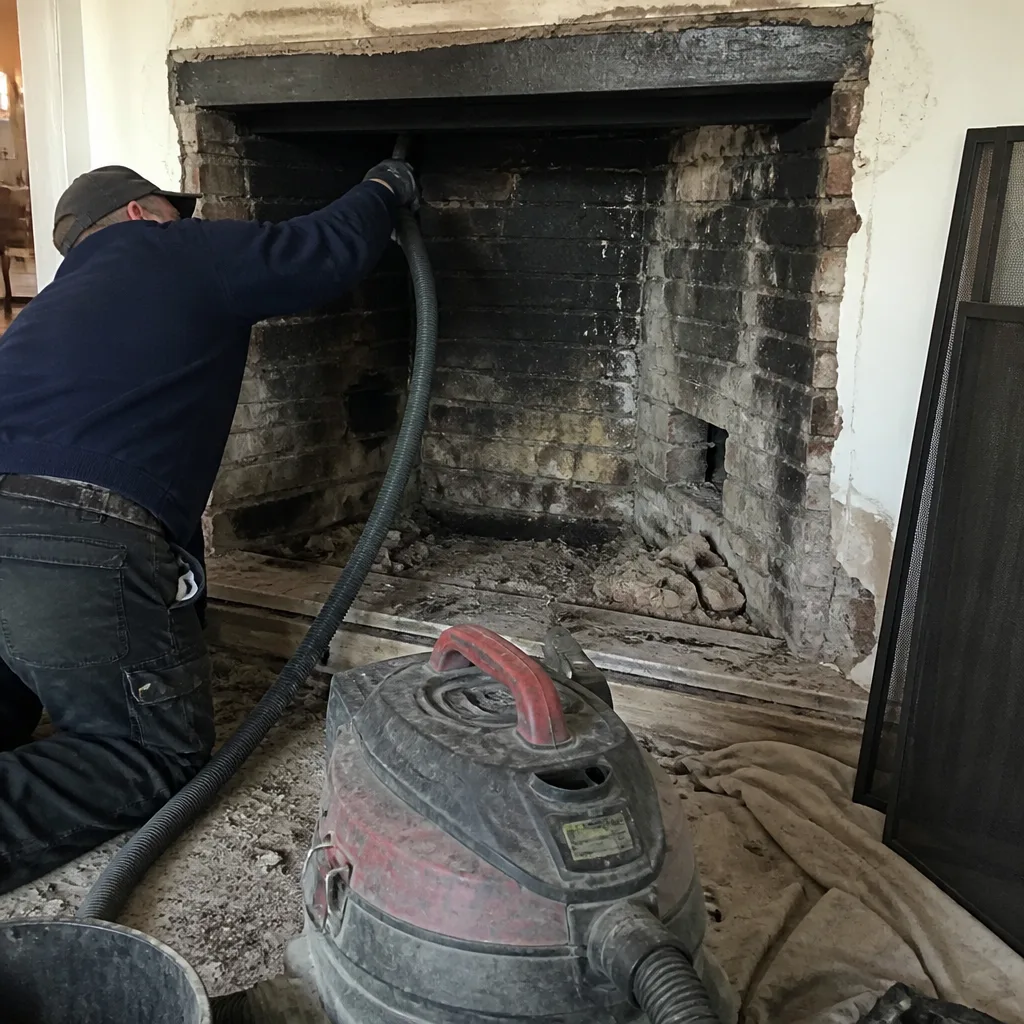 Before
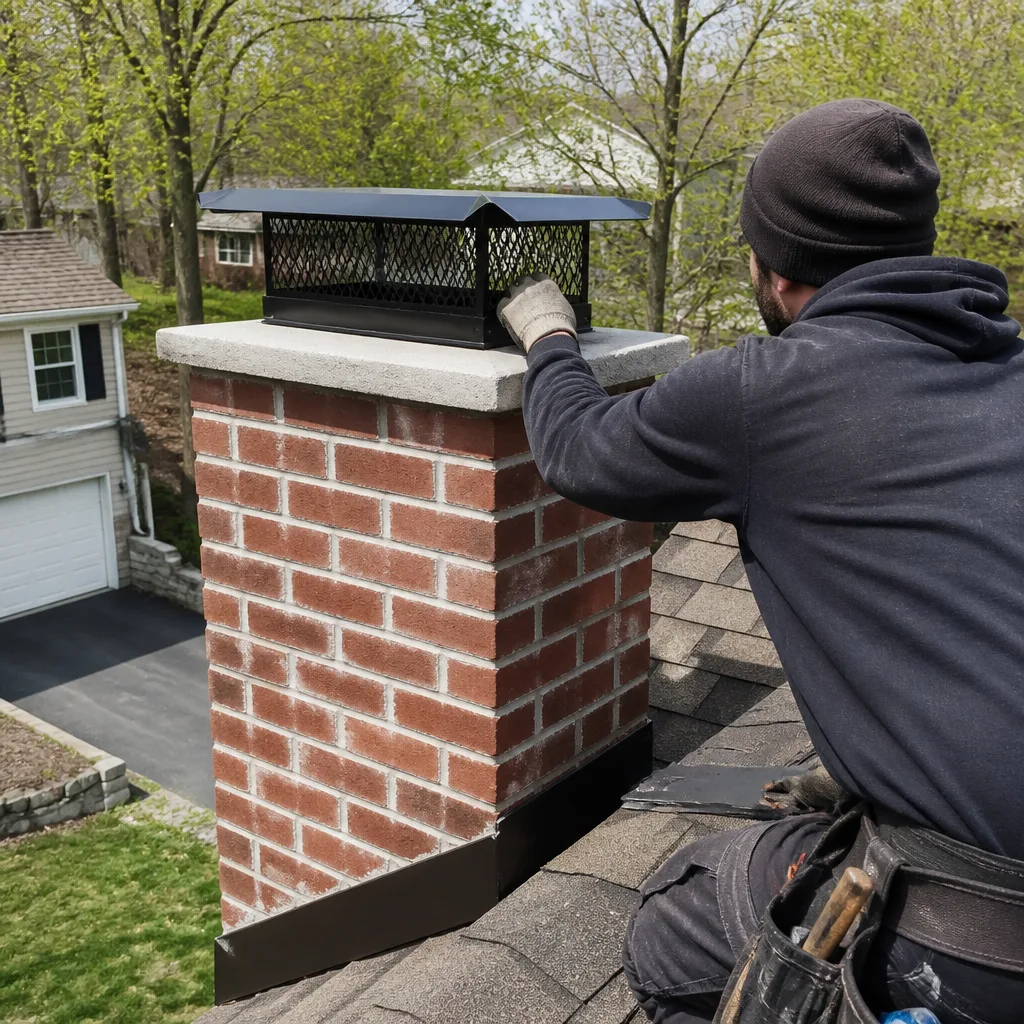 After
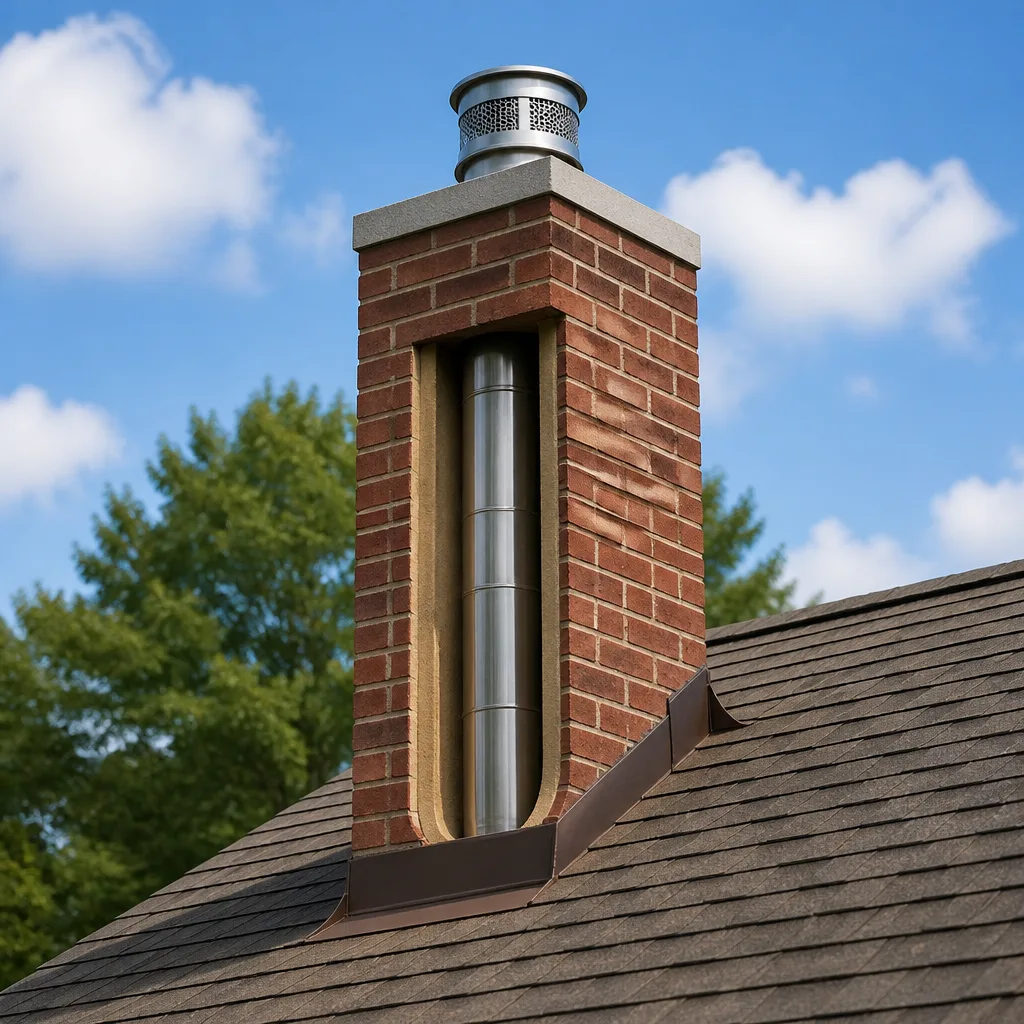
After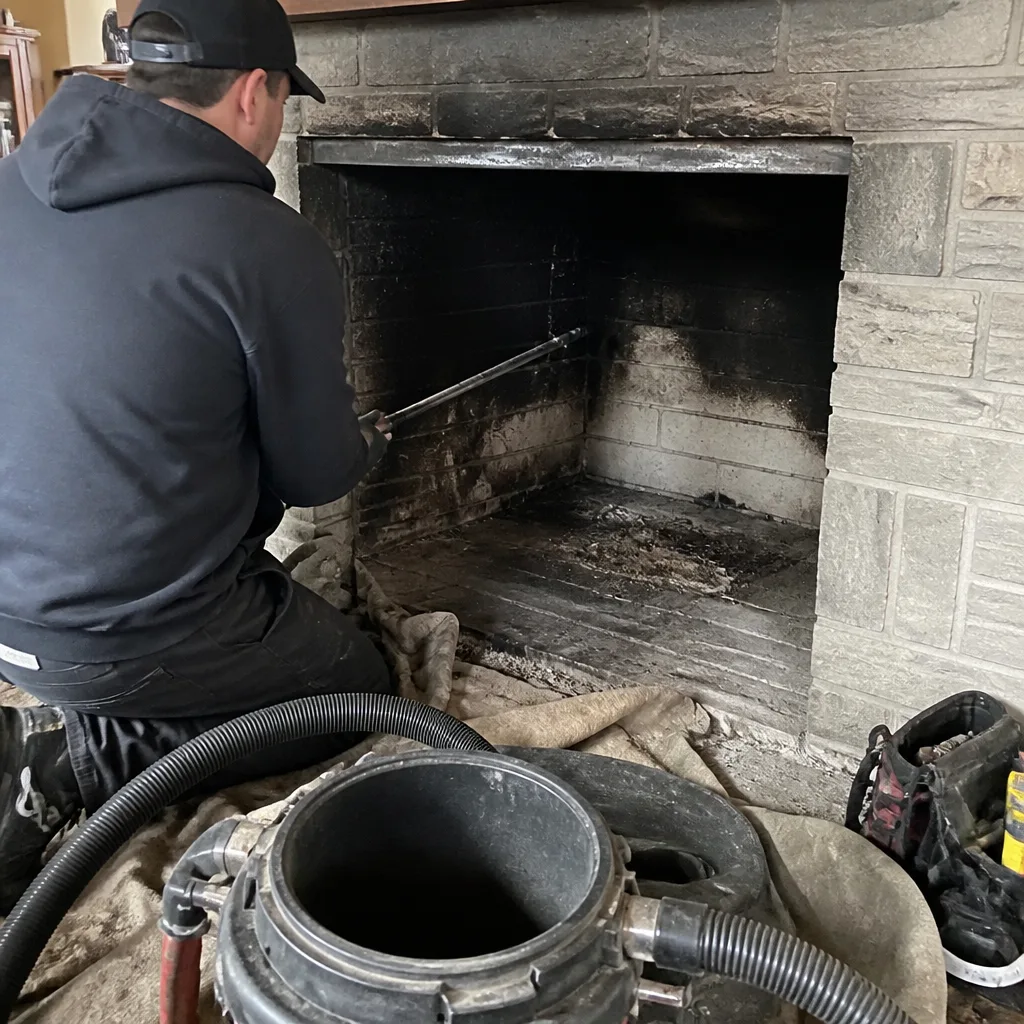 Before
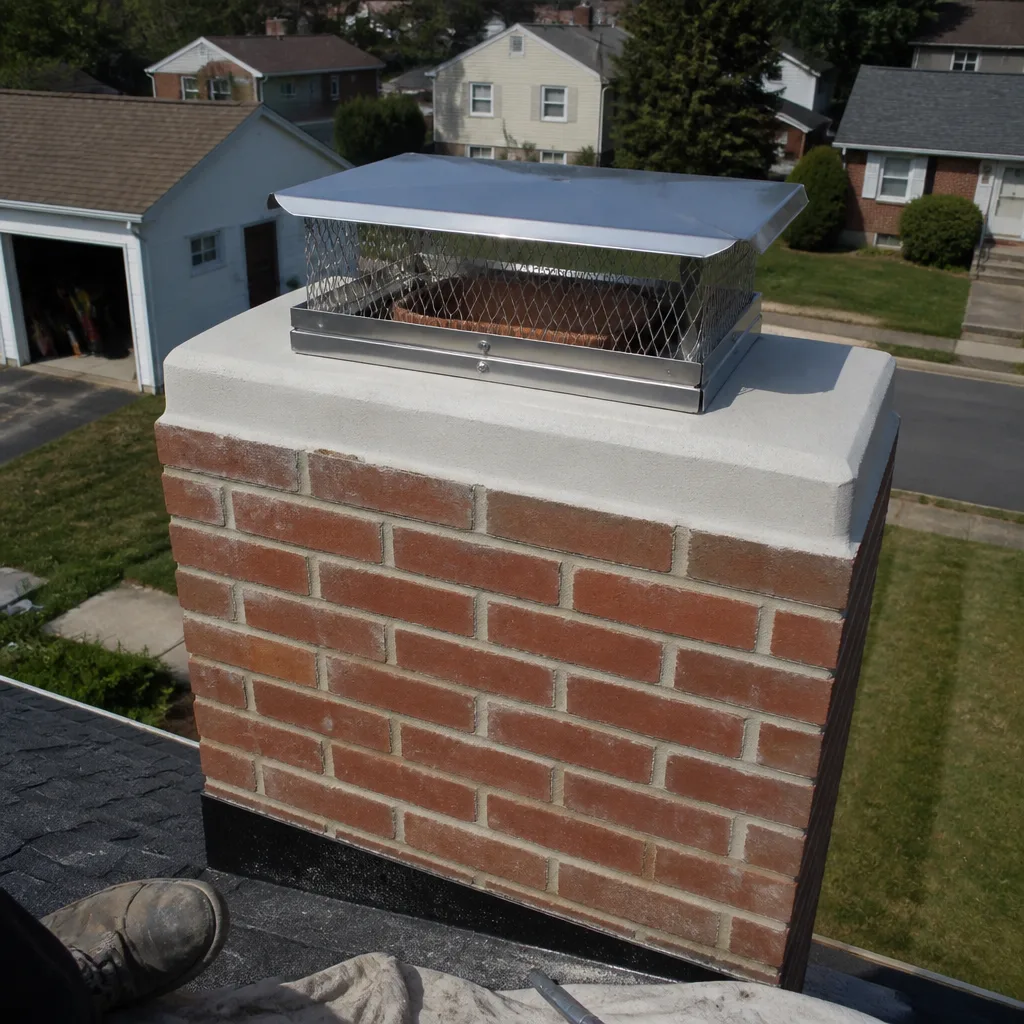 After
AfterHow Much Does Chimney Cap & Crown Cost in Reading?
In Reading, PA, a standard chimney cap installation runs $150 to $450 depending on flue size and material, while Chimney Cap & Crown repair or replacement typically falls between $250 and $1,200. Most homeowners in Berks County pay somewhere in the middle of those ranges – a galvanized single-flue cap and a crack-sealed crown on a standard two-story colonial lands around $400 to $600 total when we do both in the same visit.
If you want a number before anyone climbs a ladder, call Top Hat Chimney at (484) 209-0837 – Wendell or someone who actually knows chimneys will pick up.
Chimney Cap and Crown Cost Breakdown (2026)
Here is how the numbers break down for the Reading market as we head into 2026. These are the prices homeowners in neighborhoods like Wyomissing, Mount Penn, and Shillington actually pay – not the phone-quoted lowball that doubles when the truck rolls up.
| Service | Typical Price Range (Reading, PA) | Notes |
|---|---|---|
| Single-flue galvanized cap (supply + install) | $150 – $250 | Most common for gas inserts and older mid-century homes |
| Single-flue stainless steel cap (supply + install) | $220 – $375 | Better corrosion resistance for wood-burning flues |
| Multi-flue cap (stainless, 2-3 flues) | $350 – $600 | Common on older Victorian-era homes in the Hill districts |
| Copper chimney cap (supply + install) | $500 – $950 | Preferred on historic homes in Wyomissing and West Reading |
| Crown inspection only | $75 – $125 | Often rolled into a full chimney sweep appointment |
| Crown crack sealing / waterproofing (minor) | $250 – $450 | CrownCoat or equivalent flexible sealant applied in one visit |
| Crown rebuild (partial – severe cracking, spalling) | $500 – $900 | Mortar form rebuilt, cure time required before rain |
| Full crown replacement (demolish and pour new) | $850 – $1,200 | Needed when crown has separated from flue or failed structurally |
| Cap + crown repair combo (same visit) | $400 – $750 | Best value – saves a second trip charge and staging time |
A few things push those numbers toward the top of the range. Steep-pitch roofs – and Reading has plenty of them, especially in the older Hampden Heights and Northeast Reading neighborhoods – add time and require additional safety rigging. That is real labor with real cost. Chimney height matters too: a two-story colonial with an 8-foot chimney above the ridge is a different job than a three-story row home on Perkiomen Avenue. Brick chimneys that have been losing mortar around the crown for a season or two sometimes need pointing before a new crown will bond properly, which adds $100 to $300 depending on how many courses need attention.
On the low end, plenty of jobs stay modest. A homeowner in Sinking Spring who caught a hairline crown crack during a routine sweep last spring paid $280 for a flexible elastomeric coat and a new stainless single-flue cap. That is a good outcome – because she called before the freeze-thaw cycle had a chance to open that crack into a real problem.
Senior and veteran discount: Top Hat Chimney takes 10% off for seniors and veterans on every job, every time. And if your repair clears $200, there is a standing $40 off coupon that applies on top of that.
What Affects Chimney Cap and Crown Pricing in Reading
Reading sits in a climate band that is genuinely hard on masonry. Berks County averages around 30 freeze-thaw cycles per winter – not as brutal as the Poconos, but enough that water that got in through a cracked crown in October becomes a spalled chimney breast by March. Here is what actually moves the price needle on a cap or crown job in this market:
- Flue size and count: A single 8×8 terra cotta flue liner is the easiest scenario. A double-wythe chimney with two 13×13 flues serving a fireplace and a furnace – like you find constantly in Shillington split-levels built in the 1960s – needs a larger cap footprint and more custom fabrication. Every inch of cap overhang that has to be bent or welded adds to cost.
- Cap material: Galvanized steel is the budget option and works fine for gas appliances where combustion is cleaner. Stainless steel – specifically 304 or 316 alloy – holds up better on wood-burning systems where sulfur and creosote acids accelerate corrosion. Copper is the premium tier, largely because it never needs replacing and looks right on historic architecture. Wendell stocks Gelco and Famco caps specifically because the fitment tolerances are tighter than the box-store alternatives.
- Crown condition and extent of damage: A crown with a single diagonal crack that has not opened wider than 1/8 inch is a sealant job. A crown where you can see daylight between the cap and the flue collar, or where the outer lip has broken away, is a rebuild. A crown that has heaved, settled, or completely separated from the flue tile is a full replacement. Each tier is a meaningfully different job.
- Roof pitch and access difficulty: Many of Reading’s older neighborhoods have steep 8/12 to 10/12 pitches. Work on those roofs takes longer, requires more fall-protection equipment, and limits how fast the crew can move. That labor difference is honest and unavoidable – anyone quoting you a low flat rate without seeing the roof has not accounted for it yet.
- Whether other masonry work is needed first: If the chimney’s mortar joints are soft or the brickwork near the crown is spalling, installing a new crown on top is putting new shingles on a rotten deck. We see this regularly in the older row homes in Centre Park and the Hill districts. A proper job includes pointing the top few courses before the crown form goes on.
- Combining services: Getting a cap and crown job done alongside your annual chimney sweep or a liner inspection saves you a second mobilization charge and often qualifies for the $40 repair discount. It is the single easiest way to reduce per-visit cost without compromising the work.
Cap vs. Crown: What’s the Difference and Why It Matters
These two words get used interchangeably online, and the confusion costs homeowners money when they call a company that sends out a crew unprepared for what is actually needed.
The chimney cap is the metal cover – usually stainless, galvanized, or copper – that sits on top of the flue opening. Its job is simple: keep rain, birds, and squirrels out of the flue. A good cap also has a mesh skirt that stops embers from landing on the roof. In Reading, we pull nesting material out of uncapped flues every spring – and we have seen one bird’s nest cause a chimney fire because the homeowner did not know it was there.
The chimney crown is the concrete or mortar slab that covers the top of the chimney chase, from the flue collar outward to the edges of the brick. Think of it as the chimney’s weatherproof hat brim. A properly built crown slopes outward and overhangs the brickwork by at least two inches, directing water away from the masonry rather than letting it pool and penetrate. Most crowns on homes built before 1990 in Berks County were made with standard mortar mix – not the stiffer, polymer-modified mix that holds up to thermal cycling. Those older crowns crack. It is not a sign of bad workmanship from the original builder; it is just what happens to portland mortar after 30 winters.
When both fail, which is common, we address them together. A new cap sitting on a cracked crown is still letting water into your masonry. A sealed crown with no cap means the flue is still open to weather and wildlife. The pair works together – which is why the pricing guide above shows combination pricing as the most common scenario.
For the full picture on what we do from inspection through installation, the Chimney Cap & Crown in Reading service page walks through every step of our process.
How to Save on Chimney Cap and Crown Work in Reading
There is no trick here – just a few things that consistently keep the total bill lower without cutting corners on the work itself.
- Schedule before the problem gets worse. A hairline crown crack sealed in September costs a fraction of what a full crown rebuild costs after two or three freeze-thaw cycles open it up. In Berks County, October is the last comfortable window before the work gets harder and the damage accelerates. Waiting until spring to address something that cracked last fall is expensive patience.
- Bundle cap and crown in the same appointment. Mobilization – getting a truck out, staging a ladder, setting up safely on a steep roof – is the same cost whether the crew is up there for 45 minutes or two hours. Doing cap and crown work together in one visit is consistently cheaper per task than two separate calls.
- Book the cap during your sweep. If you are already scheduling an annual chimney sweep or inspection, adding a cap installation during the same appointment avoids a second trip charge entirely and takes maybe 20 minutes of additional work in most cases.
- Use the senior and veteran discount. It is not a promotional rate – it applies every time, on every invoice. If you are 65 or older or have served, mention it when you call. Ten percent comes off the total.
- Use the $40 repair coupon. Any repair over $200 qualifies. Crown work almost always clears that threshold. You do not need to present anything – just mention it when you call or when the crew arrives.
- Get a second opinion on a written estimate before authorizing major work. Top Hat Chimney provides a free second opinion on any competitor’s written estimate. If another company quoted you $1,400 for a crown replacement and you are not sure the scope is right, call us at (484) 209-0837 before signing. We will tell you honestly what we think is warranted.
- Ask about the 90-Day Done Right Promise before booking anyone. Getting the work done correctly the first time is the biggest cost-saver. Our 90-Day Done Right Promise means if something is not right, one call brings Wendell and the crew back at no additional cost – in writing, on every job. That is worth more than saving $50 on the initial quote from a company you can’t reach afterward.
For a free, no-obligation estimate on cap or crown work at your Reading-area home, call (484) 209-0837. You will speak with a real person – possibly Wendell himself – who can give you a straight number before anyone sets foot on your roof.
What a Crown Repair Actually Looks Like on a Reading Home
A homeowner in Kenhorst called us last fall after noticing water stains on the wallpaper inside her fireplace breast. She had used the fireplace twice in the past three years and assumed the firebox was fine since she was not burning regularly. When Wendell got up top, the crown had two full-width cracks running the depth of the slab, and the outer lip on the north-facing side had broken off entirely. Water had been tracking down the flue liner seams and weeping through the back of the firebox – which explained the staining.
The fix was a partial crown rebuild on the damaged sections and an elastomeric crown coat over the remainder, plus a new stainless single-flue cap since the old galvanized one had rusted through at the mesh. Total job: $620. She also had the sweep done at the same time, which brought the combined bill to $745 after the $40 repair credit. The 90-Day Done Right Promise covered all of it.
That is a real job, real numbers, no upsell theater. The wallpaper staining was the tell – if you see rust or mineral staining on a chimney breast or smell a musty odor near the firebox when it has not been used, a cracked crown is often the culprit.
Permits and Code Considerations in Reading
For the vast majority of chimney cap and crown work in Reading and Berks County, no building permit is required. Cap installation and crown repair fall under routine maintenance in most municipal codes. The exception is a full chimney rebuild that changes the height or footprint of the structure – that kind of structural masonry work typically does require a permit through the City of Reading’s Bureau of Inspections or the applicable township office.
If you live in a historic district – several blocks in Centre Park and parts of the Hill Section carry historic overlay designation – you may need approval from the Reading Historic and Architectural Review Board before replacing a cap that alters the visible roofline profile. Copper caps on those properties are often the right call not just aesthetically but practically, because they blend with existing material profiles and tend to satisfy review board requirements.
Wendell has worked in the city limits and surrounding townships since 1999. If there is a code or HOA consideration that applies to your address, he will tell you before the work starts – not after.
How Long Do Chimney Caps and Crowns Last in Berks County?
A properly installed stainless steel cap on a wood-burning flue should last 20 years or more with no maintenance. Galvanized caps on wood-burning systems tend to corrode faster – 10 to 15 years is a realistic lifespan, and in our experience here the mesh degrades first, usually at the seam welds. Gas appliances are gentler on metal because there is less sulfuric acid in the exhaust, so a galvanized cap serving a gas insert can go considerably longer.
Crown longevity depends almost entirely on what the original crown was made from. Standard mortar crowns – which is what most homes in Reading’s established neighborhoods have – typically start showing hairline cracks within 10 to 15 years, and those cracks become significant within 20 to 25. A crown rebuilt with polymer-modified mortar or parged with a flexible elastomeric coat can last 20 to 30 years before needing attention. A properly formed concrete crown with the right mix and overhang can outlast the homeowner.
The difference between the 10-year crown and the 25-year crown is often not visible from the ground. That is why the annual inspection matters – and why we run a camera up the flue and photograph the crown from the top on every inspection visit. You will see exactly what we see.
FAQs: Chimney Cap and Crown Costs in Reading, PA
How much does a chimney cap cost in Reading, PA?
A chimney cap in Reading typically costs $150 to $450 installed for a single-flue cap, depending on material. Galvanized single-flue caps run $150 to $250; stainless steel single-flue caps run $220 to $375; multi-flue stainless caps covering two or three openings run $350 to $600; and copper caps on historic or high-end homes run $500 to $950. The difference between galvanized and stainless is worth paying on a wood-burning system – the acid in wood smoke eats galvanized mesh faster. Call (484) 209-0837 for a specific quote based on your flue size.
How much does chimney crown repair cost in Reading?
Crown repair in Reading runs $250 to $1,200 depending on the extent of damage. Minor crack sealing with a flexible elastomeric coat runs $250 to $450. A partial rebuild where severely cracked sections are removed and reformed in mortar runs $500 to $900. A full crown demolition and replacement – needed when the crown has separated from the flue collar or failed structurally – runs $850 to $1,200. Catching it at the crack-sealing stage is obviously the better financial outcome. Call (484) 209-0837 for a free estimate.
Can I have the cap and crown done at the same time?
Yes, and it is almost always the smarter approach. Doing cap and crown work in the same visit saves a second mobilization and is generally $75 to $150 cheaper than two separate appointments. Most homeowners in Wyomissing, Kenhorst, and Shillington who call about one end up doing both, and the combined cost typically lands between $400 and $750 for a standard colonial or split-level. If the repair portion clears $200, the $40 repair discount applies to that visit.
Does a cracked chimney crown cause real damage, or is it cosmetic?
A cracked crown causes real, progressive damage – it is not cosmetic. Water enters through the crack, works its way into the masonry joints, and expands when it freezes. After two or three winters, what started as a hairline crack becomes spalled bricks, deteriorated mortar, and eventually water staining inside the house. In Berks County, where we regularly see 25 to 30 freeze-thaw cycles between November and March, a cracked crown that goes unaddressed for a full winter can turn a $300 repair into a $1,500 masonry job. The wall staining inside a firebox is often the first visible sign inside the house.
Is Top Hat Chimney licensed and insured for chimney cap and crown work in Pennsylvania?
Yes. Top Hat Chimney is state-licensed, insured, and bonded for chimney repair and masonry work in Pennsylvania. Wendell Pike has operated under his own name and license since founding the company in 1999 – over 29 years serving Berks County and the communities around Reading. Every job comes with upfront pricing before work begins and is backed by the 90-Day Done Right Promise in writing. If you want to verify credentials before booking, call (484) 209-0837 – Wendell will answer those questions directly.
Do I need a permit for chimney cap or crown work in Reading, PA?
For standard cap installation and crown repair, no permit is required in most of Reading and Berks County. A full structural chimney rebuild that changes the height or footprint of the chimney may require a permit through the City of Reading’s Bureau of Inspections or the applicable township office. Homes in Reading’s historic overlay districts – portions of Centre Park and the Hill Section – may need Historic and Architectural Review Board approval for cap replacements that affect the visible roofline. Wendell knows which situations trigger those requirements and will flag it before the job starts.
Key Takeaways
- Chimney cap installation in Reading runs $150 to $450; crown repair or replacement runs $250 to $1,200.
- Stainless steel caps outlast galvanized on wood-burning systems – the upgrade is worth it.
- Berks County’s freeze-thaw cycle turns a hairline crown crack into a major masonry problem within one or two winters.
- Combining cap and crown work in one visit saves $75 to $150 compared to two separate appointments.
- Seniors and veterans always receive 10% off; any repair over $200 qualifies for the $40 repair credit.
- Every Top Hat Chimney job is backed by the 90-Day Done Right Promise – in writing, no conditions.
- Upfront pricing before any work starts. The number on the phone is the number on the invoice.
Ready for a Straight Answer and a Free Estimate?
Top Hat Chimney has been working on chimneys in Reading, Wyomissing, Shillington, Kenhorst, and the rest of Berks County since 1999. Wendell Pike built this business one job at a time in communities where he runs into his customers at the hardware store on Saturday, which means the work has to be right the first time. There are no national call centers here, no price changes at the door, and no voicemail box when you have a question.
If you have a cracked crown, a missing cap, or you just want to know what shape your chimney is in before winter, call (484) 209-0837. You will get a real person, a straight answer, and a free estimate with no trip charge for calls inside our service county. The 90-Day Done Right Promise applies to every job we quote you.
You can also learn more about what we do from inspection through installation on our home page, or go straight to the service details on the Chimney Cap & Crown in Reading page.
Written by Wendell Pike, Owner at Top Hat Chimney, serving Reading, PA since 1999.
Pricing reflects the Reading, PA market as of 2026. Top Hat Chimney offers free estimates – call (484) 209-0837.
What Our Customers Say
"Honest work and a fair price. The masonry repair took longer than the two weeks he first said because of the weather, which I understand, but I would have liked being told rather than having to ask."
- Isaiah Brantley"We bought a house with a fireplace nobody had touched in a decade. He ran a camera up it, found a cracked liner tile, and told me plainly not to light a fire until it was fixed. He could have swept it, taken the money and said nothing."
- Marcus Elderidge"Creosote build up was bad enough that he showed me a jar of it. Explained the difference between the stages and why the wood I had been burning was the cause. I have burned seasoned wood ever since."
- Gordon Selkirk