
Last updated September 10, 2026
Level 1 sweep and inspection to the NFPA 211 annual standard - flue, crown, cap, and flashing checked and photographed
Chimney sweep logs do not sweep chimneys. They loosen some creosote - which then falls where a brush and vacuum still have to collect it.
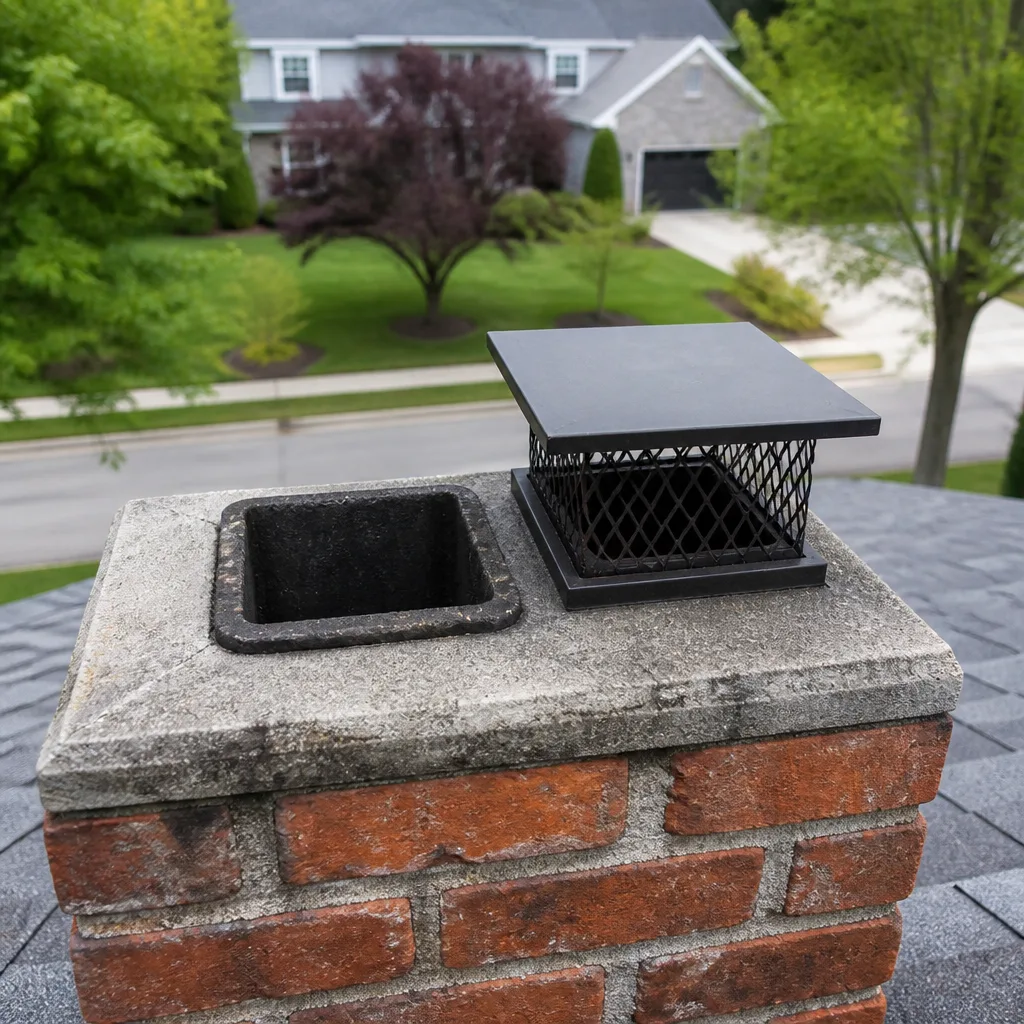
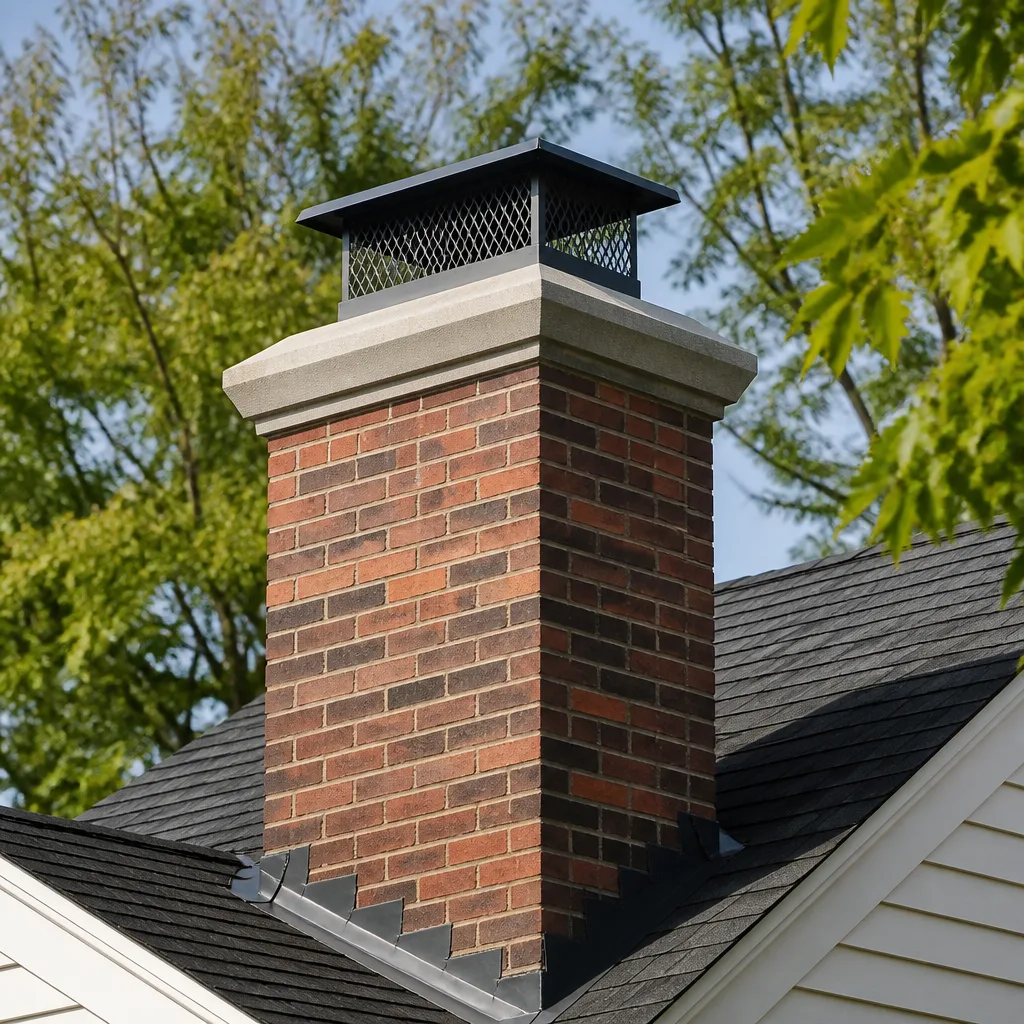
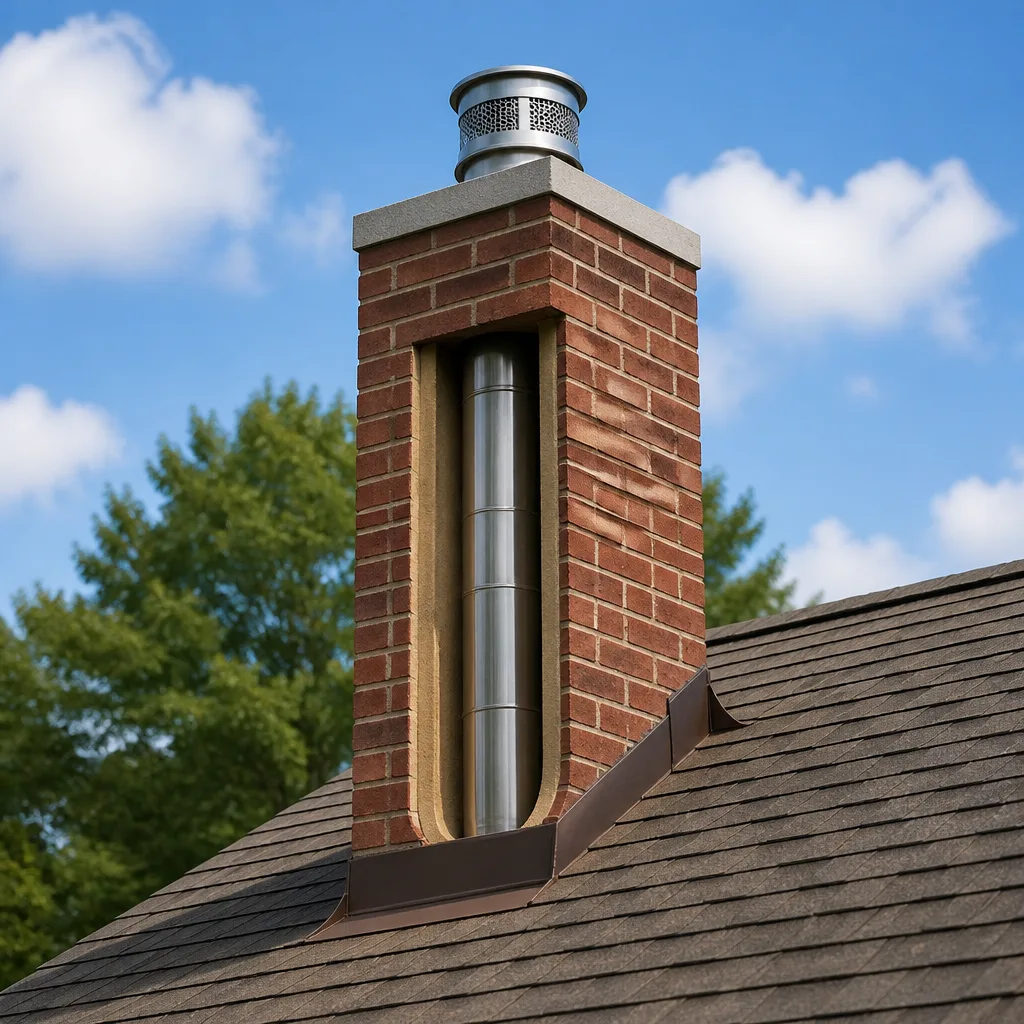
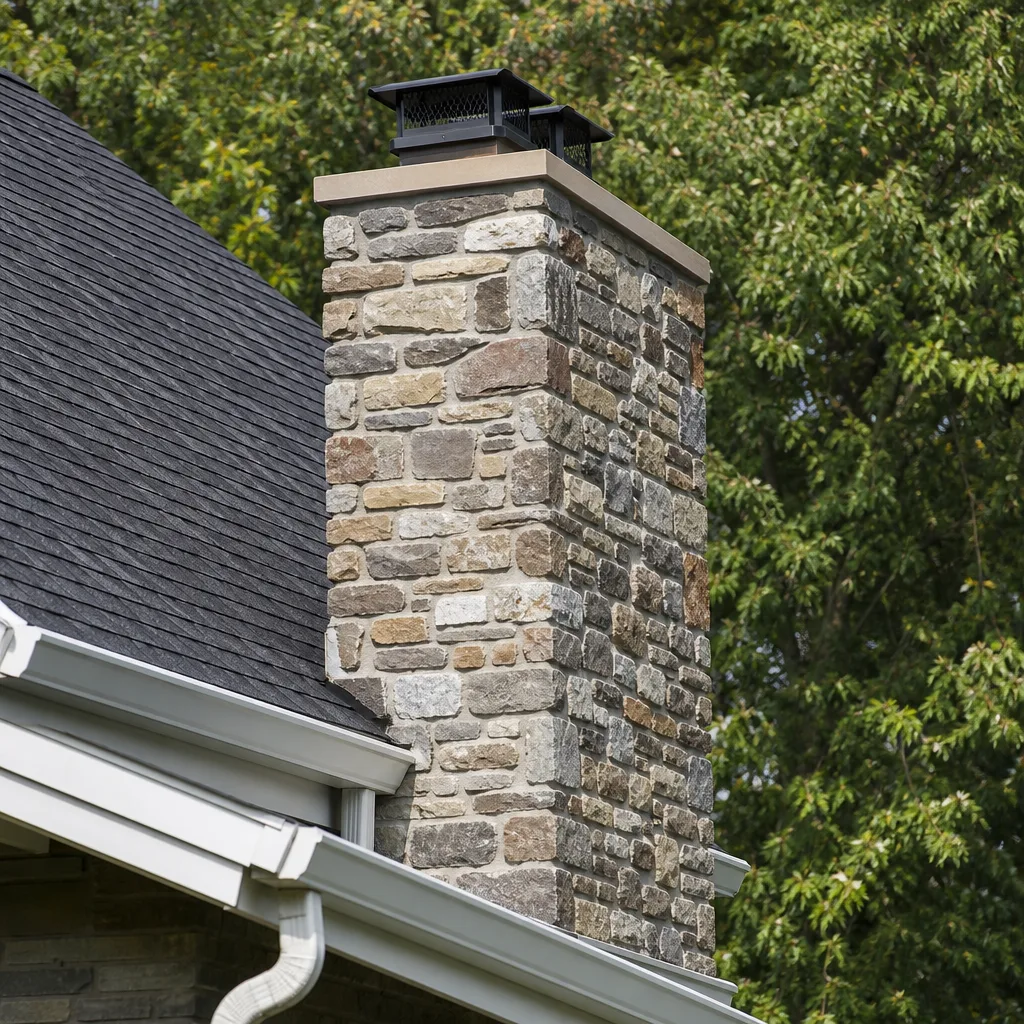
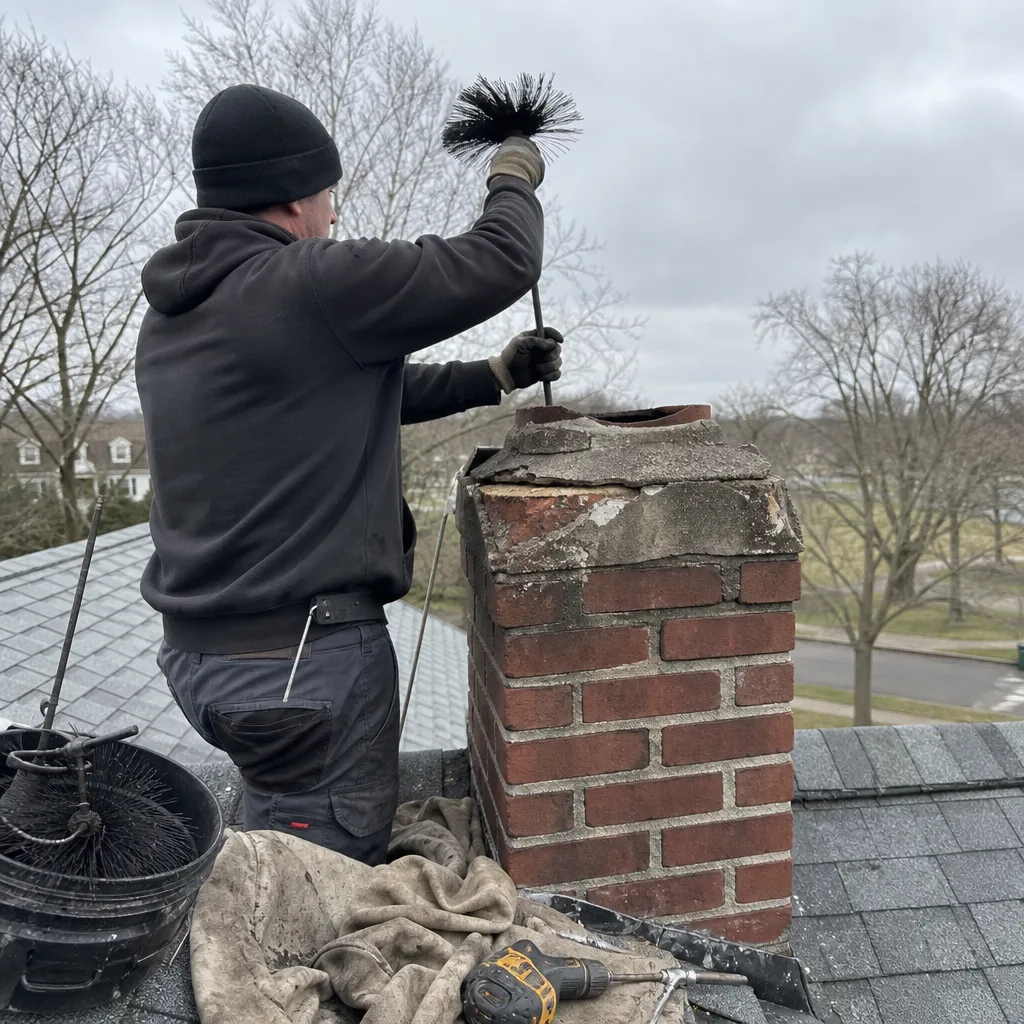 Before
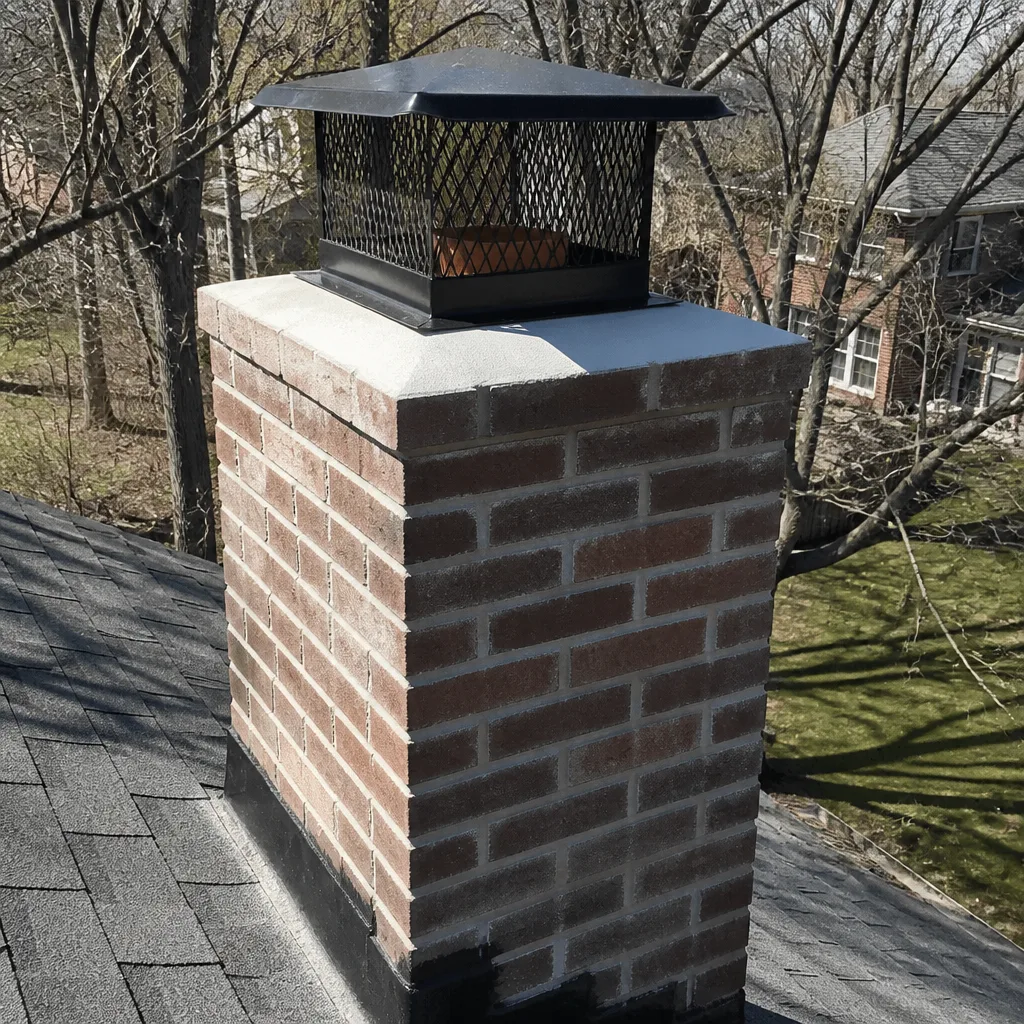 After
After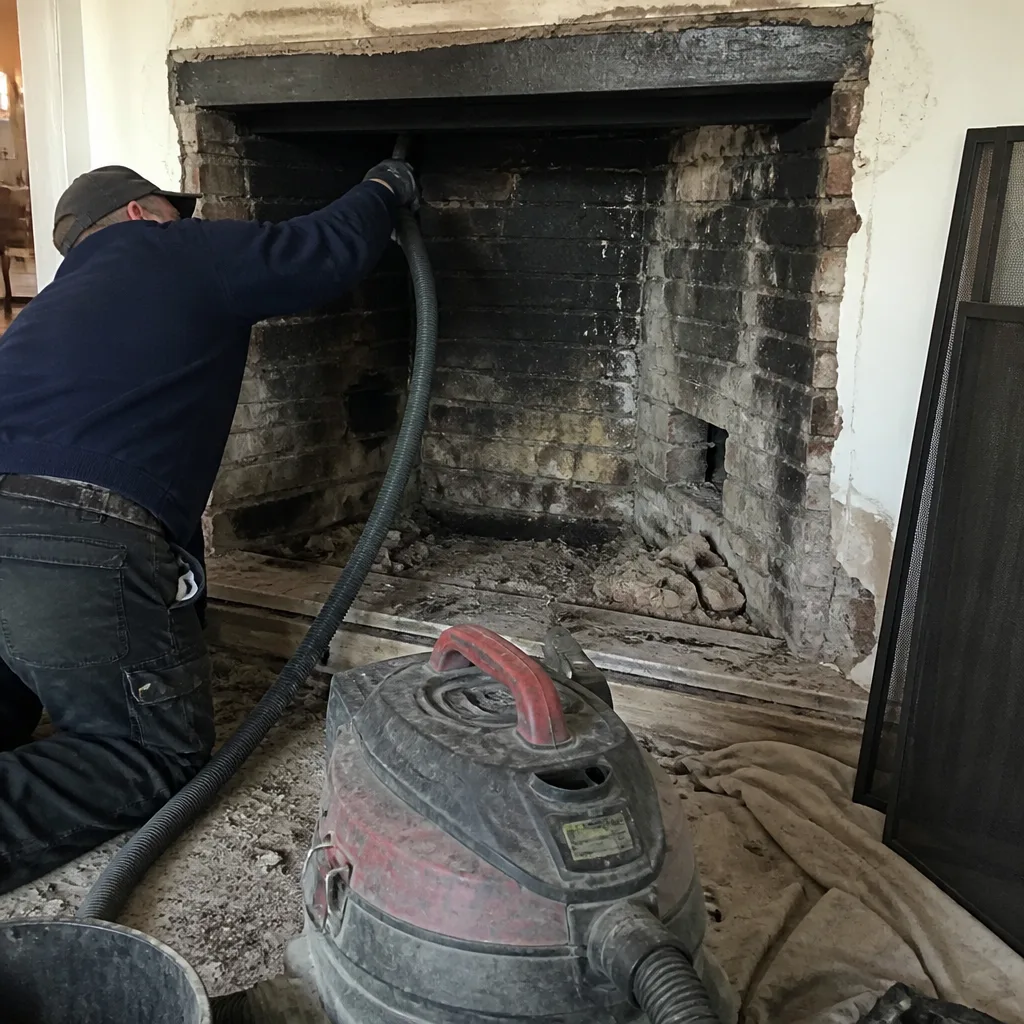 Before
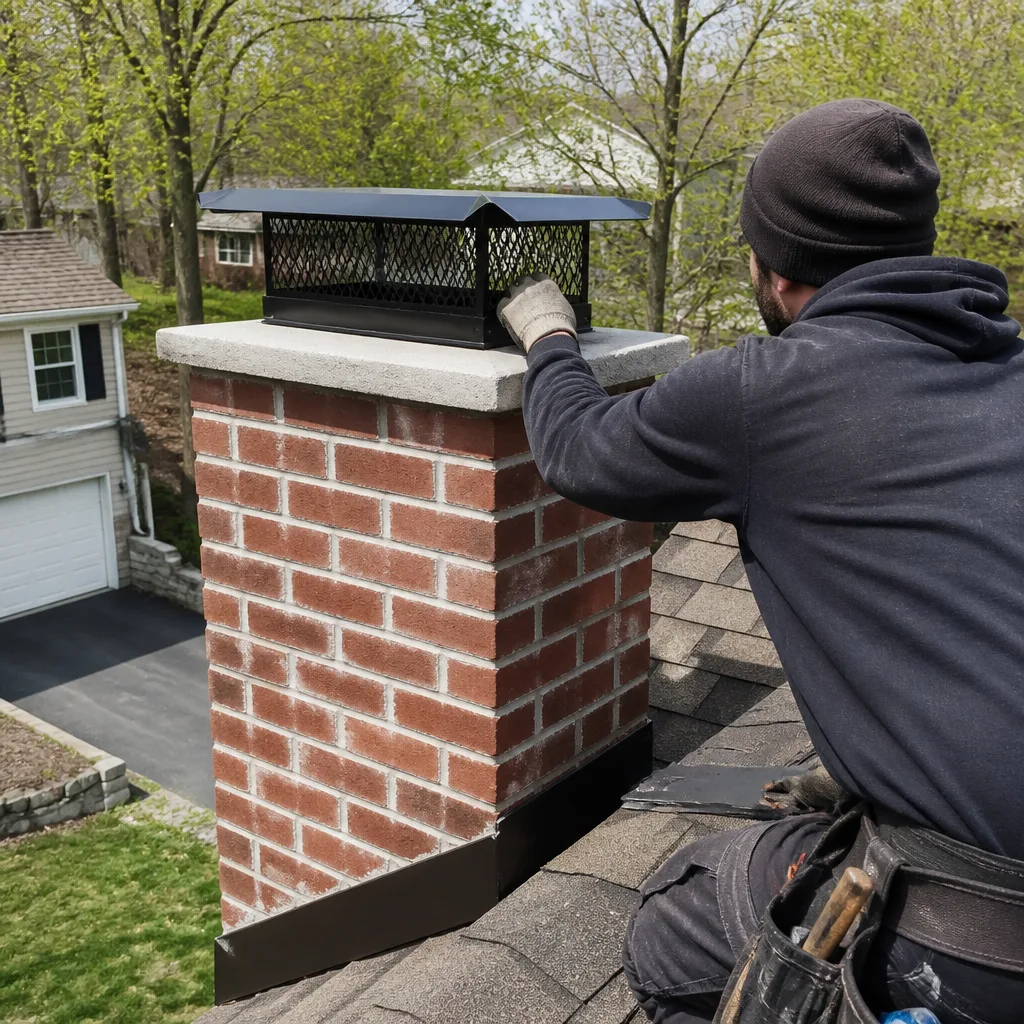 After
After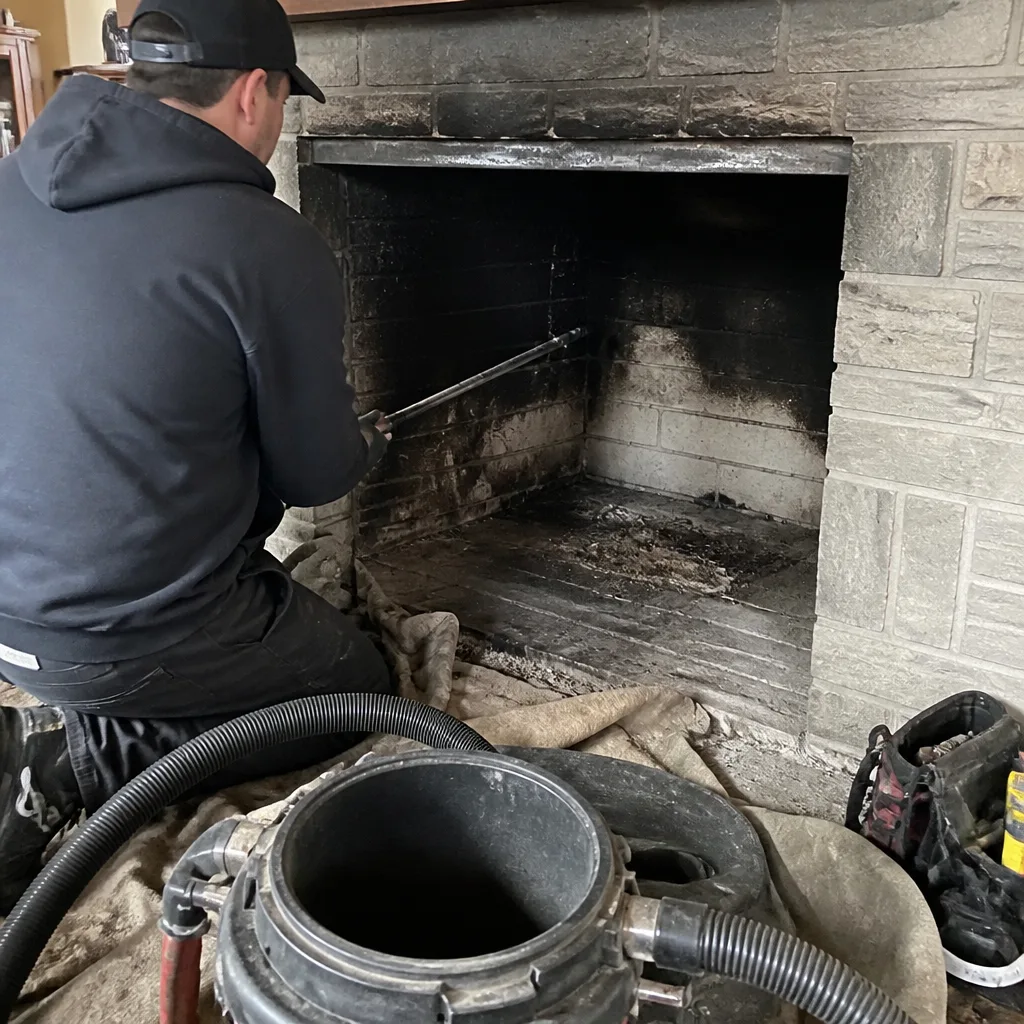 Before
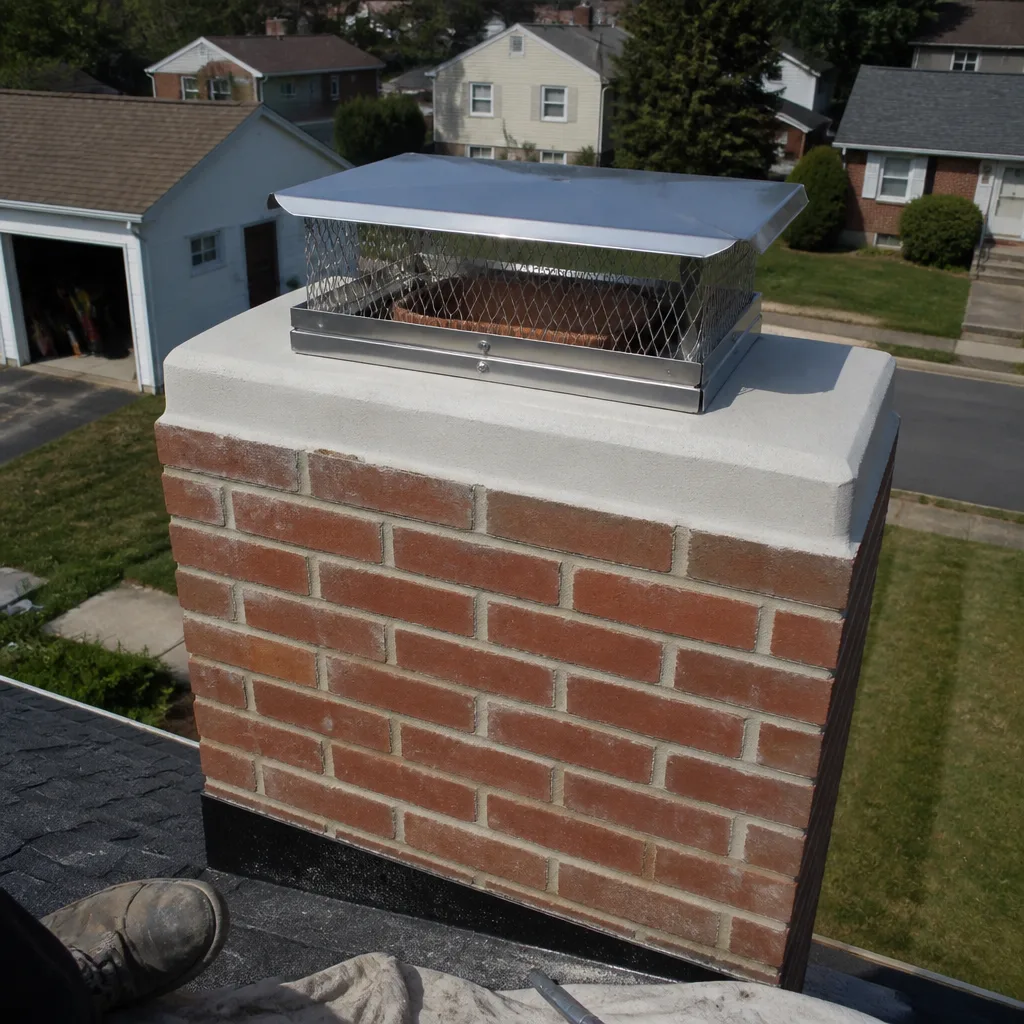 After
AfterThe Complete Guide to Chimney Cleaning in Reading
Here’s something most guides won’t tell you: Reading sits in a bowl. Cold air settles here, pushes down on the valley, and drives smoke back toward the roof line more often than in the hill towns around us. That single fact changes how fast creosote forms in your flue, how often you should clean it, and why a chimney that “looked fine” in Wernersville might be a hazard in Centre Park. This guide explains what actually happens inside your chimney, what a good cleaning involves, how inspections work, what things cost here, and how to know when work can honestly wait-plus links to more guides & resources for Reading homeowners. You’ll know more about your flue after reading this than most homeowners learn in a decade of burning.
Quick Answer
Chimney cleaning in Reading typically costs between $169 and $289 for a standard sweep of an open fireplace, with most homeowners scheduling it once a year regardless of how often they burn. A proper cleaning removes combustible creosote deposits that accumulate faster in Reading’s valley air, where cold drafts push smoke into longer contact with flue walls. The work takes 45 to 90 minutes and should always end with photos or camera footage, not just a verbal “you’re good.”
Table of Contents
- How Often Should You Clean Your Chimney in Reading?
- Why Reading’s Valley Location Changes Your Cleaning Schedule
- What Does Chimney Cleaning Cost in Reading?
- Level 1, Level 2, Level 3: Which Inspection Do You Actually Need?
- What Happens During a Proper Chimney Cleaning?
- Rowhomes vs. Detached Colonials: How Reading’s Housing Stock Affects Your Flue
- Berks County Firewood: What You Burn Changes How Often You Clean
- DIY vs. Professional: What’s Safe and What Isn’t
How Often Should You Clean Your Chimney in Reading?
Once a year, burn or no burn. That’s the short answer, and it holds for nearly every home in Reading, from the row houses on Penn Street to the newer builds in Exeter. The National Fire Protection Association’s standard 211 says chimneys should be inspected annually and cleaned when creosote reaches 1/8 inch or more. In practice, for most Berks County households, that means one professional cleaning per year.
Here’s the nuance people miss: you can’t judge buildup by how many fires you lit. Creosote forms in stages. First-degree creosote is flaky soot that brushes away easily. Second-degree is harder, often shiny in patches, and needs more aggressive tools. Third-degree is glaze, a tar-like coating that can look like black glass and may require chemical treatment or removal with a rotary loop system. The difference between a $200 brush job and a $600 glaze removal is simply how long the buildup sat. Waiting three years because you “barely use” the fireplace often means the thing you did use, even occasionally, layered up slowly and hardened.
Some seasons are heavier than others-our Seasonal Chimney Cleaning Care for Reading: Year-Round Homeowner’s Guide covers this in depth. When we get a run of damp, low-pressure days in November and December, fires burn cooler and smokier. Cooler smoke means condensation further up the flue, which means creosote deposits higher than a brush can easily reach from below. The calendar doesn’t know how many fires you burned; neither does your chimney. It just knows something has been building inside it since last spring.
What determines your personal cleaning interval
- Wood type: Pine and other softwoods common in Berks County smoke more and leave more residue than seasoned oak.
- Burn temperature: Smoldering fires with the damper half-closed produce far more creosote than hot, bright burns.
- Chimney height and draft: Shorter flues, common in Reading rowhomes, don’t heat up as much before smoke exits, leaving more deposits behind.
- Seasoned wood vs. green: Wet wood is the single biggest driver of accelerated creosote buildup, and many Reading homeowners buy “seasoned” wood that has only been split for a few months.
- Off-season moisture: A chimney without a proper cap lets rain in, and wet creosote is acidic, degrading the flue liner even when you aren’t burning.
If you want a rule that covers most situations: sweep it before burning season begins, typically September or October in Reading when the first cold snap reminds everyone their fireplace exists. If you burn more than two cords per year, schedule a second cleaning in January or February. And if you just bought a home in Reading and the previous owner can’t tell you when the chimney was last serviced, the answer is: it’s time.
Why Reading’s Valley Location Changes Your Cleaning Schedule
Reading was built in a depression, ringed by Mount Penn and Neversink Mountain. That isn’t just scenery. Cold air pools in valleys, and when warm air inside your house rises up the chimney, it hits a wall of heavier cold air sitting on top of the city. The result is sluggish draft, especially on cold mornings before the sun has warmed things up. Smoke lingers in the flue longer than it would in communities like Shillington or Wyomissing Hills, which sit a bit higher and get better airflow.
What does longer smoke residence time mean for your flue? The gasses cool before they fully exit. When they cool, the unburned wood particles in them condense on the flue walls. That condensation is creosote. Every chimney produces creosote. Reading chimneys, on average, produce more of it per fire than chimneys in surrounding towns because the cold-air cap over the city holds smoke in the flue a few seconds longer. Those seconds become inches of buildup over a season.
We see this pattern across the county. A homeowner in Flying Hills with a well-drafted chimney can go 18 months between sweeps without hitting the 1/8-inch threshold. The same burn habits in a home near 13th and Cotton often show 1/8 inch inside ten months. The houses are similar; the geography is not.
Also relevant: Berks County’s shoulder seasons are damp. Spring and fall bring morning fog that settles into the valley, and that moisture finds its way into uncapped chimneys. Wet creosote is not just a fire hazard; it is chemically acidic. It attacks mortar joints and clay tile liners from the inside, which is why leaky crowns and missing caps on Reading homes turn into liner repairs faster than in drier locations.
The practical takeaway: if a national chain tells you that every chimney everywhere needs the same 12-month schedule, they are not looking out your window. Your chimney, in this particular stretch of the Schuylkill, is working against geography. Annual cleaning is not panic. It is the correct interval.
What Does Chimney Cleaning Cost in Reading?
Chimney sweep prices in the Reading area are straightforward, with a couple of local caveats. A standard open-fireplace cleaning runs between $169 and $289, depending on flue height, the condition of the unit, and whether the chimney has been recently serviced or is being caught up after several years. Most Reading homeowners fall in the $189 to $249 range. Wood stove inserts and pellet stove venting often run slightly less, between $149 and $219.
Here’s a realistic breakdown of what you can expect on an invoice in this market:
| Service | Typical Reading Area Price |
|---|---|
| Level 1 inspection (visual, no tools) | $75-$125 if standalone; often bundled free with a sweep |
| Level 2 inspection (camera scope) | $200-$400 depending on access |
| Standard chimney sweep, open fireplace | $169-$289 |
| Wood stove or insert cleaning | $149-$219 |
| Creosote glaze removal (severe buildup) | $400-$800 |
| Chimney cap supply and installation | $150-$375 depending on type (Famco, Copperfield) |
| Chimney crown repair | $300-$900 depending on severity |
| Flue liner replacement (stainless, e.g., DuraFlex) | $2,500-$6,000 depending on flue height and access |
These are the prices you should expect from a local, licensed operator who does not subcontract to a rotating cast of hourly techs. If an estimate comes in far below the bottom of these ranges, ask who will actually show up and whether the price includes equipment that can handle glaze creosote. If it comes in far above, ask for the camera report that justifies the add-ons. A straight operator will have no problem showing you evidence.
We price every job before a single tool comes off the truck. The number you hear on the phone is the number on the invoice. No surcharge for showing up, no “unexpected condition” discovered after the fact. Inside our service county, there is no trip charge at all. Seniors and veterans get 10% off every service, every time. And any repair over $200 gets $40 off, standing offer. If you are weighing a written estimate from another company, bring it to us for a free second opinion. That is what a fair market looks like.
One more cost note: the most expensive chimney cleaning in Reading is the one you put off. Severe glaze creosote, water-damaged caps, and hardened third-degree buildup all start as $200 brush jobs and become $800 rehabilitations. The cheap route is the annual sweep.
Level 1, Level 2, Level 3: Which Inspection Do You Actually Need?
Chimney inspections come in three recognized levels, and the difference is not marketing; it is defined by the National Fire Protection Association. Level 1 is a visual check of the readily accessible parts of the chimney, inside and out. Level 2 adds camera scanning of the flue interior and inspection of accessible attic, crawlspace, and basement areas. Level 3 goes further, removing building components to access concealed areas, and is typically reserved for cases where a Level 2 suggests serious hidden problems or after a chimney fire.
Which one do you need? Here is the honest answer:
- Annual maintenance visit on a chimney you use every year and that was recently serviced: Level 1. This is the inspection bundled with a standard sweep. If nothing has changed since last year, a visual inspection plus brushing is sufficient.
- New home purchase in Reading: Level 2. No exceptions. You do not know how the previous owner burned, whether they burned at all, or what the last inspection found. A Level 2 gets a camera inside the flue and will catch cracked tiles, deteriorating mortar, or hidden blockages. The few hundred dollars it costs is less than the liner replacement you might skip by skipping it.
- After a chimney fire, before installing a new appliance, or after a major weather event (tree hit the chimney, earthquake, severe wind): Level 2 or Level 3. Chimney fires can structurally compromise a flue even when the house looks fine from the ground.
- Suspected structural damage following a storm or fire, or when a Level 2 reveals a likely problem behind walls: Level 3. This is rare. If someone pressures you into a Level 3 inspection without a clear reason, get a second opinion.
What gets upsold in this market is the camera scope. Some companies position Level 2 as mandatory for every visit, every year. It isn’t. An honest sweep will recommend a camera inspection when something warrants it: a first service after buying a home, a concern from a Level 1 glance, an unusual smell, or visible deterioration. For a chimney you have used without issue and swept annually, a Level 1 is generally the right tool. Wendell has been in enough Reading flues to know when he needs the camera and when he does not, and he will tell you plainly which applies.
After any inspection, you should leave with something. A written report, photos, camera stills, or all three. If you pay for an inspection and get only a verbal summary, ask for the documentation. You are owed it. Our sweeps include camera inspection and a photo report on every job, not as an add-on line item, because you cannot make an informed decision about a flue you cannot see into.
What Happens During a Proper Chimney Cleaning?
A proper chimney cleaning in Reading takes between 45 and 90 minutes and follows a consistent sequence. Here is what should happen when a sweep arrives at your home:
- Setup and floor protection: Drop cloths go down around the fireplace opening. A proper operator protects your rugs and floors before anything else.
- Visual exterior check: The sweep looks at the chimney from the ground, checking the cap, crown, flashing, and any visible masonry issues. This happens before the brush ever goes up.
- Firebox and damper inspection: The firebox when cold reveals cracks, loose bricks, and accumulated ash that affects draft. The damper gets opened, checked for warping, and tested for full closure.
- Brushing the flue: Using a properly sized wire or poly brush matched to your flue dimensions, the sweep scrubs the interior walls from top or bottom, depending on access. This dislodges first- and second-degree creosote, soot, and any nesting materials.
- Debris removal: Everything that falls into the firebox and smoke shelf gets vacuumed with a high-filtration vacuum designed for fine particulate. A household Shop-Vac is not the right tool for this job; fine soot blows right through standard filters.
- Final visual inspection: A post-cleaning camera pass or bright-light check confirms the flue walls are clean. This is the difference between a brush-and-run and a real service.
- Photo documentation and written findings: You should be shown photos of your flue before and after cleaning. If there is a concern, you should see it, not just hear about it.
Two things matter here that most homeowners do not think about. First, the smoke shelf, the flat area just above the damper, is where most creosote collects in a standard masonry chimney. If a sweep skips the smoke shelf, he did not sweep your chimney; he agitated its most dangerous part and left it in place. Ask whether the smoke shelf was cleaned. A real sweep will say yes before you finish the sentence.
Second, the cap. A missing or damaged chimney cap is the most common issue we find in Reading, and it causes more downstream repairs than any fire ever did. Rain enters, mixes with creosote, and eats the flue from the inside. A cap is a $150 to $375 fix with a Famco or Copperfield unit. The liner it protects is a $2,500 to $6,000 fix. Your flue doesn’t care how the fire looks. It cares how it breathes.
What you should never accept: a “sweep” that lasts eight minutes, produces no dust, shows no evidence, and ends with a bill and a business card. A real cleaning makes a sound in the flue, moves debris, and leaves a clean firebox. Ask to see the residue. Ask for photos. If the answer is a vague “looked good up there,” ask for the next closest name in the phone book instead.
Rowhomes vs. Detached Colonials: How Reading’s Housing Stock Affects Your Flue
Reading’s housing stock does not look like the rest of Berks County’s. The brick rowhomes that line the blocks between Penn Street and the river were built in a style, and with a set of assumptions, that directly affect how their chimneys behave. If you live in a detached single-family home on a quarter-acre lot in Muhlenberg or Spring Township, your chimney is likely one flue, straight up, through the center of the house. It stays warm, drafts well, and is relatively easy to clean.
If you live in a Centre Park rowhome, your chimney is a different animal. Many Reading rowhomes were built with flues that run up shared party walls or on exterior walls. Those runs are shorter than in larger homes, for one thing, and exterior-wall chimneys stay colder, for another. Cold flues mean weaker draft and more creosote condensation. Shared party walls can also mean multiple flues for multiple fireplaces stacked on the same wall, which complicates any repair or liner work.
Older Reading rowhomes frequently have unlined or partially lined flues. Building codes that require clay tile or stainless liners did not exist when many of these homes went up. An unlined brick flue is not just inefficient; it is a hazard. The mortar joints in a 100-year-old chimney have been absorbing creosote and moisture for a century. If you own an older Reading rowhome and have never had a camera down the flue, this is one situation where the Level 2 inspection is not optional. It is the only way to know what you are burning into.
Shorter flue runs also mean carbon monoxide is a more pressing concern. In a two-story colonial, a properly functioning chimney draws combustion gasses up and out with little resistance. In a two-story rowhome where the flue exits barely above the roof line, wind patterns over the row and the valley inversion can push exhaust back toward the house. A properly sized cap, clean flue, and functional damper become critical. This is not a scare point. It is physics on Penn Street.
For rowhome owners, we typically recommend an annual inspection even in low-burn years specifically because the flue runs are shorter and older. The camera footage and a plain-English verdict, every time, no exceptions. That is the standard. Your grandfather’s chimney should not be grandfathered into neglect.
Berks County Firewood: What You Burn Changes How Often You Clean
Berks County burns a lot of oak. If you buy firewood from a local seller, whether a pile at a farm stand near Oley or a delivery from a guy with a truck out toward Fleetwood, most of what you get is red or white oak, with some hickory and maple mixed in. Oak is good firewood. It is dense, burns hot, and produces less smoke than softwoods. Well-seasoned oak, split and stacked for 12 to 18 months, generates the cleanest burns you will get in this climate.
Pine is the other story. Pennsylvania has pine to spare, and it is cheaper in some seasons. Nothing wrong with burning pine in a properly functioning fireplace with a clean flue, but pine produces more creosote-forming resins than oak, and it burns faster, which means you load more of it, which means more total smoke through the chimney. If you burn pine as your primary wood, expect to sweep twice a season instead of once. That is not a judgment against pine. It is a burn-rate and resin calculation.
The bigger issue is moisture. “Seasoned” is not a protected word. Some firewood sellers in Berks County split wood in August and call it seasoned in October. That wood is still at 30 to 40 percent moisture content, and burning it is like trying to run a stove on damp newspaper. Wet wood burns cool, produces heavy smoke, and lays down creosote faster than any other factor. How do you know if your wood is ready? The short test: split a piece and press the fresh face to your cheek. If it feels cool and damp, it is not ready. If it feels dry and room-temperature, you are close. A moisture meter, available for under $30 at any hardware store in Reading, will tell you exactly: under 20 percent is good.
Keep the wood off the ground, stacked loosely with airflow between rows, and covered on top but open on the sides. Wood stacked against a house wall in a Reading alley with no cover absorbs the valley’s damp spring air and never dries. This is the most common firewood mistake we see: good oak, bought in good faith, ruined by a bad stack site.
Burn hot, bright fires. The smoldering, dampered-down fire that lasts all night feels great but lays down more creosote than any roaring fire that burns out in four hours. Once a week, give the fireplace a strong, hot burn with well-seasoned wood; it helps clear loose first-degree creosote before it has a chance to harden into second and third. That is not a substitute for a sweep. It buys you margin between sweeps.
DIY vs. Professional: What’s Safe and What Isn’t
Plenty of Reading homeowners own a chimney brush. The hardware stores sell them, the internet explains how to use them, and the idea of saving $200 is understandable. Here is what is safe and what is not, from someone who has seen both sides. For the full breakdown of risks and rewards, see our DIY vs Professional Chimney Cleaning: The Reading Homeowner’s Decision Guide.
What you can reasonably do yourself:
- Inspect the firebox with a bright flashlight for obvious cracks, loose bricks, or visible creosote buildup.
- Check the chimney cap from the ground with binoculars. Is it present? Is it dented? Is there a visible screen that is not clogged?
- Clean ash out of the firebox before and after burning season, leaving about an inch of ash as insulation during winter.
- Test your damper: does it open fully and close snugly? Does it rattle in the wind?
- Run a chimney cleaning log if you like, but understand that it treats first-degree creosote, not second- or third-degree glaze. It is a maintenance aid, not a sweep.
What you should not do yourself:
- Climb onto a roof. Reading rowhome roofs are often steep, slate, or both, and the valley’s damp mornings leave them slick. Falls from roof height are the most common cause of serious injury in chimney work.
- Attempt to brush a flue from the roof without proper fall protection. It is not worth a broken spine to save a sweep fee.
- Apply chemical creosote treatments to severe buildup without understanding what you are treating. Misapplied chemicals on a glaze can create a harder, more dangerous deposit.
- Attempt liner repair, crown work, or any masonry patch. These are not brush jobs. Wrong materials make the problem worse and more expensive to fix properly.
The honest economic case: a professional sweep with camera documentation costs about what a decent dinner out costs two people in downtown Reading. The risk you take crawling around a roof is not worth the avoided expense. If cost is the issue, ask about discounts. Most reputable local companies offer a senior or veteran discount, and we do the same: 10% off, every service, no questions about service history. That is the kind of accessible pricing that makes the DIY risk unnecessary.
If you do attempt anything yourself, do it on a dry day, with another adult present, and a phone in your pocket. And know that when you are up there and unsure, the right call is to come back down and phone a professional. No one will think less of you. The roof is not the place to rehearse bravery.
Common Mistakes to Avoid
- Burning wet or unseasoned wood. The single fastest way to build creosote in a Reading chimney. Wet wood burns cool and smoky, and cold flue walls condense every bit of that smoke into fuel. Buy early, stack properly, and check moisture before you burn.
- Skipping the cap inspection. A missing or damaged cap is the most common deferred repair we see, and in Reading’s damp springs and autumns, it causes liner damage that costs twenty times the cap’s price. Look up once a year.
- Using “chimney cleaning logs” instead of a sweep. They reduce light creosote, not heavy creosote. If your flue has second- or third-degree buildup, no log you can buy at a hardware store will resolve it. They are a supplement, never a substitute.
- Running fires with the damper half-closed to “save heat.” This starves the fire of oxygen, cools the smoke, and paints the flue with creosote. Open the damper fully when burning; close it when the fire is out.
- Trusting a verbal “looks good” without evidence. Any sweep who will not show you photos, camera footage, or written findings is not giving you a service; he is giving you an anecdote. You paid for information about your chimney. Get it in a form you can hold onto.
- Buying a home in Reading without a Level 2 inspection. A standard home inspection glances at the fireplace; it does not scope the flue. The previous owner’s bad habits become your liner problem, and you won’t know until something fails. Camera inspection before closing is the cheapest insurance you’ll ever buy on a house.
- Sweeping only before winter. Chimneys break in the off-season too. Moisture, nesting animals, and freeze-thaw cycles all do their work between March and September. An annual inspection timed to burning season is fine, but don’t assume no fires means no issues.
When to Call a Professional
Call when you see obvious creosote: a dark, shiny accumulation visible in the firebox or on the flue walls when you look up with a flashlight. Call when you smell a sharp, smoky odor in the house even when the fireplace hasn’t been used in days. That smell usually means creosote buildup and poor draft. Call when you hear water dripping in the chimney during rain, when you see efflorescence, a white powdery stain, on the exterior brick, or when the damper no longer closes properly. Call if you have had a chimney fire, even a small one, even one you put out yourself. Call before you buy a home, before you install a wood stove or insert, and after any severe wind event. And call when it has simply been more than two years. Two years in a Reading flue is long enough for bad news to form quietly. Top Hat Chimney offers free estimates in Reading, call (484) 209-0837 to schedule yours.
Frequently Asked Questions
A standard chimney sweep in Reading costs between $169 and $289, with most homeowners paying between $189 and $249 for an open fireplace. Wood stoves and inserts typically run $149 to $219. Severe glaze creosote removal costs more, generally $400 to $800, which is why annual cleaning is the cheaper long-term path. Call (484) 209-0837 for an exact quote, estimates are free.
Once a year, even in low-burn years. Reading’s valley air slows draft and accelerates creosote condensation compared to surrounding towns, so 12 months is the right interval for most local chimneys. If you burn pine primarily or more than two cords per season, sweep twice per year.
Sometimes you do, and sometimes a cracked clay tile liner can be resurfaced with a product like HeatShield rather than fully replaced. The decision turns on what the camera shows: how many cracks, where they are, and whether the surrounding masonry is sound. If a contractor recommends a full liner replacement without camera evidence, get a second opinion. That’s exactly what a free second opinion on any written estimate is for.
A Level 1 inspection is a visual check of the accessible parts of the chimney and is appropriate for an annual maintenance visit. A Level 2 adds a camera scope of the flue interior and is required before buying a home, after a chimney fire, or when installing a new appliance. In Reading, where older housing stock is common, buyers should always request a Level 2.
You can, but you shouldn’t. Roofs in Reading, especially the steep slate roofs on older rowhomes, are hazardous when damp, and chimney work without fall protection is the leading cause of serious injury in this trade. The financial savings of a DIY sweep are small compared to the cost of a fall. This is one job worth hiring a professional for.
Photos or camera footage of the flue’s interior before and after brushing, plus a written summary of findings. The camera footage and a plain-English verdict, every time, no exceptions. If the flue is clean, you should see a clean flue, not just be told about one.
The Bottom Line
Chimney cleaning in Reading is not a mystery ritual. It is a predictable, scheduled service that costs less than most home repairs and prevents the most expensive ones. Sweep your flue once a year, burn dry seasoned wood, keep the damper open during fires, and put a cap on every chimney you own. If you own an older rowhome, get a camera inspection even if you don’t burn often, your chimney is older than the code that protects you. If you bought your house recently and inherited an unknown chimney history, the same advice applies. The work is not a luxury. In a valley that holds cold air over its chimneys, annual cleaning is the price of keeping the fireplace you love from becoming a problem you pay for with five figures. And when you want it done by someone who has been working these streets since 1999, with a name, a license, and a written pledge behind the job, call (484) 209-0837.
Written by Wendell Pike, Owner at Top Hat Chimney, serving Reading since 1999.