
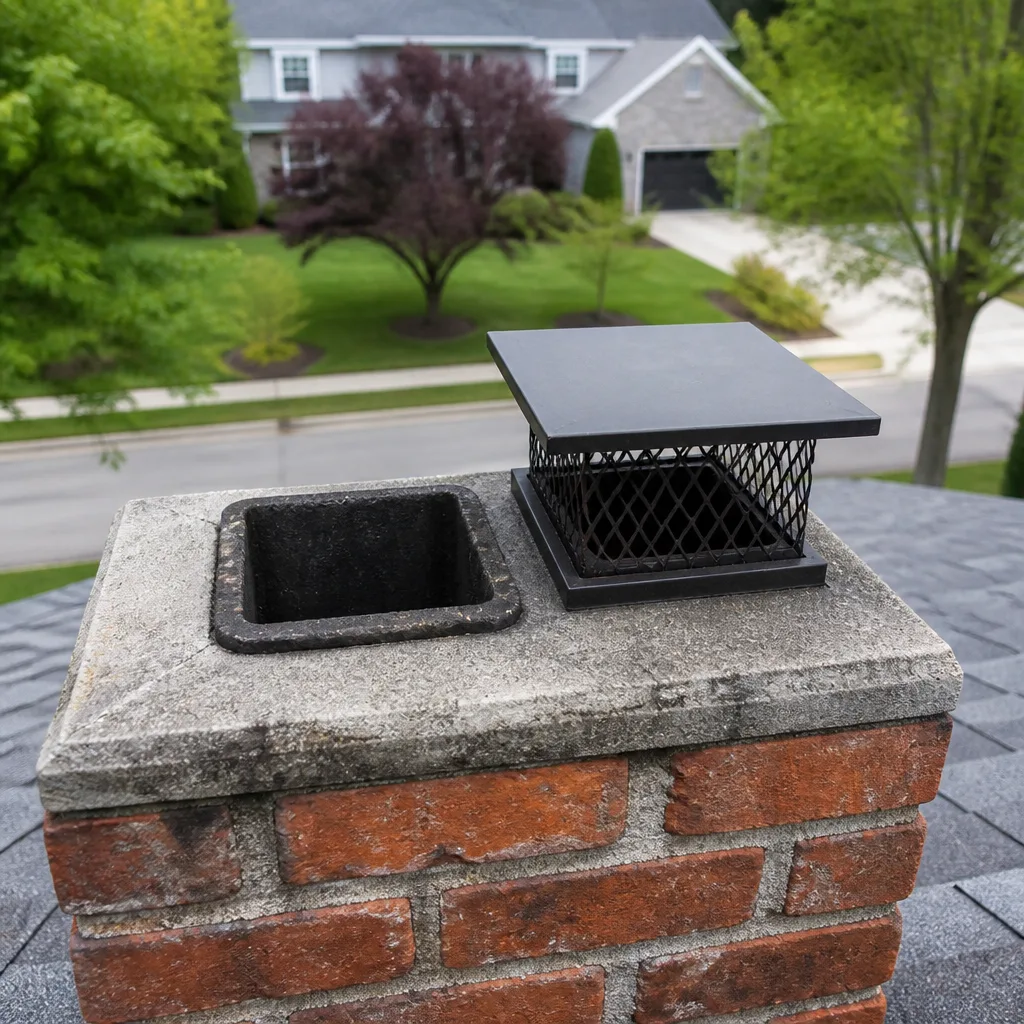
Level 1 sweep and inspection to the NFPA 211 annual standard - flue, crown, cap, and flashing checked and photographed
Chimney sweep logs do not sweep chimneys. They loosen some creosote - which then falls where a brush and vacuum still have to collect it.
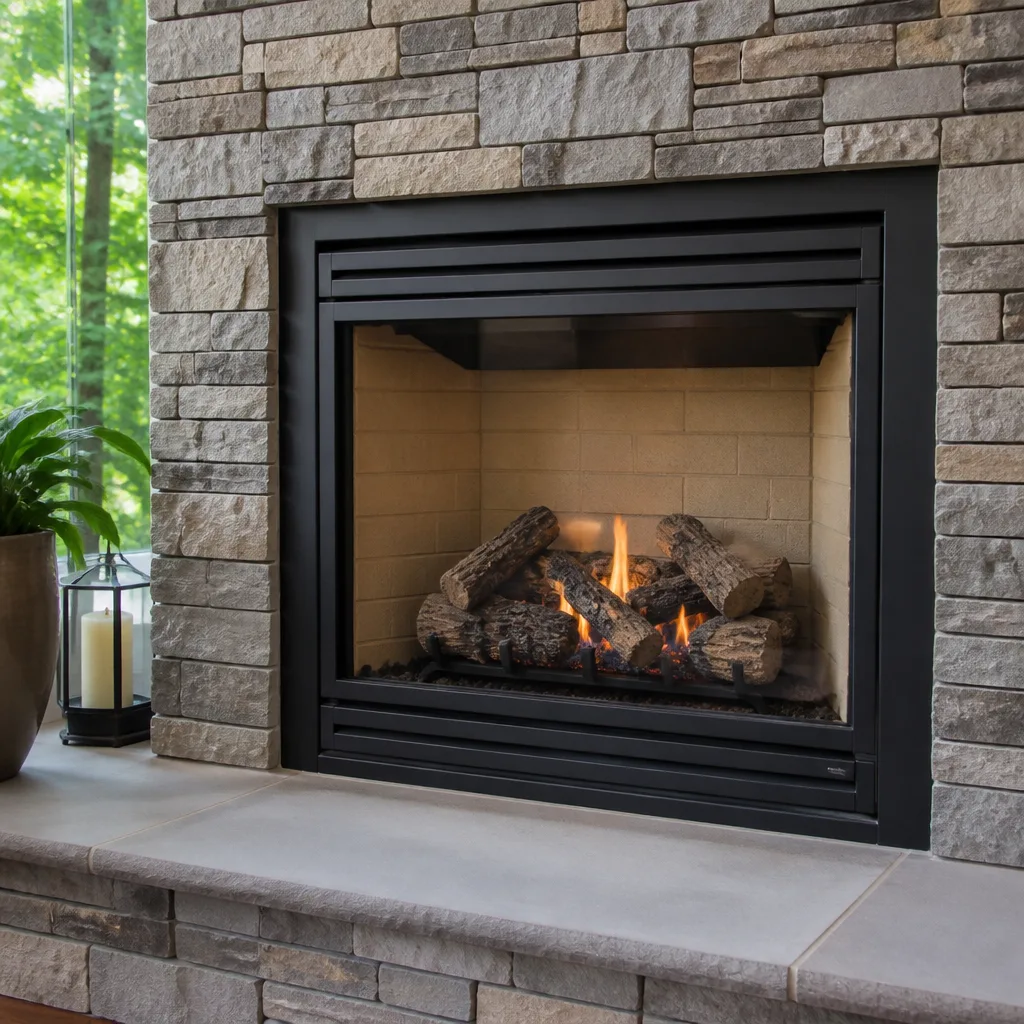
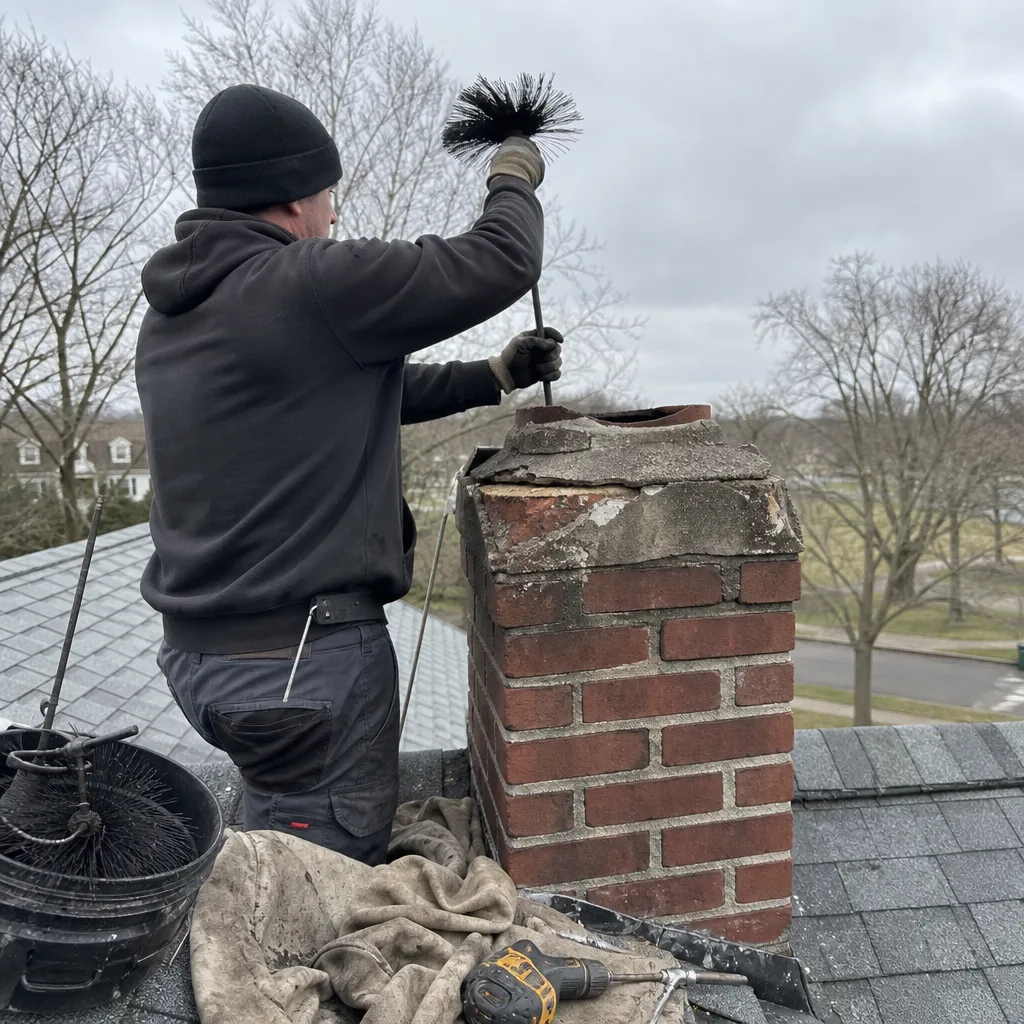 Before
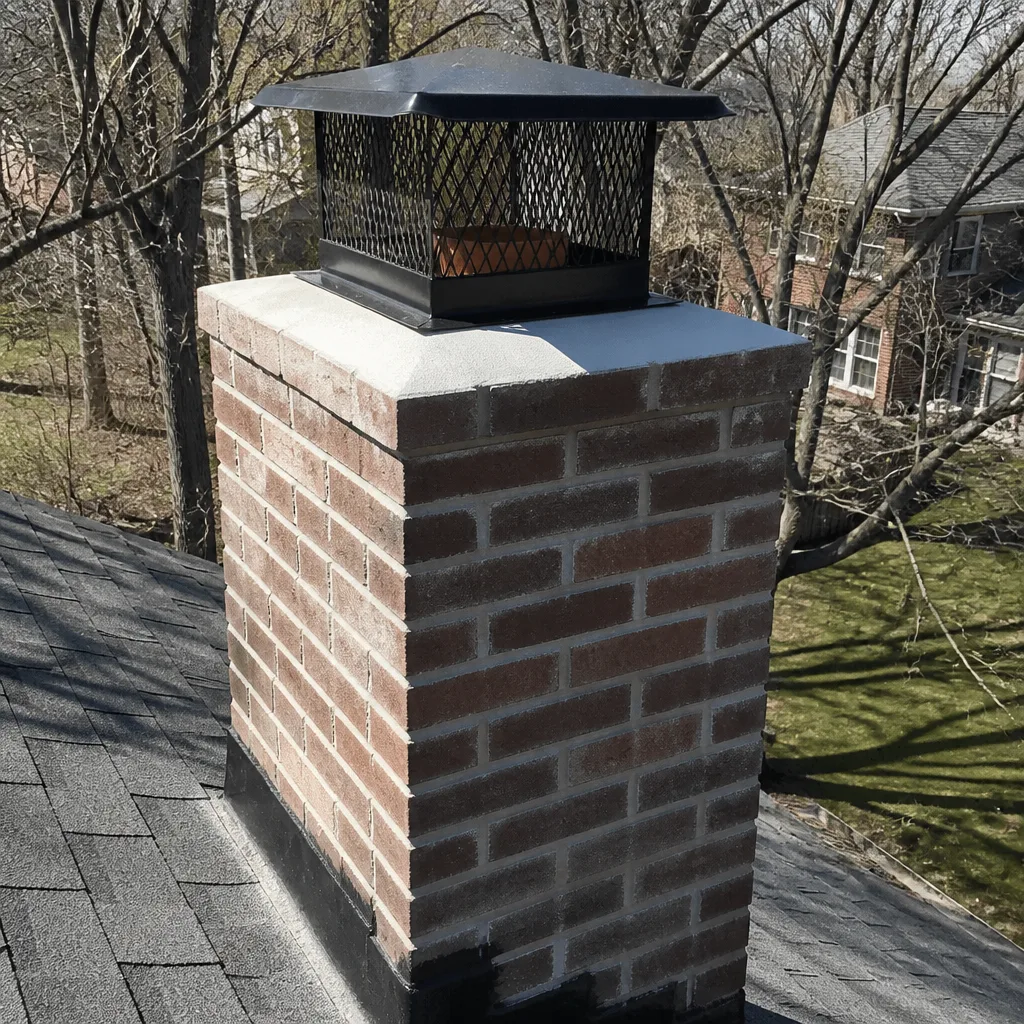 After
After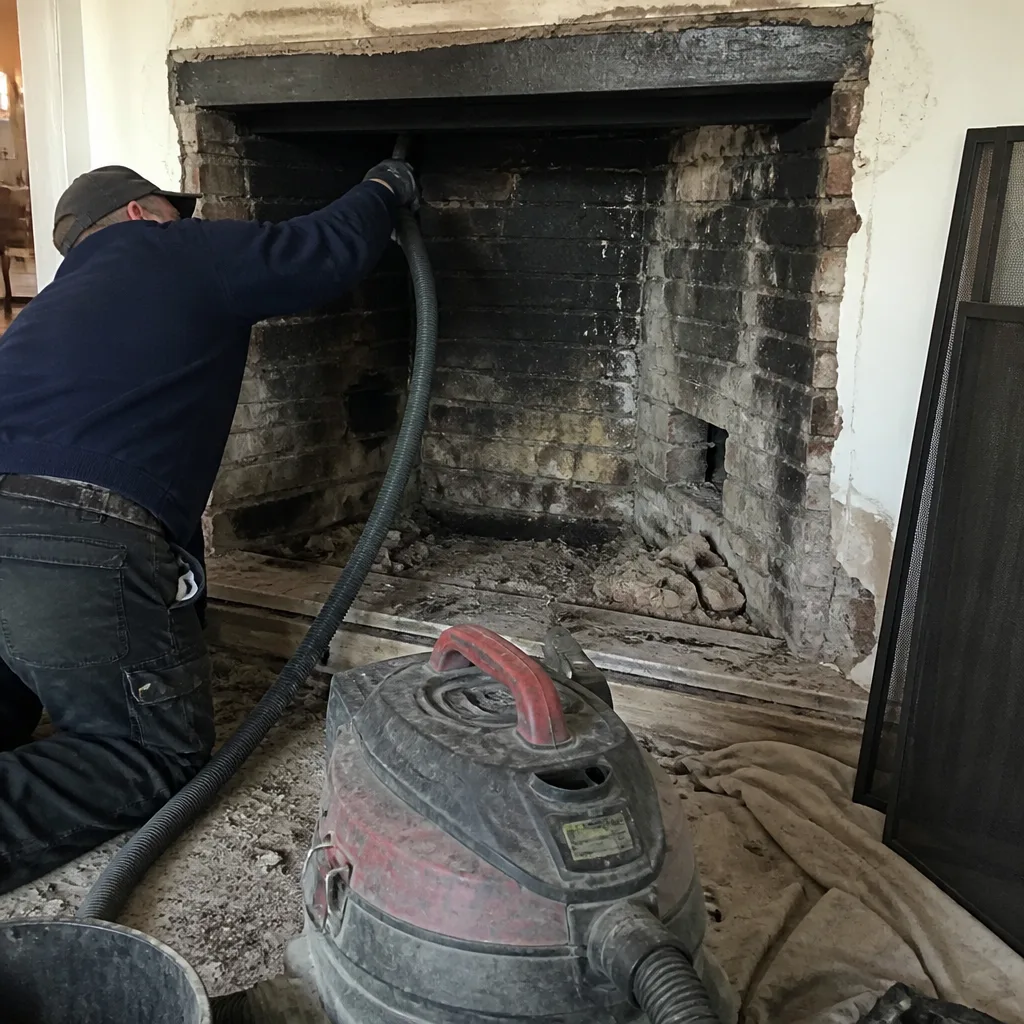 Before
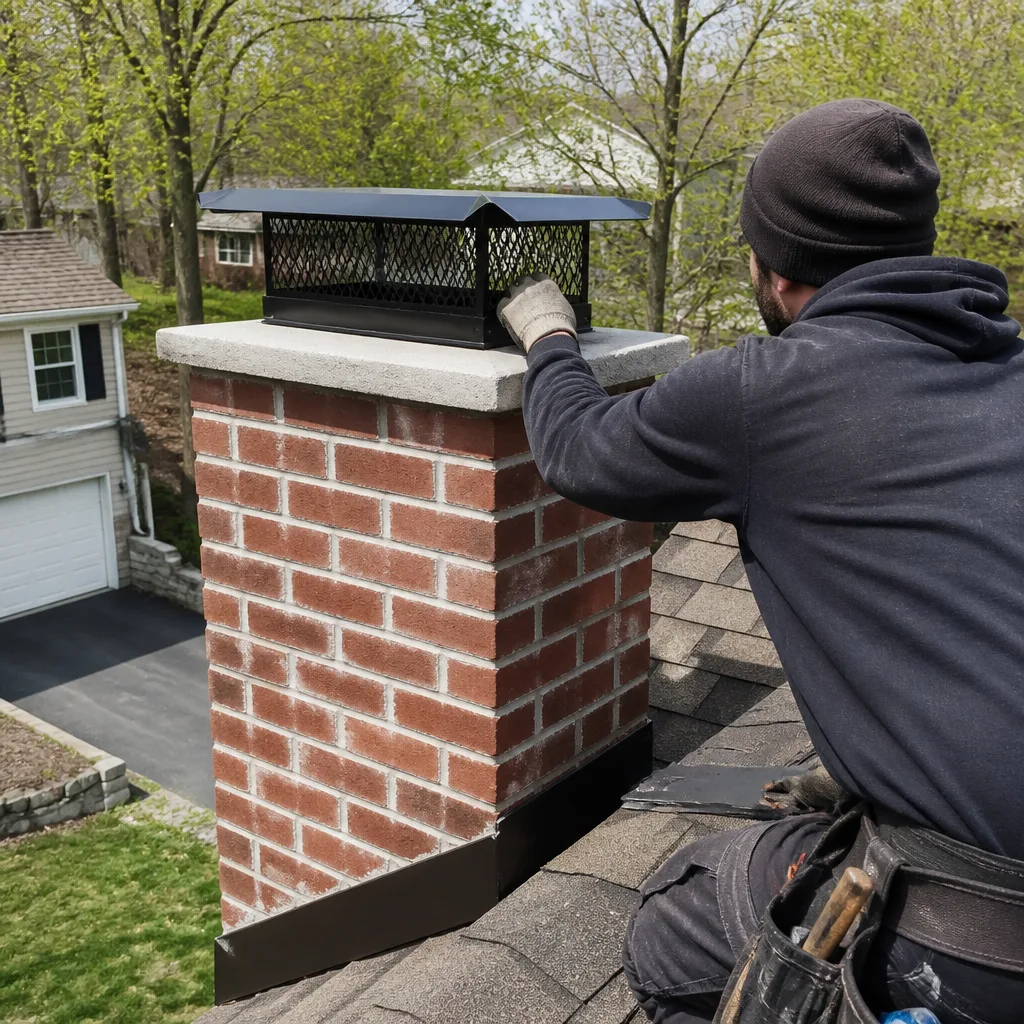 After
After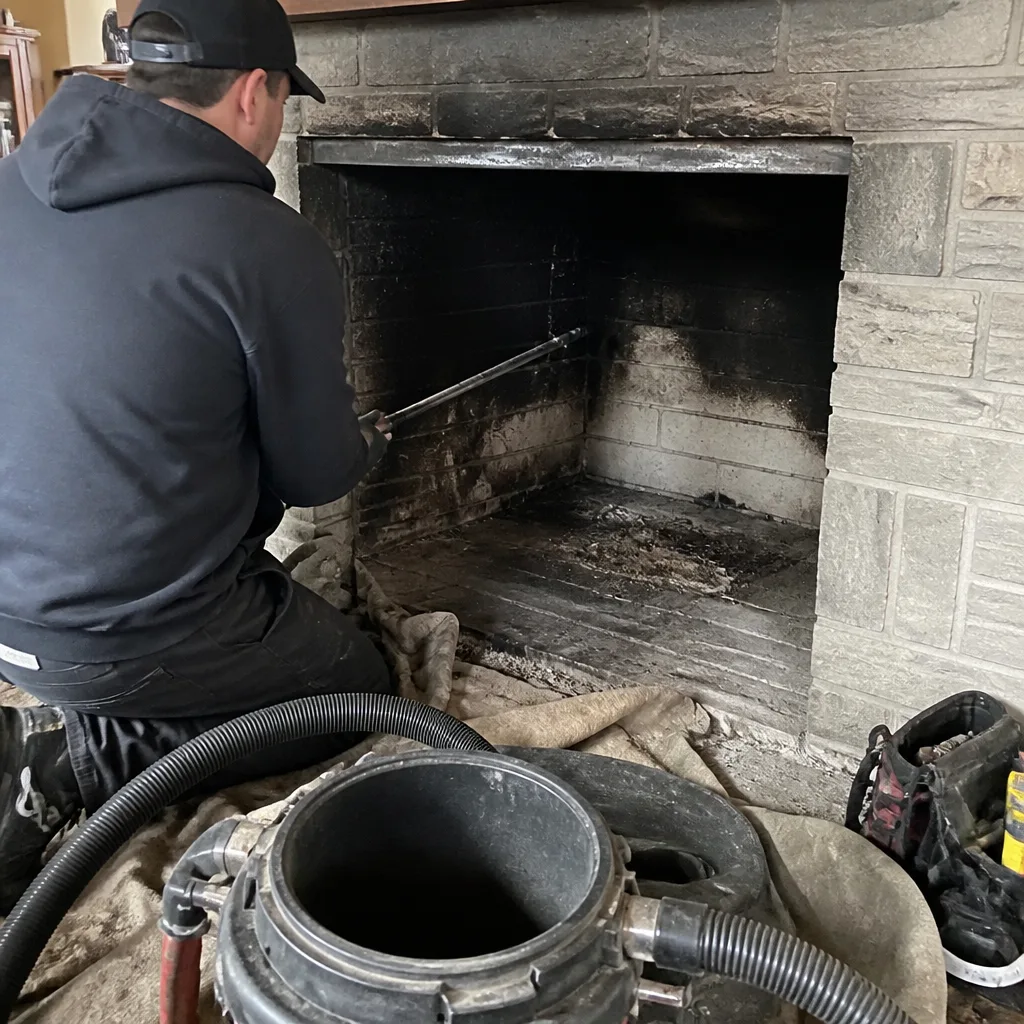 Before
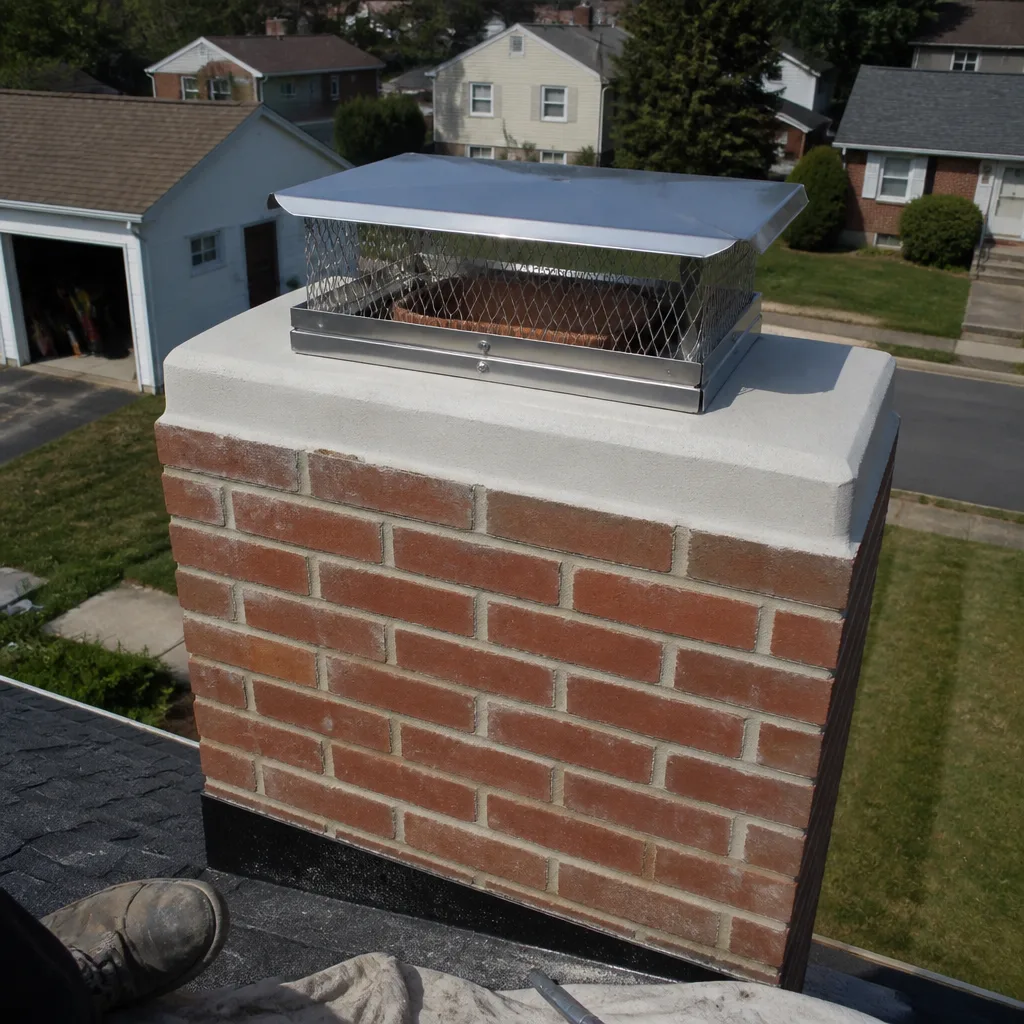 After
AfterWhy Reading Homeowners Choose HeatShield Chimney Cleaning
HeatShield chimney cleaning and repair in Reading means restoring the flue you already have instead of tearing it out and starting over. We’re an independent Heatshield service in Reading, not a factory-authorized dealer, which means we can tell you plainly when the foam is the right fix and when it isn’t. Wendell Pike and his crew at Top Hat Chimney work hands-on with HeatShield’s full product line, from Cerfractory flue sealant to the Joint Repair System, and we’ve seen how these materials hold up in the old coal-era flues that Reading is full of. Call (484) 209-0837 for a straight answer on whether HeatShield makes sense for your chimney.
The reason HeatShield keeps coming up in Reading is simple: most of the chimneys in this city were built before 1920, back when every rowhouse burned anthracite coal shipped down the Reading Railroad from Schuylkill and Carbon counties. Those original clay tile liners are now a century old, cracked from decades of thermal cycling, and improperly sized for the gas and oil appliances that replaced the coal stoves. Tearing out a shared party-wall flue in a Reading rowhouse is a messy, expensive job. HeatShield offers a way to seal and restore that existing liner from the inside, which is why so many homeowners ask us about it.
Why Trust Top Hat Chimney for Your HeatShield Chimney Cleaning?
We’ve been running crews through Reading’s rowhouse blocks since 1999, and that matters when you’re dealing with HeatShield work. The foam chemistry is specific. The cure times matter. The application temperature matters. A sweep who only brushes flues can’t diagnose why a previous HeatShield application failed, and that’s exactly the situation we keep walking into: someone applied the foam, the homeowner paid good money, and six months later the cracks are back. Wendell learned chimney fundamentals at Southwestern College in Chula Vista before planting roots in Berks County, and he’s spent years working the old brickwork near Pagoda Hill. He’ll tell you the same thing he tells everyone: if it doesn’t need doing, I’ll be the first one to tell you. We train specifically on HeatShield installation and repair methods so we can diagnose and restore their systems independently, without factory backing. Every job gets a 90-Day Done Right Promise in writing, and every tech who shows up is background-checked and in uniform.
HeatShield’s Cerfractory foam is a specialized material, and it behaves differently in a Reading climate than it does in a warmer one. The valley cold air that drains off Blue Mountain and South Mountain extends our heating season and keeps flue temperatures lower during the shoulder months. That affects cure behavior, which affects how long the repair actually lasts. We know this because we fix other companies’ failed HeatShield work on a regular basis. The phone rings, a homeowner says the repair didn’t hold, and we find the foam was applied in weather that was too cold, or the flue wasn’t cleaned thoroughly enough before application. These are not questions you want answered by someone reading a manual on the job.
Common HeatShield Chimney Cleaning Problems We Fix in Reading
- Cerfractory foam shrinkage causing hairline cracks in restored flue liners. The most common thing we see. HeatShield’s Cerfractory Flue Sealant is designed to expand and bond to the existing clay tile, but if the flue wasn’t properly prepped or the foam cured too fast, it pulls back from the tile walls and leaves hairline fractures. Creosote finds those cracks. In Reading’s older rowhouses with original coal-era tiles, the surface is often too sooted for a proper bond even after brushing, which is why prep work matters more than the foam itself.
- Failed joint repair at flue tile offsets, allowing creosote to bypass the liner. Clay tile flues are built in sections, and at every offset the joints shift over time. The HeatShield Joint Repair System is designed to seal those joint gaps, but if the offset is too severe or the existing mortar has crumbled away completely, the repair material can’t bridge the void. We find creosote channels running behind the foam at these offsets, which means the liner isn’t actually doing its job. This is a Reading problem specifically because so many of the original flues were built with steep offsets to route around party-wall framing.
- Smoke chamber parging delamination from HeatShield repair material. The smoke chamber is the funnel-shaped section above the firebox, and HeatShield’s Smoke Chamber Repair System involves applying a parge coat to smooth and seal the surface. In older Reading chimneys, the original parging is often already spalling, and the new material can’t bond to a crumbling subsurface. We’ve pulled off sections of HeatShield material that came away in sheets because the underlying brick was too deteriorated to hold it.
- Premature foam cure in cold-weather applications leading to soft, crumbly sections. Reading’s valley fog and cold air drainage mean late fall and early spring are prime chimney service months, but those are also the worst times to apply HeatShield if the temperature isn’t managed properly. The Cerfractory foam needs a specific temperature window to cure correctly. Applied in air that’s too cold, it cures soft and crumbly instead of dense and bonded. We’ve re-done jobs where the foam could be scraped out with a putty knife.
- Blocked or collapsed flues where HeatShield was never the right call. HeatShield is a restoration system for liners that are damaged but still structurally sound. It is not a fix for a flue that has fully collapsed, and it won’t solve an improperly sized flue for a modern gas appliance. In Reading’s rowhouse blocks, we routinely find active appliances venting into flues that are completely blocked or collapsed. That’s a stainless steel liner job, not a HeatShield job, and any honest sweep will tell you that before quoting anything.
Those five problems account for most of the HeatShield-related work we do in Reading. The common thread: the repairs fail when the flue wasn’t properly inspected or prepared first. That’s why we camera-scan every flue before applying any HeatShield material. The camera footage and a plain-English verdict, every time, no exceptions.
HeatShield Parts & Our Repair-vs-Replace Approach
We use genuine HeatShield repair materials whenever possible because the foam chemistry and expansion rates are matched to their system. Mixing in a generic refractory foam to save a few dollars is how you end up with the failures we get called to fix. For non-structural parts like caps and dampers, we’ll suggest quality aftermarket equivalents when they outperform or match HeatShield’s own, and we’ll tell you plainly if a full stainless steel liner replacement makes more sense than another patch. Sometimes the honest answer is that the flue has been patched once too many times, and a DuraFlex liner is the right long-term play. We carry common HeatShield application materials on the truck for fast turnaround, but we don’t stock what your specific chimney needs until we’ve actually seen it.
Wendell’s rule on repair versus replace is straightforward: if the existing structure can hold a seal and the repair will last a decade, patch it. If the repair is a band-aid on a flue that’s already falling apart, say so. Call (484) 209-0837 and we’ll give you that answer after a camera inspection, not before we’ve even looked at the thing.
Our HeatShield Service Process - Step by Step
- 1
Diagnosis with a Level 2 camera scan. Before we touch anything, we run a camera up the flue to see exactly what’s there. Cracks, spalling, failed prior repairs, creosote buildup, missing mortar joints. You see the footage. We explain what we’re looking at in plain English.
- 2
Quoting and scope agreement. The number you hear before we start is the number on the invoice. No add-ons after the fact. If the camera shows that HeatShield isn’t the right fix, we’ll tell you then, not after we’ve already applied the foam.
- 3
Flue preparation. This is the step that makes or breaks a HeatShield application. We remove all creosote using rotary brushes designed for the flue’s dimensions, then vacuum and clean the surface so the Cerfractory foam can bond properly. Skipping this step is the single biggest cause of failed HeatShield repairs we see.
- 4
HeatShield application. Depending on the diagnosis, this means Cerfractory Flue Sealant for liner cracks, the Joint Repair System for offset gaps, or the Smoke Chamber Repair System for parging. We monitor temperature and cure conditions throughout, especially in Reading’s colder months.
- 5
Post-application camera verification. After the material cures, we run the camera again to show you the finished surface. You see the seal is continuous before we leave. If anything doesn’t look right, we fix it then and there. That’s the 90-Day Done Right Promise in action: if it’s not right, one call brings us back.
- 6
Written documentation. You get a report with the camera images, what we applied, what we found, and what we recommend going forward. No mystery. No guesswork.
HeatShield Products We Service & Install in Reading
We work hands-on with HeatShield’s full product line: the Cerfractory Flue Sealant, the Joint Repair System, Flue Liner Restoration materials, and the Smoke Chamber Repair System. The Cerfractory Flue Sealant is the workhorse for hairline cracks in existing clay tile liners. The Joint Repair System seals the offset gaps that are common in Reading’s older flue construction. Smoke Chamber Repair System work addresses the funnel section above the firebox where so many rowhouse chimneys are failing. We don’t stock every HeatShield SKU on the truck; we order specific application materials based on what the camera shows, and we’ll tell you the timeline from diagnosis to completed repair before we start. If you need our Chimney Cleaning & Sweep services, firebox repair, or smoke chamber repair as part of the job, we handle those in the same visit wherever possible.
We Also Service These Brands
HeatShield isn’t the only system we work with. We also install and service DuraFlex stainless steel liners and Gelco products, plus Olympia Chimney, Famco, and Copperfield. Sometimes the right answer for a Reading chimney is a liner replacement, not a restoration. We’ll tell you which brand or system fits your specific flue, and we’re not married to any single manufacturer’s product line. Call (484) 209-0837 and we’ll talk through your options.
FAQs - HeatShield Chimney Cleaning Service in Reading
Can HeatShield be applied over my existing clay tile flue liner? Yes, HeatShield’s Cerfractory Flue Sealant is specifically designed to be applied over existing clay tile liners, provided the liner is still structurally sound and has been properly cleaned. If the tiles have shifted significantly or collapsed, HeatShield won’t work, and you’ll need a stainless steel liner instead. We’ll show you the camera footage before recommending anything.
How long does HeatShield last compared to a stainless steel liner? A properly applied HeatShield repair can last 10 to 20 years, depending on the flue’s condition and how often the chimney is used. A stainless steel liner typically carries a lifetime warranty. For older Reading rowhouses where replacing the liner means breaking into party walls, HeatShield can be the far less disruptive option. Call (484) 209-0837 for an honest comparison based on your actual flue, not a brochure.
Does HeatShield work in a prefabricated factory-built fireplace? No. HeatShield is designed for masonry chimneys with clay tile liners. Prefabricated fireplaces have factory-built metal flues that require a different approach entirely. If you have a factory-built fireplace, we’ll inspect it and tell you what it actually needs.
Can I use my fireplace immediately after HeatShield is applied? No. The Cerfractory foam requires a full cure period before the flue can handle heat. We’ll give you the exact wait time for your specific application based on the materials used and the weather conditions during application. Rushing a fire before the foam cures is one of the fastest ways to ruin a fresh HeatShield repair.
Will HeatShield stop smoke from leaking through my chimney walls? It can, if the smoke is leaking through cracks in the flue liner or gaps at the tile joints. If the problem is a structural issue like a collapsed flue or a failed smoke chamber parge, HeatShield may address part of it but not all of it. That’s why we camera-scan before quoting. The footage tells us what the real problem is.
How much does HeatShield chimney cleaning cost in Reading? The cleaning portion of a HeatShield job in Reading typically runs $150 to $300 depending on the flue’s condition and how much creosote has accumulated. The HeatShield repair application itself is quoted separately after the camera inspection shows what’s actually needed. Call (484) 209-0837 for an exact quote after we’ve looked at your chimney. Estimates are free, and if the chimney doesn’t need work, we’ll tell you that and shake your hand on the way out.
Is Top Hat Chimney authorized by HeatShield? No. We’re an independent HeatShield service provider. That means we’re not bound by a factory playbook, and we’ll tell you honestly when HeatShield isn’t the right product for your chimney. It also means we can recommend other brands like DuraFlex when a stainless steel liner makes more sense. Our loyalty is to the homeowner paying the invoice, not the manufacturer.
Book Your HeatShield Service in Reading, PA
If your Reading chimney needs HeatShield work or you want a second opinion on a repair that didn’t hold, call (484) 209-0837. Wendell or someone from the crew will pick up, ask what’s going on, and get you on the schedule. Free estimates, no trip charge inside Berks County, and a straight answer before anything gets torn apart.
Written by Wendell Pike, Owner at Top Hat Chimney, serving Reading since 1999.