
Last updated September 10, 2026
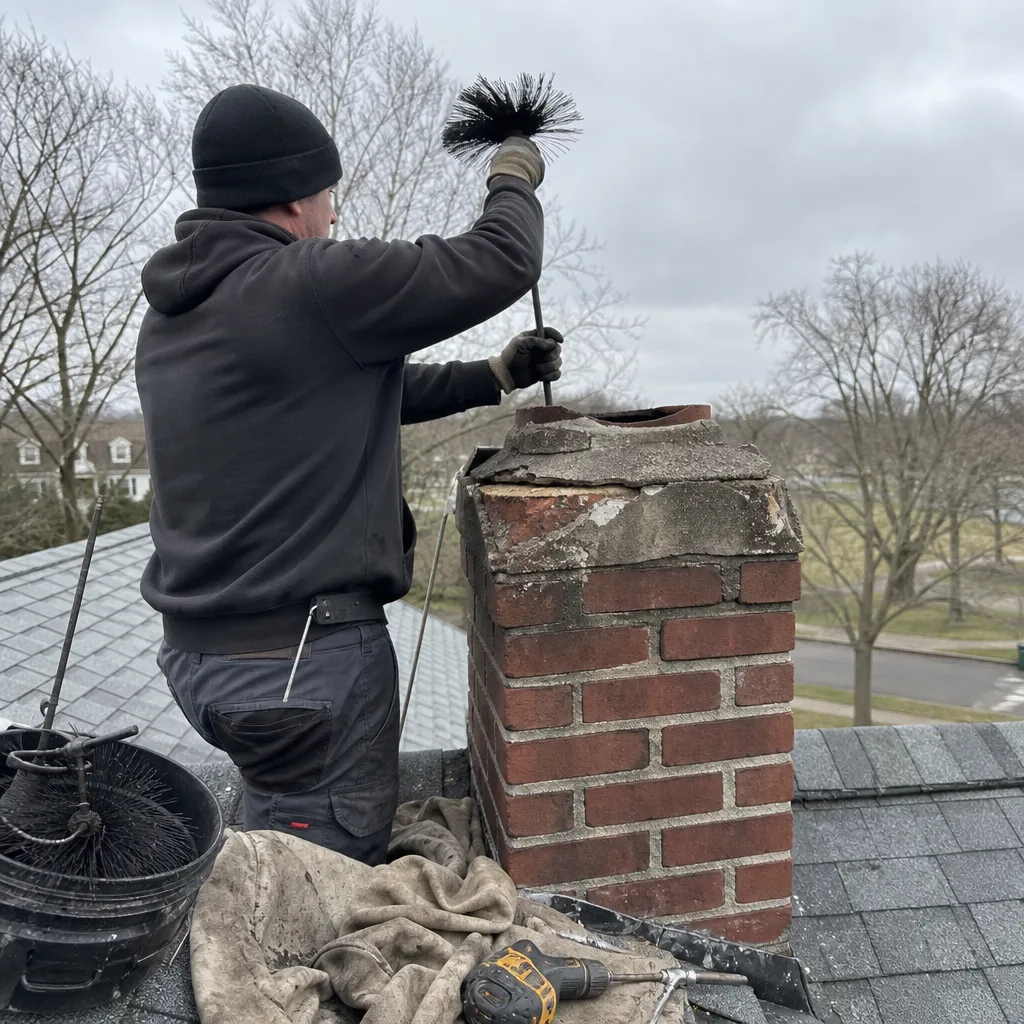
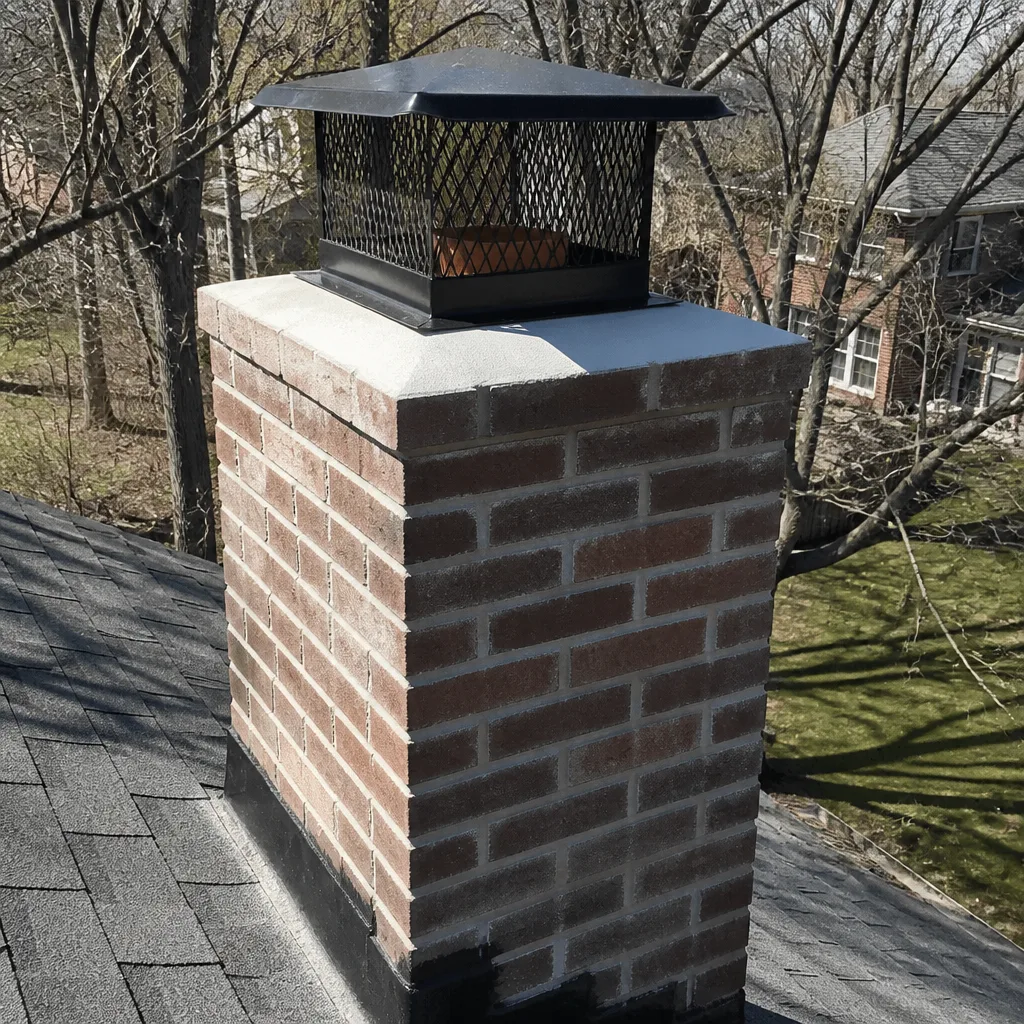
Level 1 sweep and inspection to the NFPA 211 annual standard - flue, crown, cap, and flashing checked and photographed
Chimney sweep logs do not sweep chimneys. They loosen some creosote - which then falls where a brush and vacuum still have to collect it.
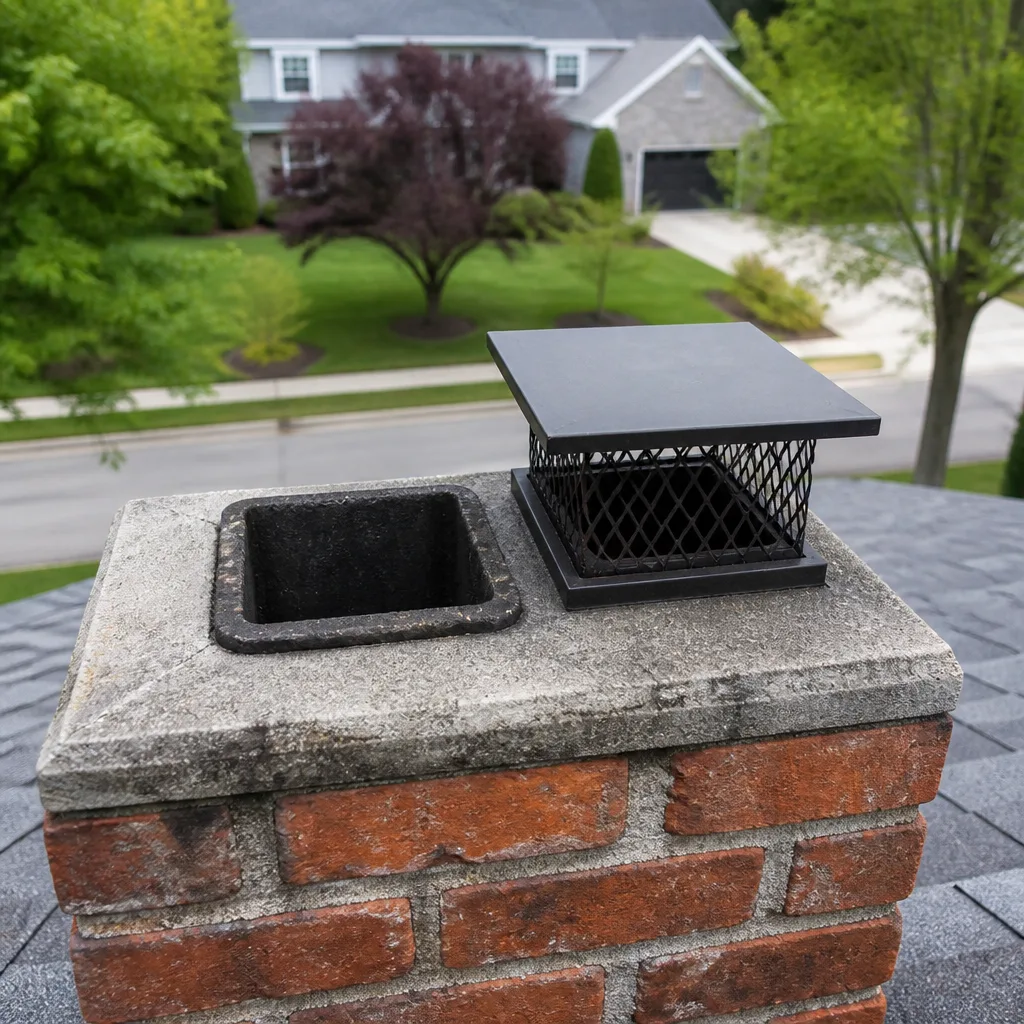
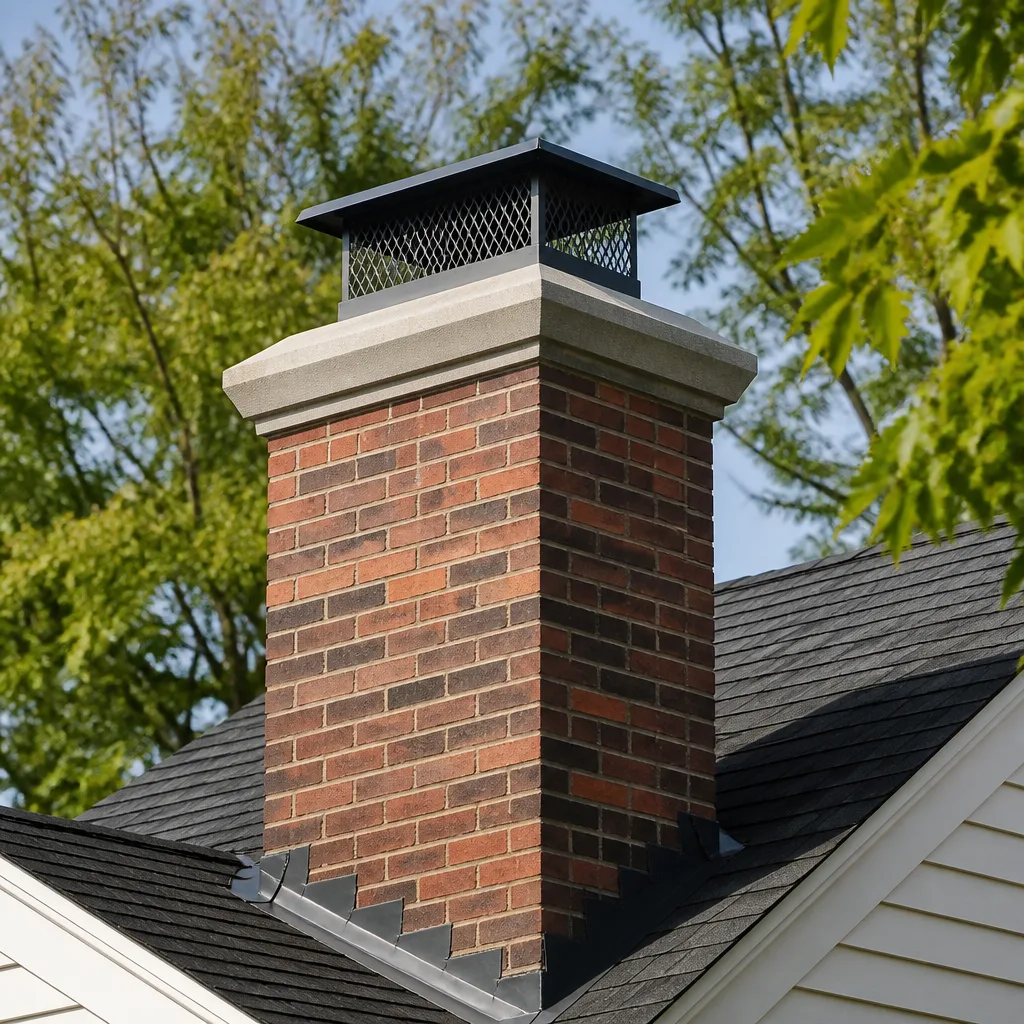
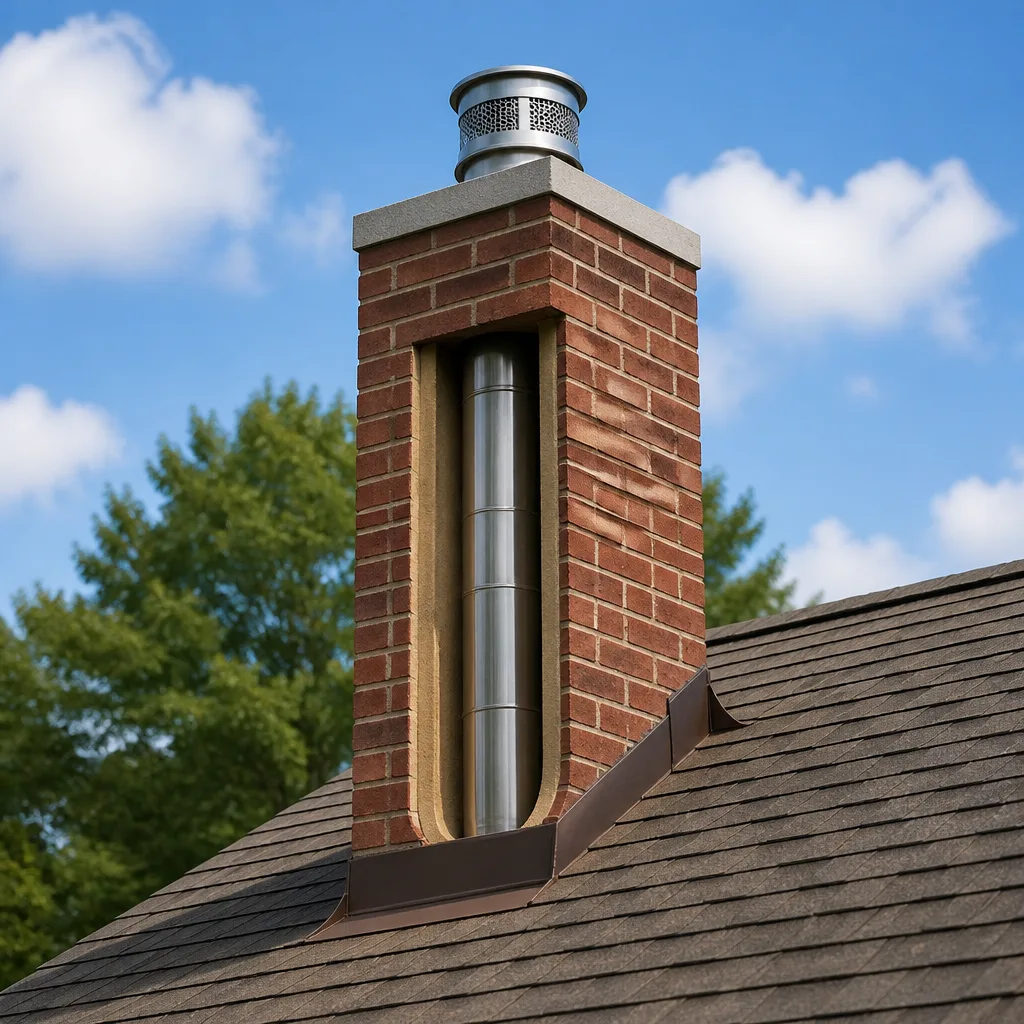
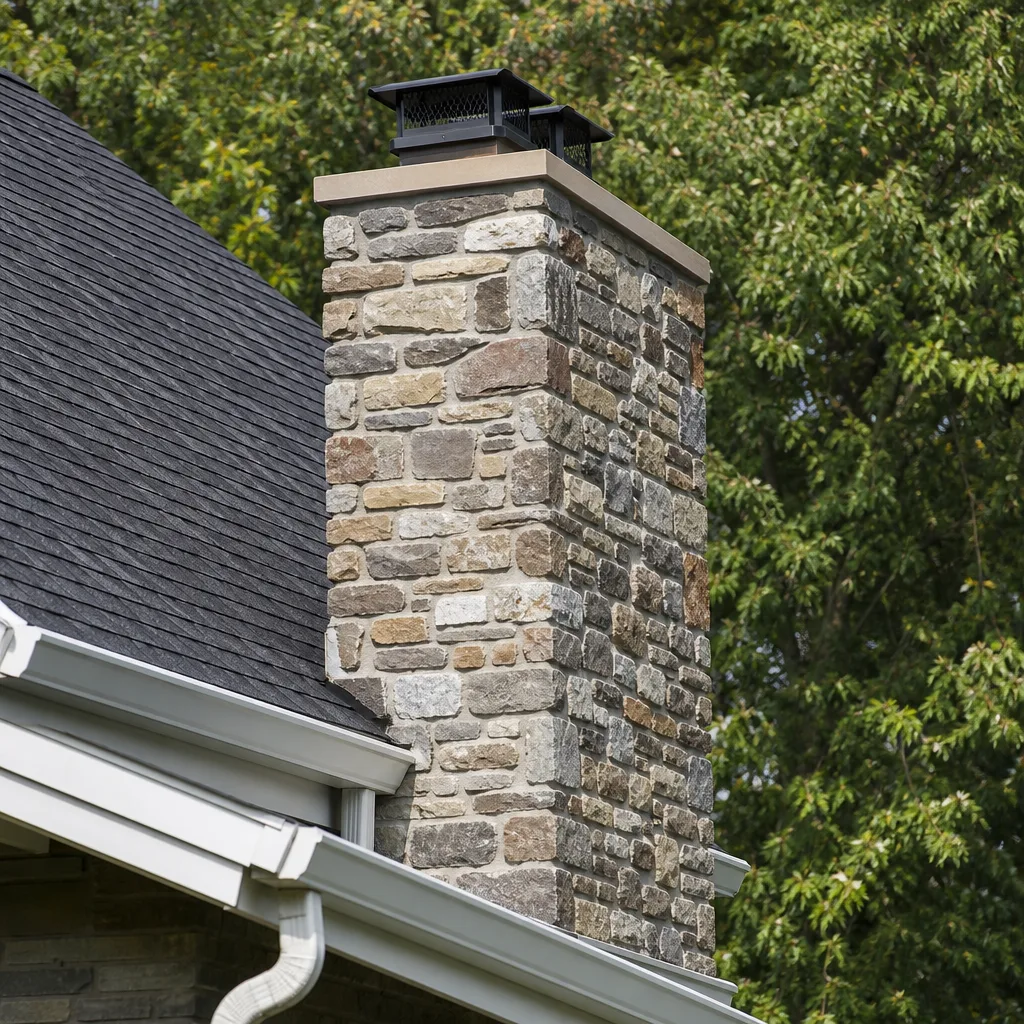
 Before
 After
After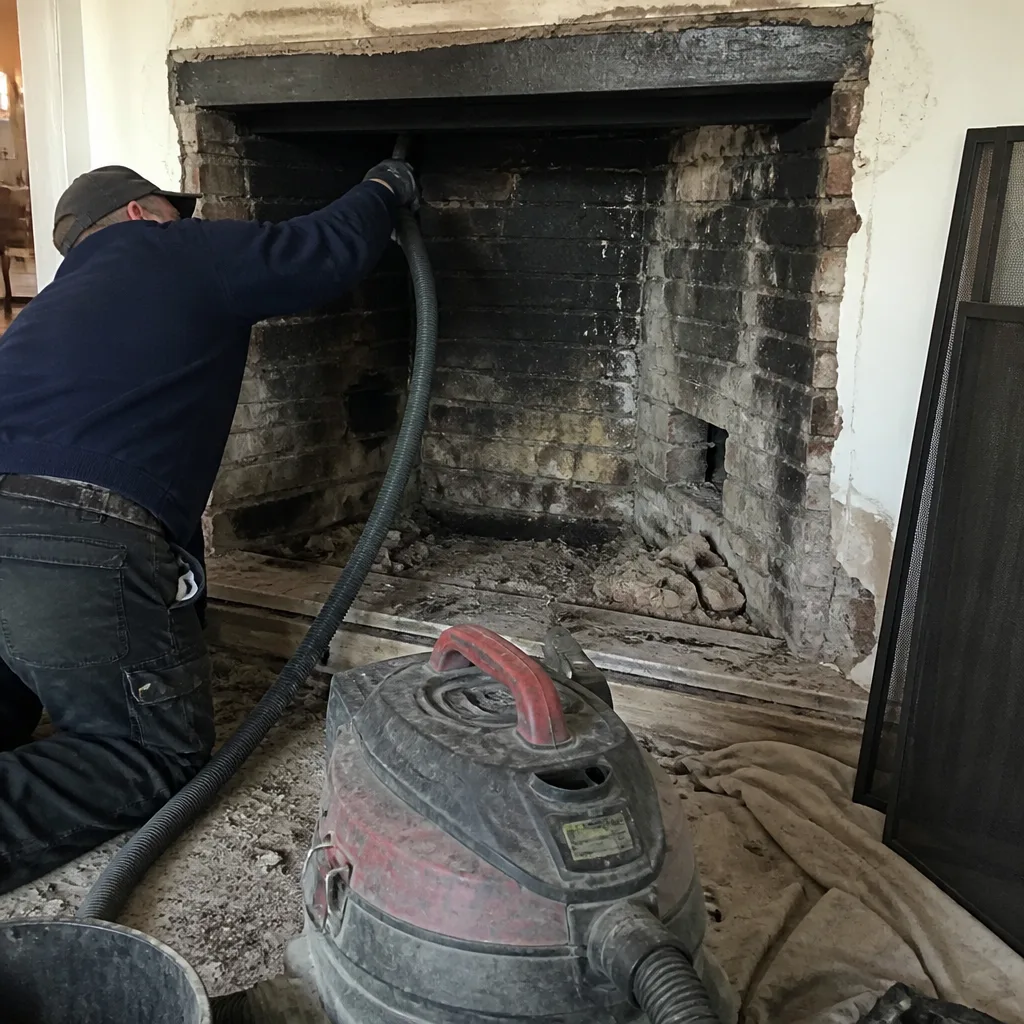 Before
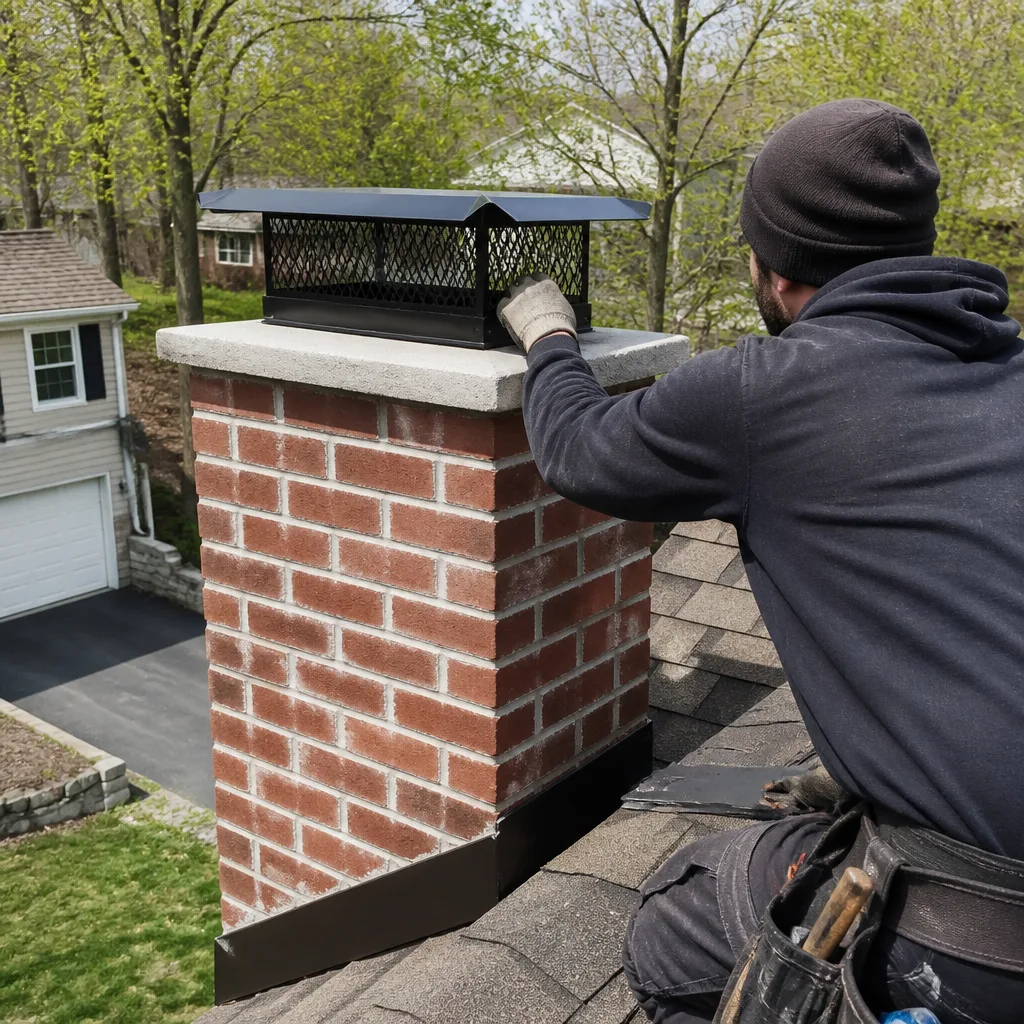 After
After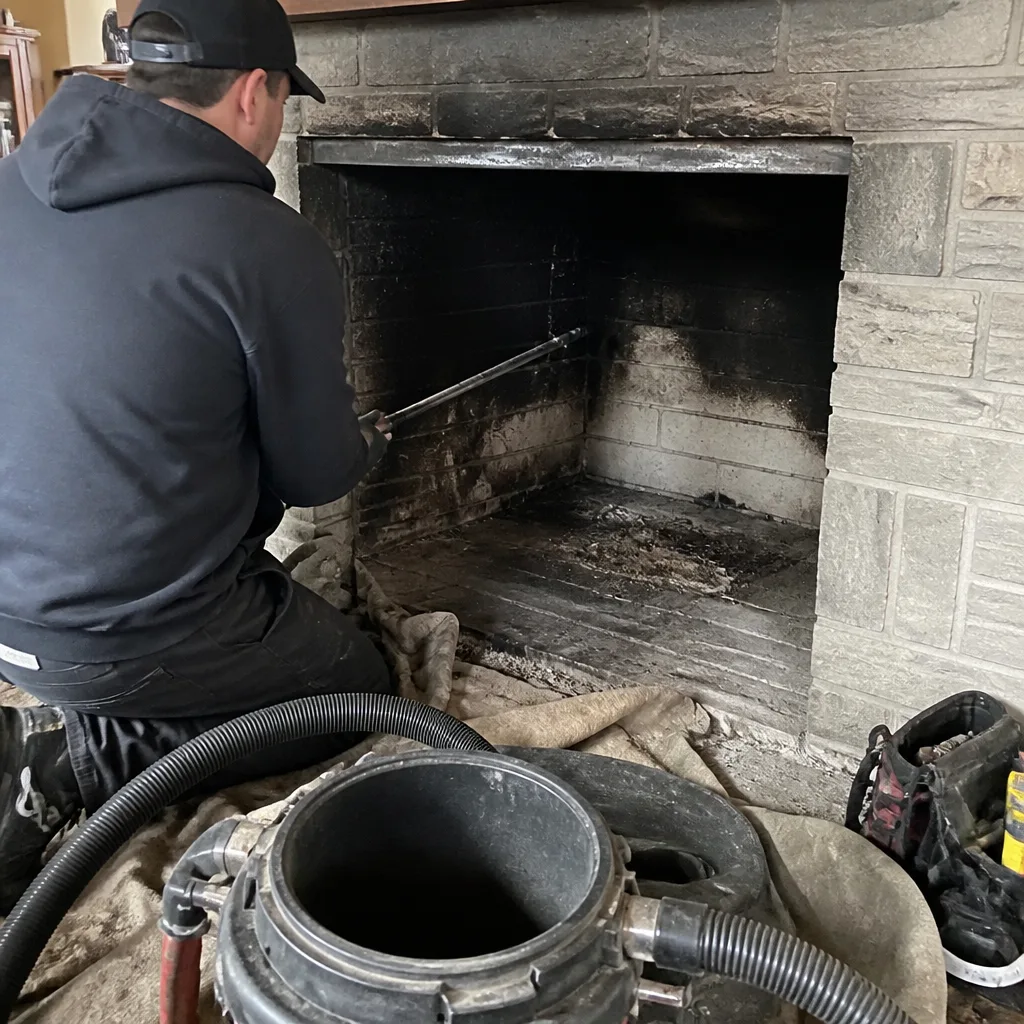 Before
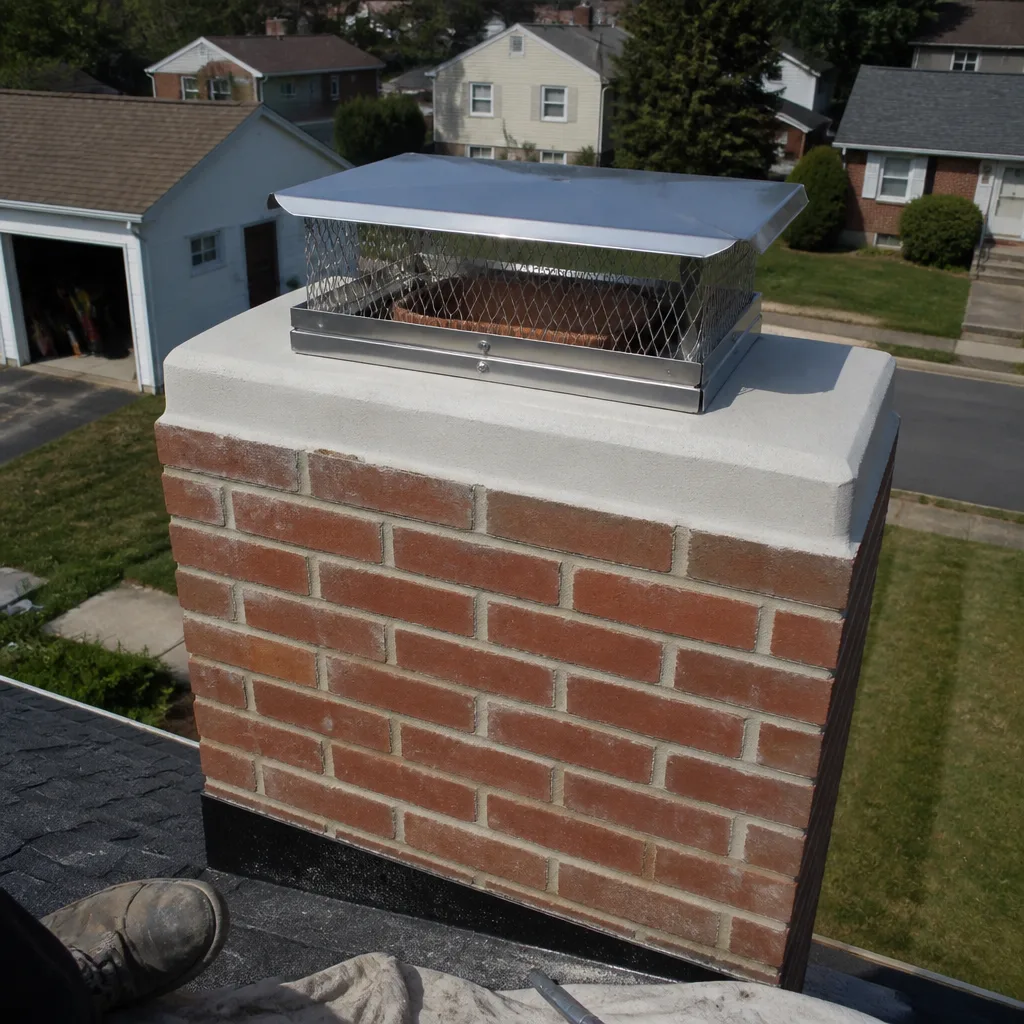 After
AfterChimney Cleaning Permits, Codes & Inspections in PA: What You Need to Know
If you bought a Reading home in the last three years and the seller’s disclosure listed the chimney as “swept and inspected,” that piece of paper tells you almost nothing about whether the flue meets current PA Uniform Construction Code requirements. A sweep receipt means someone ran a brush through it. A code inspection means something entirely different, and Reading homeowners confuse the two constantly. This guide walks through what Pennsylvania actually requires, what Berks County pulls permits for, and which inspection reports hold weight when you’re selling, filing an insurance claim, or standing in your living room wondering if that crack in the flue tile matters. For the complete picture on chimney cleaning in Reading, see our dedicated guide.
Quick Answer
Chimney cleaning itself does not require a permit anywhere in Pennsylvania, including Reading. But liner replacements, wood stove insert installations, and structural repairs often do trigger the PA UCC, and the documentation you need depends on whether you’re maintaining your home, selling it, or making an insurance claim after a chimney fire.
Table of Contents
- What the PA Uniform Construction Code Actually Says About Chimneys
- Berks County Permits: What Requires a Pull and What Doesn’t
- When Cleaning Triggers an Inspection vs. When It’s Just a Recommendation
- Reading Occupancy Permits and Chimney Documentation When a Home Changes Hands
- Sweep Inspection Reports vs. Code-Compliance Inspections: What Each One Is For
- Common Code Violations in Reading’s Pre-1978 Housing Stock
- What Insurance Companies Actually Ask For After a Chimney Fire
What the PA Uniform Construction Code Actually Says About Chimneys
Pennsylvania adopted the International Residential Code as the basis of its Uniform Construction Code, with some state-specific amendments. The IRC chapter that governs chimneys and fireplaces is Chapter 10, and it’s the same chapter a municipal code officer in Reading will cite if a problem comes up during a sale or renovation. Here’s the short version most homeowners need.
Every masonry chimney serving a solid-fuel appliance needs a flue liner. That liner can be clay tile, or it can be a listed stainless steel system from a manufacturer like DuraFlex or Olympia Chimney, but it has to exist and it has to be intact. The code doesn’t say a liner has to be brand new. It says the liner has to perform. A hairline crack in a clay tile may pass a visual inspection. A gap between tiles that allows flue gas to reach the masonry is a violation, full stop.
Chimney height and termination are also codified, and this is one area where Reading homeowners run into trouble. The code requires the chimney to extend at least three feet above the highest point where it passes through the roof, and at least two feet above any portion of the building within ten feet. On older Reading rowhomes and twins where rooflines meet at awkward angles, a chimney that met code in 1940 may not meet it in 2026, and a roof replacement is often the moment this gets flagged.
Clearance to combustibles is the other big one. The code spells out minimum distances between a chimney or connector pipe and any framing, insulation, or finished wall material. In our experience, this is the single most common violation in older Reading homes: someone framed a wall too close to a chimney chase thirty years ago, and the finished wall has been sitting an inch and a half from a single-wall connector pipe ever since. It isn’t dangerous every day, but it’s a code violation, and a code officer will flag it.
The PA UCC does not require annual chimney inspections. It requires code compliance at the time of construction, renovation, or alteration. What keeps a chimney safe between those moments is a maintenance schedule, which the code assumes you’ll handle as a homeowner. Reading is a city with brutal freeze-thaw cycles, and the code can’t prevent spalling brick or a rusting cap. That’s simply age and weather.
Berks County Permits: What Requires a Pull and What Doesn’t
Reading operates under the PA UCC through its own code enforcement office, and the practical threshold is straightforward: work that alters the structure or the system requires a permit. Work that maintains the system does not. Here’s how that line falls in the real world.
- Chimney cleaning or sweeping: No permit. This is maintenance, and no municipality in Berks County treats it as construction.
- Replacing a chimney cap: No permit in most cases. If the cap sits on an existing flue and you’re swapping like for like, it’s maintenance. If you’re adding a cap to a flue that never had one, or if the crown itself is being rebuilt, that edges toward structural work.
- Crown repair or rebuild: Usually a permit in Reading. A crown is structural, not cosmetic, and a code officer wants eyes on it.
- Liner replacement: Permit required. This is an alteration to a listed system, and the PA UCC treats it as such. The permit application in Reading will ask for the liner type, the appliance it serves, and the installer’s information. We install DuraFlex liners, and the manufacturer’s listing documentation is part of what the code office wants to see.
- Wood stove or insert installation: Permit required, always. The appliance itself has to be listed by a recognized testing agency, and the installation has to meet clearance and connector requirements. A homeowner who installs a wood stove without a permit in Reading isn’t just violating code. They’re also giving their homeowners insurance company a reason to deny a future claim.
- Masonry repair, repointing, or partial rebuild: Permit required for anything beyond cosmetic work. A few tuckpointed bricks is maintenance; rebuilding a section of flue is structural.
Here’s a numbered sequence for how a liner replacement permit typically goes in Reading:
- The homeowner or contractor files a permit application with the Reading code office, including the liner manufacturer’s listing documentation and a description of the work.
- Code enforcement reviews the application and issues the permit. Permit fees vary by job scope, but a liner replacement is generally at the lower end of the residential fee schedule.
- The installer completes the work, and the code office may require an inspection before the system is used. Reading typically wants a visual inspection at minimum, and for a reline, the inspector wants to see the liner connection at the appliance and the termination at the top.
- The inspection is documented, and that documentation becomes part of the property record. Keep it. The buyer’s attorney will ask for it when you sell.
We hear one question more than any other on this topic: “Do I really need to tell the city I’m replacing a liner?” Yes. A permit protects you. It creates a record that the work met code, and that record is what the next owner’s inspector asks for.
When Cleaning Triggers an Inspection vs. When It’s Just a Recommendation
Here’s a distinction almost no one explains clearly. A chimney cleaning is mechanical: we remove creosote and soot so the flue can breathe and the fire can burn safely. An inspection is evaluative: we look at the full system and tell you what condition it’s in. The PA UCC does not require an inspection every time you clean. It requires an inspection when the work being done changes the system.
But there’s a practical trigger most Reading homeowners don’t think about. If we’re cleaning a flue and we find a problem that affects safety, code compliance becomes relevant even though no permit was pulled. A Level 2 inspection is what’s called for. The National Fire Protection Association’s NFPA 211 standard says a Level 2 inspection is warranted when the system has changed, when the property is being sold, or after a chimney fire or external event. In Reading terms: if your liner is cracked, if your flue tiles are misaligned, or if we see water damage in the smoke chamber, the cleaning just became the moment you learned you need more than a cleaning.
Here’s a simple breakdown of the three inspection levels and when each applies:
- Level 1: Visual inspection of the accessible portions of the system, during a routine cleaning or maintenance visit. No tools beyond a flashlight and the sweep’s eyes. This is the standard annual check.
- Level 2: Includes video scanning of the flue interior, and it’s required when the home is being sold, when the system is being changed, or after a chimney fire or weather event. This is the inspection that matters for a real estate transaction or an insurance claim.
- Level 3: Involves removing portions of the structure to access hidden areas. This is rare and only happens when a serious problem is suspected and can’t be confirmed any other way.
So when does a cleaning trigger a required inspection? When the sweep sees something during the cleaning that indicates a safety issue, the responsible move is to document it and recommend a Level 2. In Reading, where much of the housing stock is pre-1978 and flues have been seeing freeze-thaw cycles for decades, this is not uncommon. A sweep who runs a brush through, collects the check, and says nothing about the gaping hole in the flue tile is doing you a disservice, and the code office will find that hole when you try to sell. Our Chimney Cleaning & Sweep Maintenance Checklist for Reading Homeowners can help you know what to expect.
Reading Occupancy Permits and Chimney Documentation When a Home Changes Hands
Reading requires a use and occupancy permit when a residential property changes ownership. That’s the U&O inspection, and it’s municipal code, not chimney code. But here’s what sellers and buyers both get wrong: the U&O inspector is not necessarily looking at your chimney, and a passed U&O inspection does not mean your chimney meets the PA UCC.
The U&O inspection in Reading focuses on habitability and safety: working smoke detectors, proper egress, no exposed wiring, that sort of thing. A chimney may get a visual pass if it doesn’t look like it’s actively falling down. The U&O inspector is not running a camera up your flue. The seller’s disclosure document, meanwhile, asks about the chimney but only in terms of known defects. “Swept and inspected” on a disclosure form is a statement that a sweep happened. It is not a certification that the flue meets current code.
What buyers should demand, and what sellers should have ready, is a Level 2 inspection report performed within a reasonable window before settlement. The report should include video documentation and a written assessment of the liner, smoke chamber, crown, and cap. That report is the closest thing a homeowner gets to a code-relevant chimney document short of a municipal inspection following permitted work. And if work was done, the buyer should ask for the permit record, not just the contractor’s invoice. A liner replacement receipt without a permit is a receipt for work that may not legally count.
For buyers looking for a straight answer before the settlement table, our position is simple: any seller who balks at a Level 2 inspection is answering a question they’d rather not have asked. And for sellers in Reading, spending the inspection fee before listing removes the single most common deal-delay we see. The chimney is one of the few systems in a house that a standard home inspection simply doesn’t evaluate thoroughly, and buyers’ agents are increasingly catching on to this gap.
Sweep Inspection Reports vs. Code-Compliance Inspections: What Each One Is For
Let’s end the confusion between these two documents, because Reading homeowners ask us about them in the same breath as if they’re interchangeable. They are not.
A sweep’s inspection report is a professional evaluation of your chimney’s operating condition. We look at the flue, the smoke chamber, the damper, the crown, the cap, and the clearances. We document what we see, we show you the camera footage, and we give you a plain-English verdict. That report matters for your own safety and maintenance planning. It tells you whether the flue needs a brushing, whether the liner is degrading, or whether you’re looking at a repair before next burn season. It does not carry legal weight with a code office.
A code-compliance inspection is a municipal function. A code officer evaluates the system against the PA UCC’s specific provisions and determines whether it meets the letter of the law. This happens after permitted work, or when a code officer is called out for a complaint, or during certain real estate processes. The code officer isn’t telling you whether the flue is clean or the crown is aging. They’re telling you whether the system complies with the adopted code at the time of inspection.
Which one do you need? For an insurance claim after a chimney fire, you need a sweep’s Level 2 inspection report, because the insurer wants documentation of the system’s condition and the cause of the loss. A code officer’s report isn’t part of that process unless the fire itself triggered a municipal inspection. For a home sale, you need both, in sequence: the sweep’s report documents condition, and if any repair or relining was done, the permit record documents code compliance. For your own annual maintenance, you need neither. You need a Level 1 inspection, which is part of a routine chimney cleaning and sweep in Reading, and you need the sweep to tell you what they saw.
One more distinction worth making: a home inspector who is not a chimney professional will often note “chimney appears serviceable” or “recommend further evaluation by a qualified chimney contractor.” That language is a hedge, and it means exactly what it says. It is not an inspection. It is a referral to an inspection.
Common Code Violations in Reading’s Pre-1978 Housing Stock
Reading has a lot of pre-1978 construction, which means a lot of chimneys built before current clearance and liner standards existed. These are the violations we see most often, and whether each one requires immediate correction or can be noted and monitored depends on severity.
- Missing or severely damaged flue liners. Many pre-1940 Reading homes were built with unlined masonry chimneys, or with clay tile liners that have since cracked and separated. Serving an active fireplace with no intact liner is a code violation and a safety problem. This one needs correction before the appliance is used again. The fix is typically a stainless liner from a manufacturer like DuraFlex or Olympia Chimney.
- Inadequate clearance to combustibles. Older framing practices sometimes placed wood members against or very near the chimney chase. If combustibles are in contact with the masonry, that’s an immediate correction. If they’re simply closer than current code but separated by a non-combustible barrier, it may be a monitor-and-document situation.
- Improper connector pipe on wood stoves. Single-wall connector routed through a wall, or vented into a flue that never saw a permit, is a violation. We see this often in Reading basements where a wood stove was added years ago without anyone pulling a permit. Correction is required before the next burn season.
- Chimney height below code minimums. On some older rowhomes, adjacent additions have changed the roofline so the chimney no longer meets the 3-foot / 2-foot / 10-foot rule. The practical fix is usually a chimney extension, and this is often flagged during a roof replacement or sale.
- Deteriorated crowns and missing caps. A cracked crown that lets water into the masonry is a maintenance issue until it becomes a structural issue. If the flue liner is exposed and degrading, the code office will flag it. The fix is a chimney repair in Reading that addresses the crown and the cap as a system, not just a patch.
- Accumulated creosote blocking the flue. This is less a code violation than a fire hazard, but a glaring accumulation will get flagged on any inspection. The fix is simple: fireplace services in Reading that include a proper mechanical sweep, and the evidence is the camera footage before and after.
Here’s the pattern we try to make clear to every Reading homeowner: violations that create an active fire or carbon monoxide risk need to be corrected before the appliance is used. Violations that reflect older construction standards but don’t present an active risk can be documented and addressed on a timeline. The worst mistake is not finding out which one you have.
What Insurance Companies Actually Ask For After a Chimney Fire
A chimney fire is the moment the paperwork matters most, and Reading homeowners who’ve been through it know the insurer doesn’t just write a check. Here’s the process we’ve seen repeatedly, and what you’ll need.
- Immediate shutdown: If you’ve had a chimney fire, stop using the fireplace or stove. The system is now suspect until inspected.
- Level 2 inspection: The insurer will want documentation that the system has been evaluated by a qualified professional. That means a camera scan of the flue and a written report. At Top Hat Chimney, we provide both, and the footage is yours to keep. The insurer wants to know what caused the fire, what damage occurred, and what repairs are necessary.
- Written estimate: The insurance company will want a line-item estimate for the repair or relining work. This is where a clear, specific quote matters, and where our upfront pricing means the number on the estimate is the number on the final invoice if the scope doesn’t change.
- Completion documentation: After the work is done, the insurer may ask for confirmation that the corrected system meets code. The permit record from Reading code enforcement becomes part of this file.
A chimney fire doesn’t automatically total a chimney. Sometimes the fix is a reline and a new cap, and the homeowner is burning again in two weeks. Sometimes the masonry itself is compromised and the work is more involved. What the insurer won’t accept is a verbal assurance. Everything has to be documented, and the documentation has to come from someone who is qualified to issue it. Ask anyone on your street who has filed a claim: the adjuster’s first question is “where’s the inspection report?”
Common Mistakes to Avoid
- Assuming a “swept and inspected” disclosure means the chimney is code-compliant. That language is not a code statement, and it will not satisfy a U&O inspector or a buyer’s attorney in Reading. It means someone ran a brush through the flue at some point.
- Skipping the permit on a liner replacement. A liner without a permit is a liability that surfaces at the worst possible moment: when you’re selling, or when an insurer questions the claim. The permit is cheap compared to the problem it prevents.
- Treating a Level 1 inspection as sufficient for a home sale. The seller’s standard cleaning visit does not produce the documentation a transaction needs. A Level 2 inspection with video is the baseline for a sale or a claim.
- Confusing the U&O inspection with a chimney inspection. The Reading U&O officer is not running a camera up your flue, and a passed U&O does not clear the chimney. Two different inspections, two different purposes.
- Ignoring clearance violations because “it’s been that way for decades.” Time doesn’t make a clearance violation safe. It makes it a problem that’s been waiting longer. Code officers in Reading have flagged these on pre-1978 homes repeatedly.
- Installing a wood stove without reviewing the code requirements first. The appliance listing, the connector, the clearances, and the flue all have to work together. We install systems built around Olympia Chimney, Famco, and Copperfield components, and the permitting is part of the job, not an afterthought.
When to Call a Professional
Call a chimney professional when the question involves the integrity of the system rather than the schedule of a cleaning. That means: when you see spalling brick or cracking mortar, when you smell smoke in the house after a fire, when water is staining the ceiling or walls around the chimney, when you’ve had a chimney fire, when you’re buying or selling a home in Reading and need documentation, or when you’re adding a wood stove or insert and need the permit process handled correctly. A good sweep will tell you when the work can wait, and the camera footage and a plain-English verdict come with the visit, every time, no exceptions. Top Hat Chimney offers free estimates in Reading, and we’ll give you a straight answer on whether you need a cleaning, a repair, or a code consultation. Call (484) 209-0837.
Frequently Asked Questions
No. Chimney cleaning is maintenance work, and no municipality in Berks County requires a permit for a routine sweep. Permits come into play when the work alters the system: liner replacement, wood stove installation, crown rebuilds, or structural masonry repair. If you’re just getting the flue brushed out before burn season, no paperwork is needed.
Ask for a Level 2 inspection report with video documentation, completed by a qualified chimney professional, dated within a reasonable window before settlement. If any liner or structural work was done, ask for the permit record from Reading code enforcement, not just the contractor’s invoice. A “swept and inspected” line on a disclosure form is not sufficient.
A Level 1 inspection is typically included with a routine cleaning, which in the Reading market generally runs in the $150 to $250 range depending on the system’s condition and accessibility. A Level 2 inspection with video scanning typically runs higher because of the camera work and the documentation. Call (484) 209-0837 for an exact quote for your home, and we’ll give you the number before any work begins.
Not in a meaningful way. The Reading use and occupancy inspection focuses on habitability and safety items like smoke detectors and egress. A chimney may receive a visual glance, but the U&O inspector is not performing a flue-level inspection. If you want documentation of chimney condition before a sale, you need a dedicated Level 2 inspection from a chimney professional.
The work is not legally documented, and that gap surfaces when you try to sell the home or file an insurance claim. A buyer’s attorney may require permit records for recent chimney work as a condition of settlement, and an insurer may question a claim tied to unpermitted work. The fix is to get the work permitted retroactively where possible, which usually involves a code inspection and possibly opening walls to show what was done.
The National Fire Protection Association recommends a Level 1 inspection at least once per year, regardless of how often you burn. In Reading’s freeze-thaw climate, once a year is the right minimum. Once a year, burn or no burn. Chimneys break in the off-season too.
The Bottom Line
Pennsylvania’s chimney rules are simpler than most contractors make them sound. Cleaning needs no permit. Liners, stoves, and structural repairs do. The documentation that matters depends on your situation: a sweep’s report for maintenance and insurance, a permit record for code compliance and a sale, and a Level 2 inspection with video for any transaction. Reading’s older housing stock carries predictable violations, and most of them are fixable when caught before a crisis. Get the inspection, get the documentation, and know exactly what you’re looking at. The camera footage and a plain-English verdict, every time.
Written by Wendell Pike, Owner at Top Hat Chimney, serving Reading since 1999.